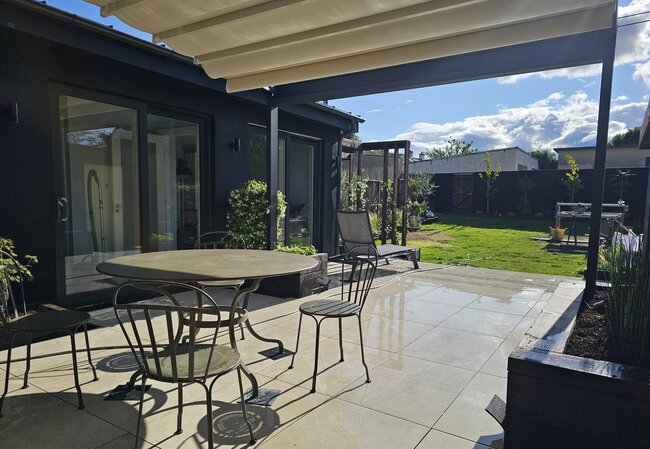
Raised deck terraces – installation systems and technology for professionals
What is a raised deck terrace
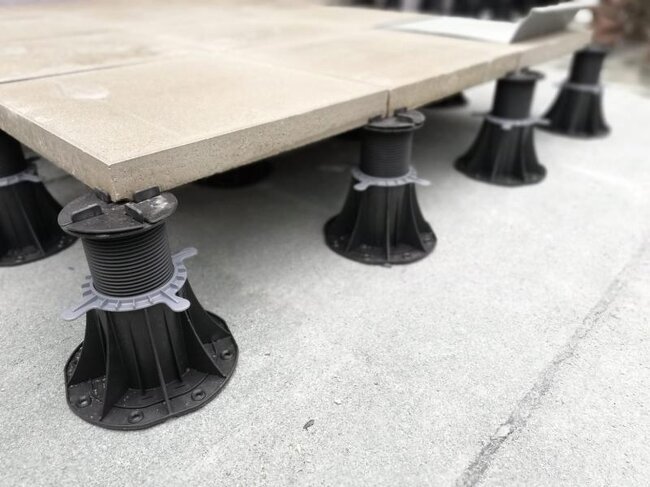
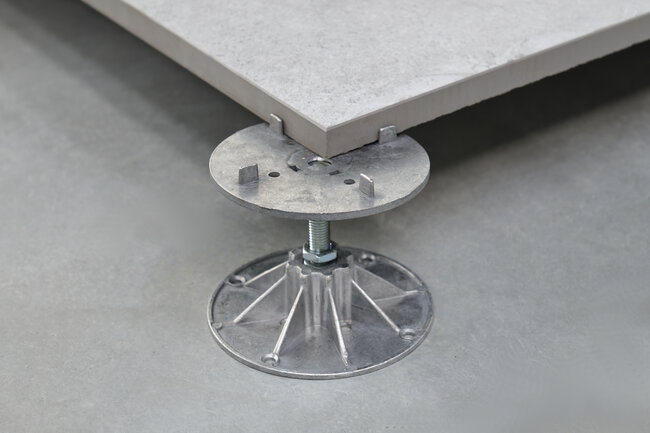
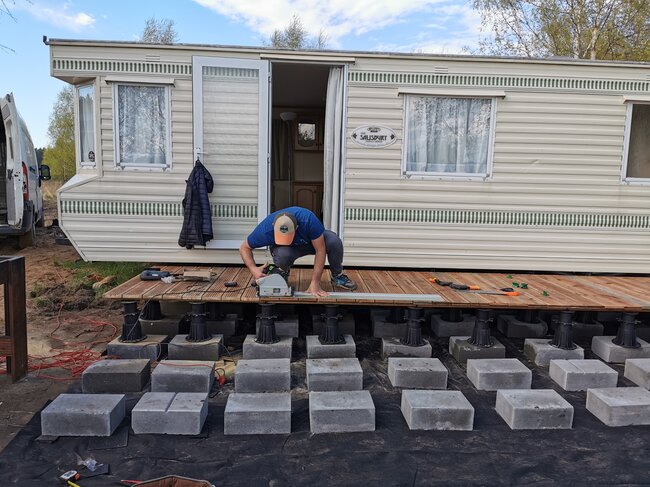
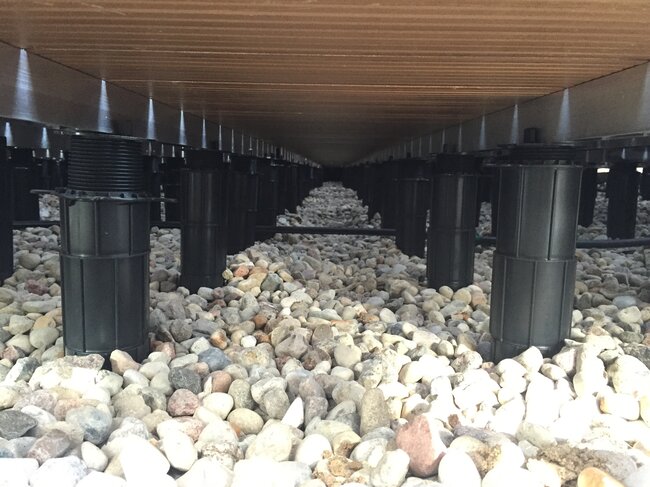
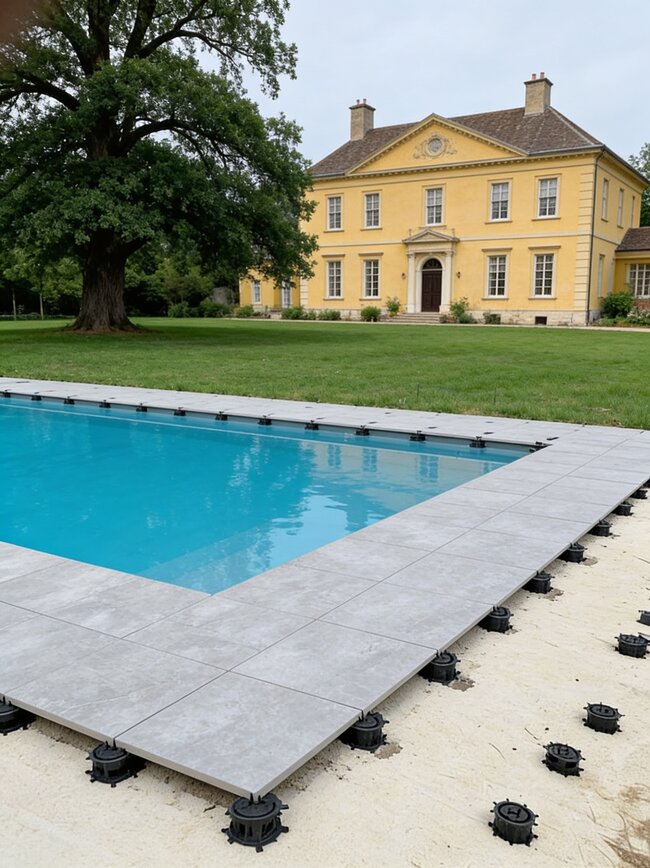
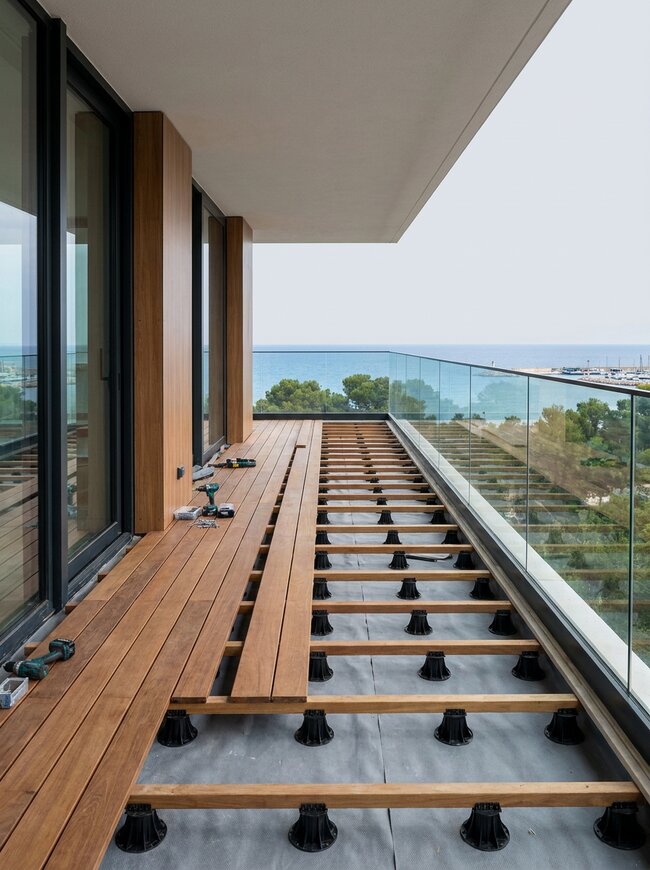
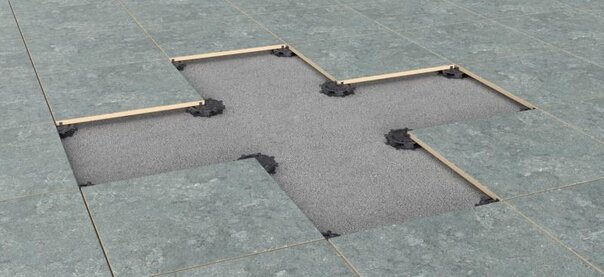
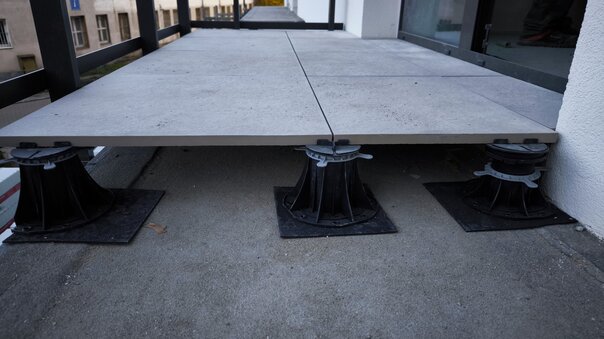
A raised deck terrace is a system-based external surface construction (terrace, deck, patio) in which pavers or other finishing elements are laid on pedestals (adjustable or non-adjustable), rather than being permanently glued to the substrate. Between the surface and the substrate, a ventilation space is created, allowing for free water drainage, air circulation, and compensation for material movement.
Raised deck terrace vs. traditional glued terrace
The fundamental difference between a raised deck terrace and a traditional glued terrace is the method of load transfer and rainwater management. In a raised deck system: the finishing elements of the flooring rest pointwise on pedestals, rainwater is drained through the gaps between pavers or boards and flows down the waterproofing layer according to the substrate slopes, the level and slope of the terrace can be independent of the substrate slopes, the lack of permanent adhesive bonds limits the risk of delamination, cracks, and material degradation caused by rain, sun, wind, frost, and biological factors.
Where raised deck terraces are used
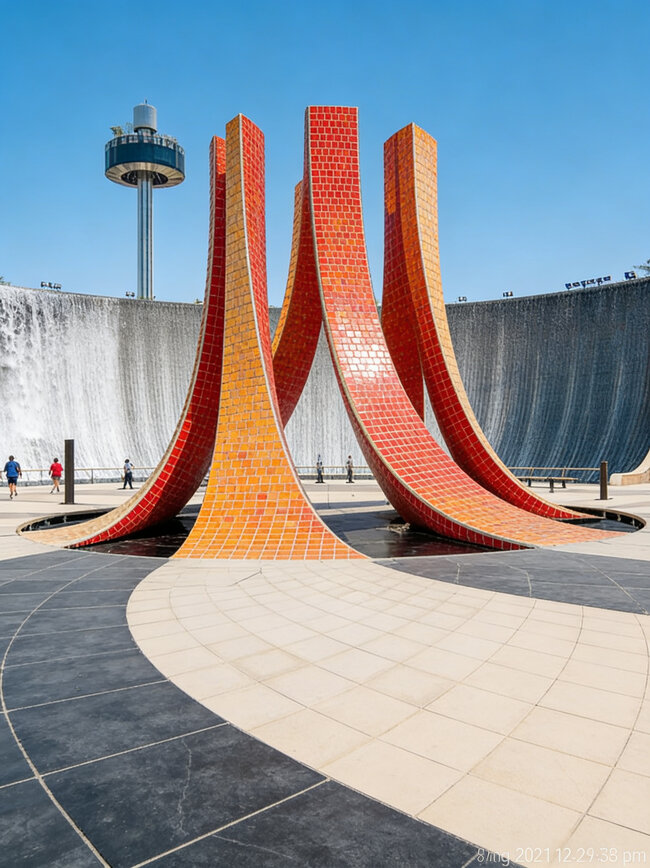
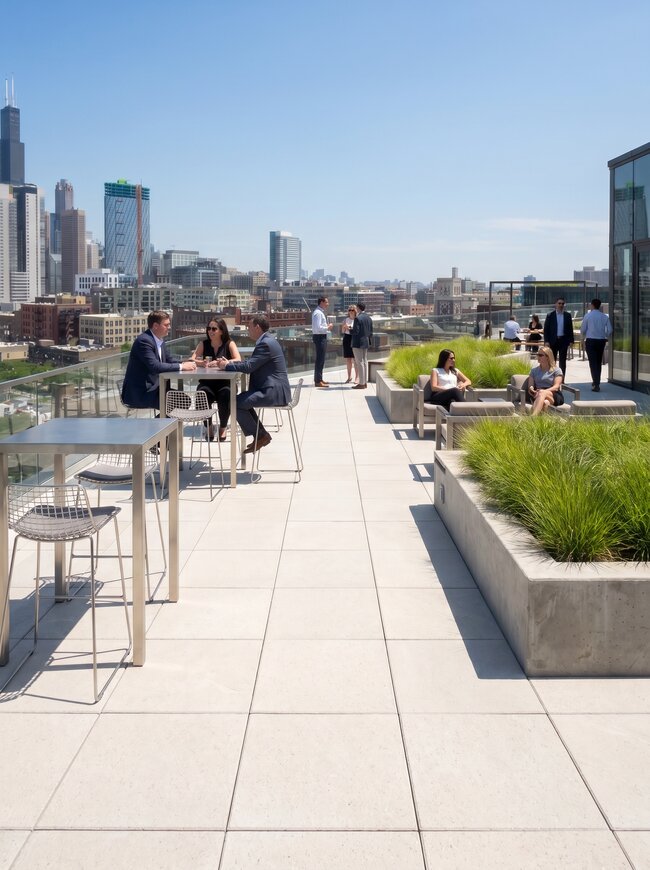
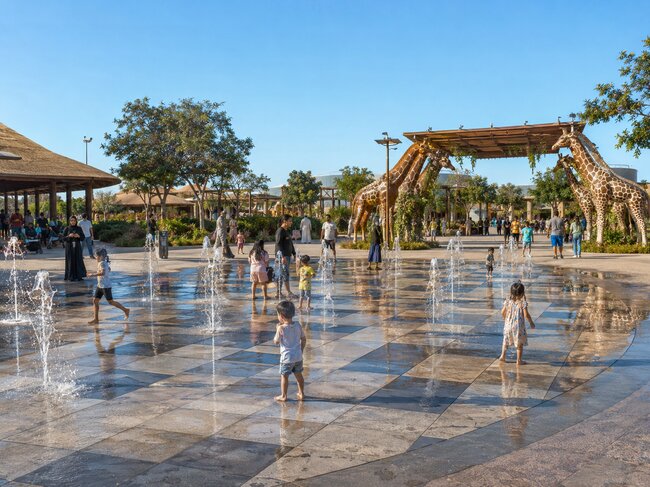
The technology of raised deck terraces is used wherever the following are key: structural durability and reduced complaints, precise leveling of the surface and freedom in shaping heights and slopes, service access enabling repairs without destroying the terrace, safety of the waterproofing layer. , squares, fountains), technical terraces and service areas.
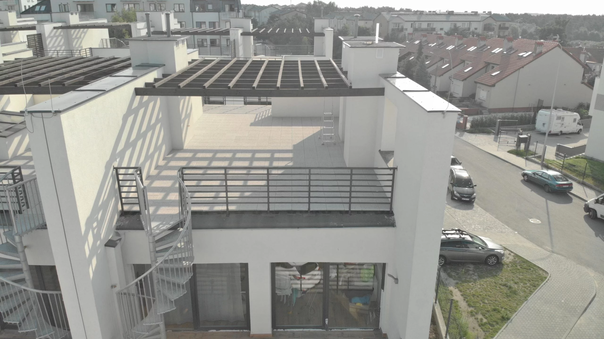
How a raised deck terrace works
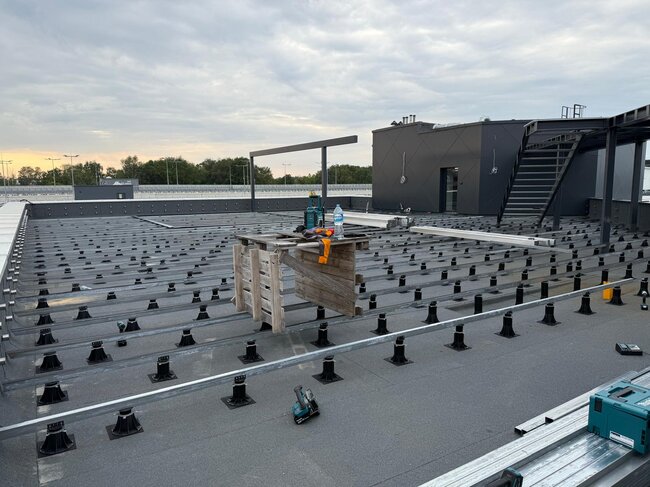
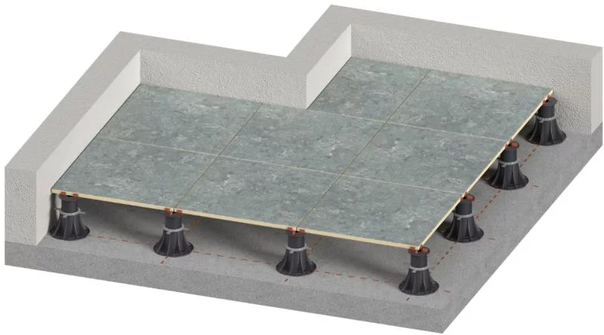
A raised deck terrace works as a construction system based on point support of the surface, rather than on its permanent bonding to the substrate. Pavers, boards, or other finishing elements rest on pedestals, creating a continuous technical space between the surface and the substrate layer.
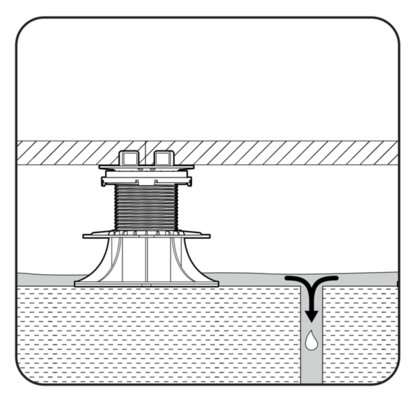
Compensation of unevenness, slopes, and expansion joints
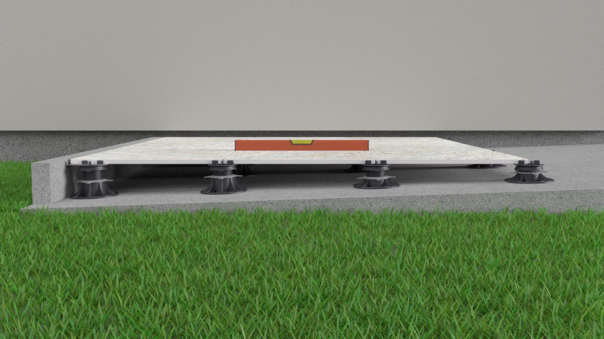
Adjustable pedestals enable precise leveling of the surface, regardless of slopes and unevenness in the substrate. This makes it possible to create a perfectly even usable surface, even on roofs or balconies with significant height differences.
Service access and structural durability
One of the most important advantages of a raised deck terrace is full service access to the layers located beneath the surface. Individual pavers or boards can be removed without disturbing the rest of the structure.
Components of a raised deck terrace system
A raised deck terrace is not a collection of random products, but a cohesive mounting system in which each component performs a specific structural function. The proper operation of the terrace, its load-bearing capacity, durability, and user safety depend on the correct selection and compatibility of all components.
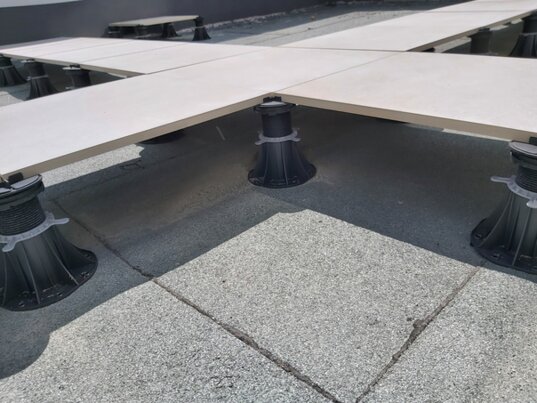
Types of surfaces used on raised deck terraces
One of the key advantages of raised deck terrace systems is the ability to use various types of surfaces, provided they are properly matched to the supporting structure and system parameters. The choice of material affects not only aesthetics but also the load-bearing capacity, durability, installation method, and maintenance of the terrace.
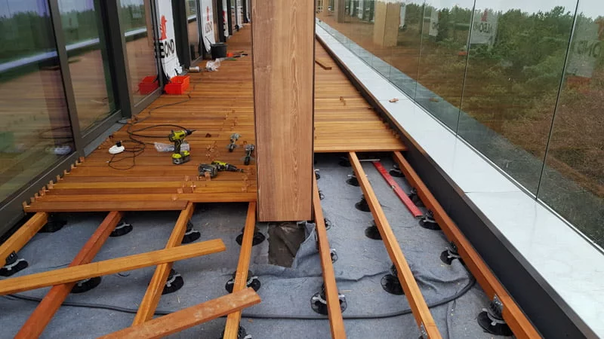
Applications of raised deck terraces
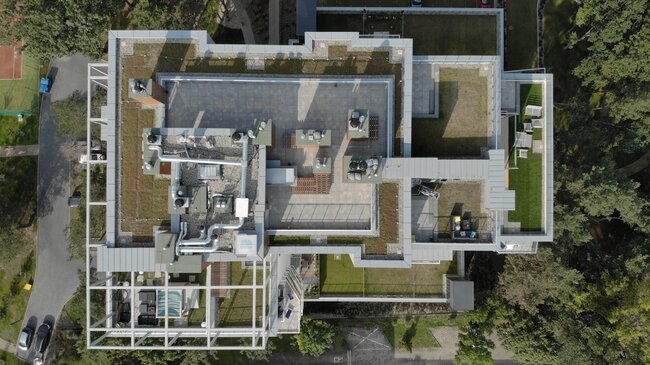
Thanks to their modular construction and wide configuration possibilities, raised deck terraces are used in various types of projects – from residential construction to commercial facilities and public spaces. The system allows precise adjustment of technical parameters to project conditions, loads, and usage patterns.
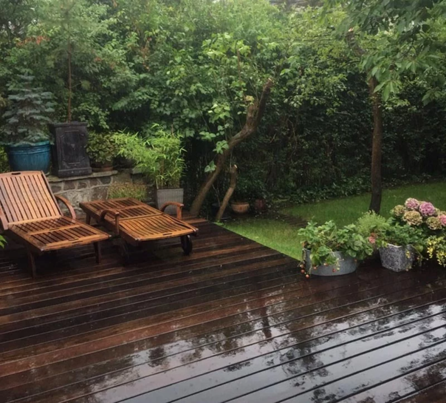
Designing a raised deck terrace
Properly designing a raised deck terrace is crucial for the durability, safety, and trouble-free operation of the structure. At the design stage, parameters are determined that should not be corrected later on site, such as heights, slopes, load-bearing capacity, or the adjustment range of the system.
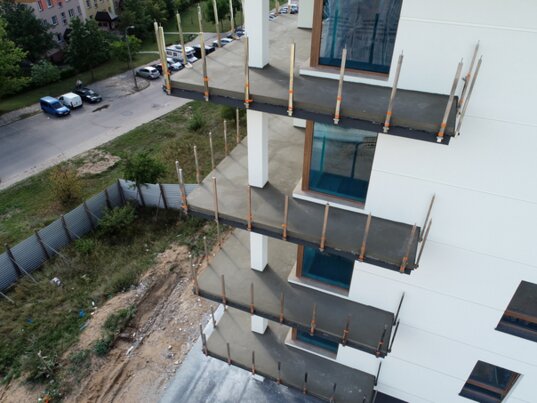
Installation and Best Practices
Proper installation of a raised deck terrace has a direct impact on the stability, durability, and safety of use of the entire structure. Although ventilated systems simplify many stages of implementation compared to adhesive solutions, they require adherence to specific installation guidelines and the use of components compatible within a single system.
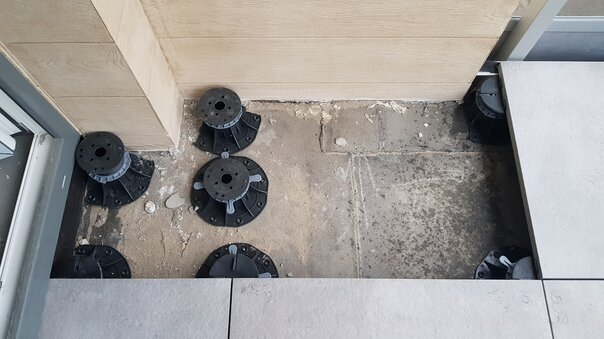
Most Common Technical Challenges and System Solutions
Raised deck terraces are designed as durable and predictable solutions, however – like any external structure – they are subject to specific loads and operating conditions. The key to their longevity is conscious identification of potential technical challenges and the application of appropriate system solutions already at the design and installation stage.
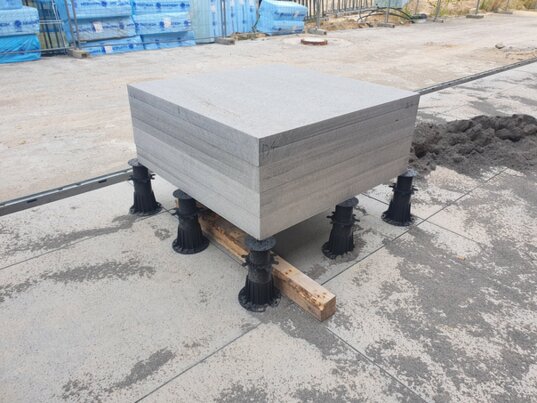
System responsibility and documentation
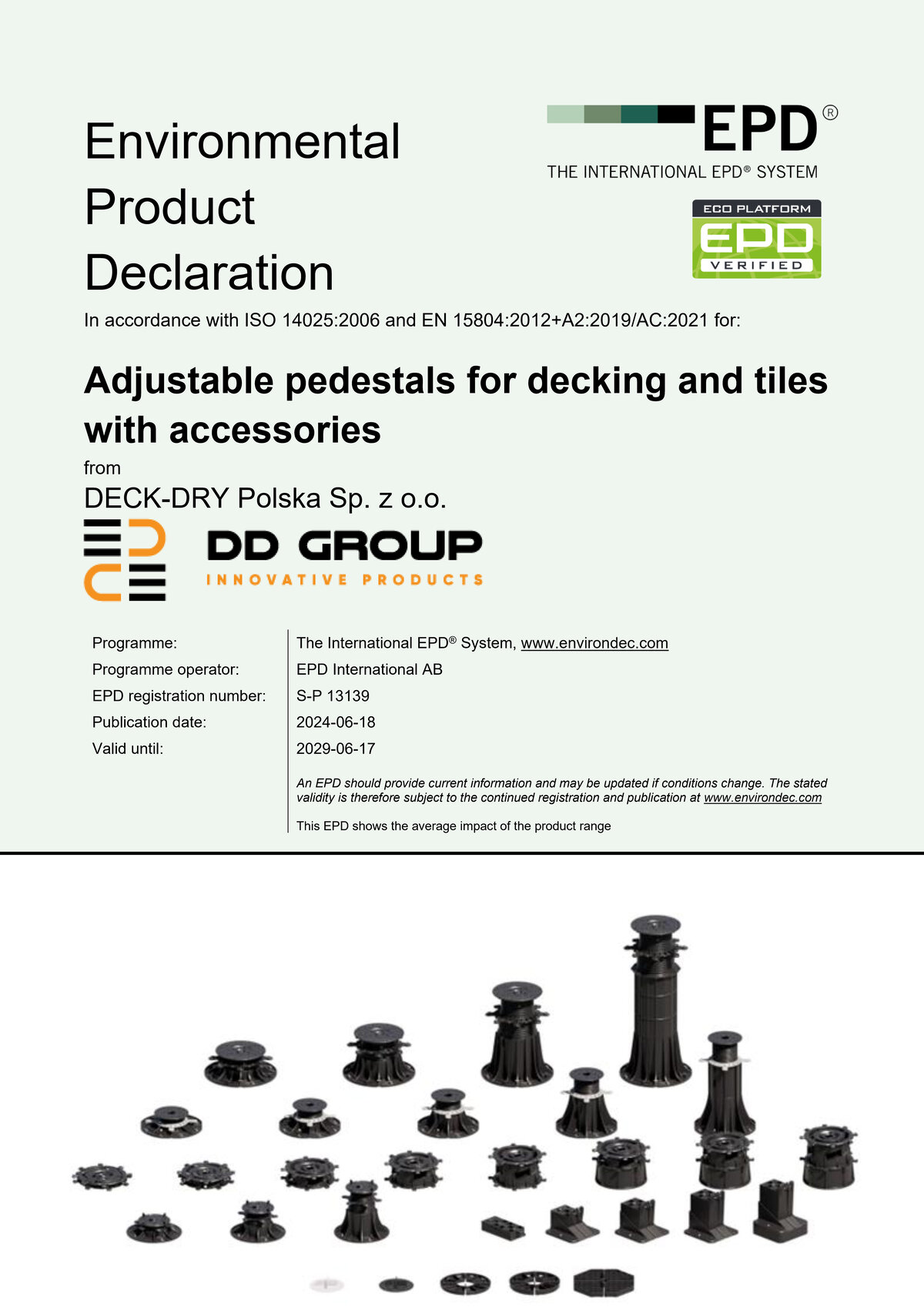
Using a complete manufacturer system also means clear system responsibility. The manufacturer provides not only structural components, but also technical documentation, strength test reports, installation guidelines, and information necessary for proper terrace maintenance, as well as warranties.
FAQ – frequently asked questions
This section compiles the most frequently asked questions about raised deck terraces, asked by designers, contractors, and investors. The answers are general and organizational in nature – detailed topics are covered in dedicated technical materials.