- Historic building: Moszna Castle (one of the most famous historical landmarks in Poland)
- Location: Moszna, Opole Voivodeship
- Project category: Revitalization and adaptation of historic buildings
- Engineering task: Construction of a stable café terrace directly adjacent to the historic facade
- Technology used: Stone paver surface laid without adhesive on a system of adjustable pedestals
Modern Functionality in a Historic Setting
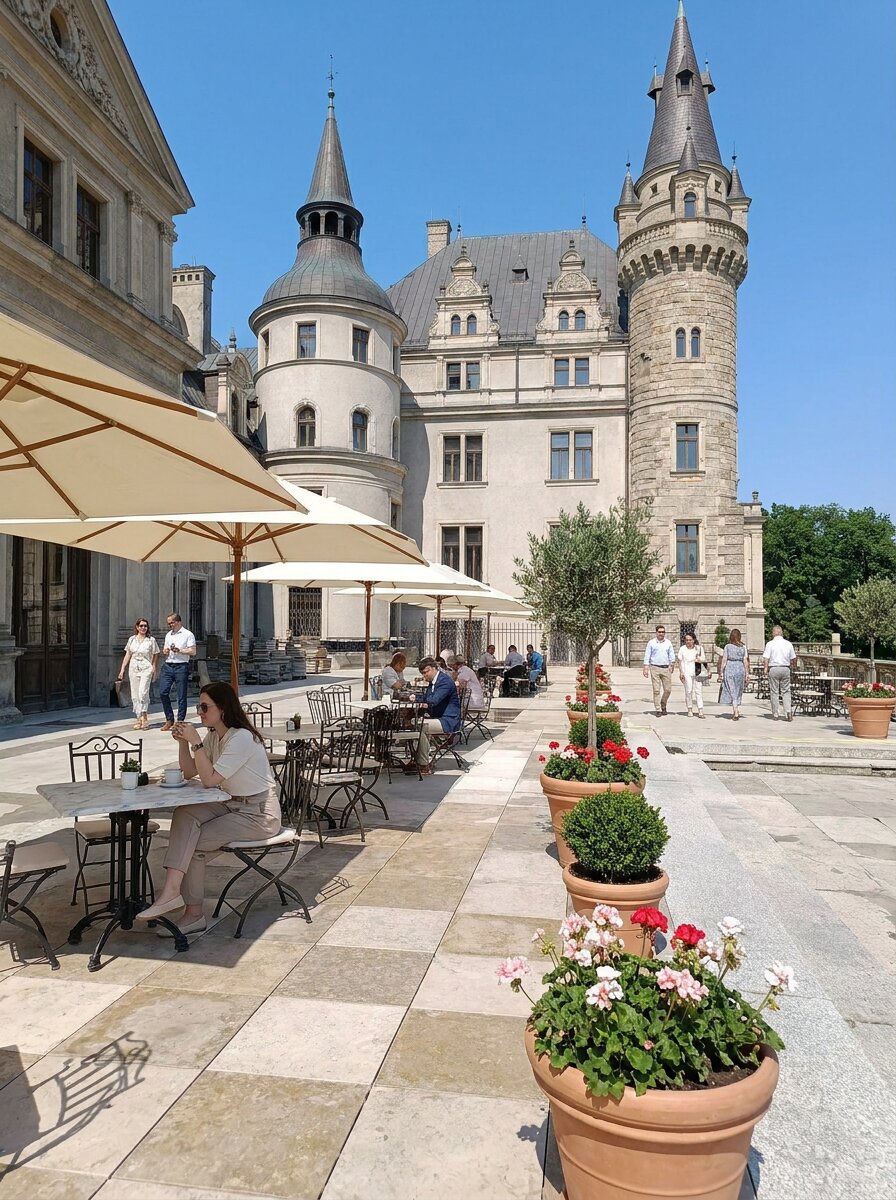
Moszna Castle, with its characteristic towers and eclectic architecture, is a tourist gem of Poland. As part of raising the standard of tourist service, the key task became the arrangement of a representative outdoor restaurant and café space, located directly next to the monumental, stone facade of the building.
The main premise of the investment was to create a luxurious, vibrant zone for guests that would not disturb the historic character of the structure, while offering the full functionality of a modern raised deck terrace.
Restrictive requirements and technical challenges
Working in the vicinity of heritage-listed buildings is governed by strict regulations. Traditional construction methods were out of the question for several fundamental reasons:
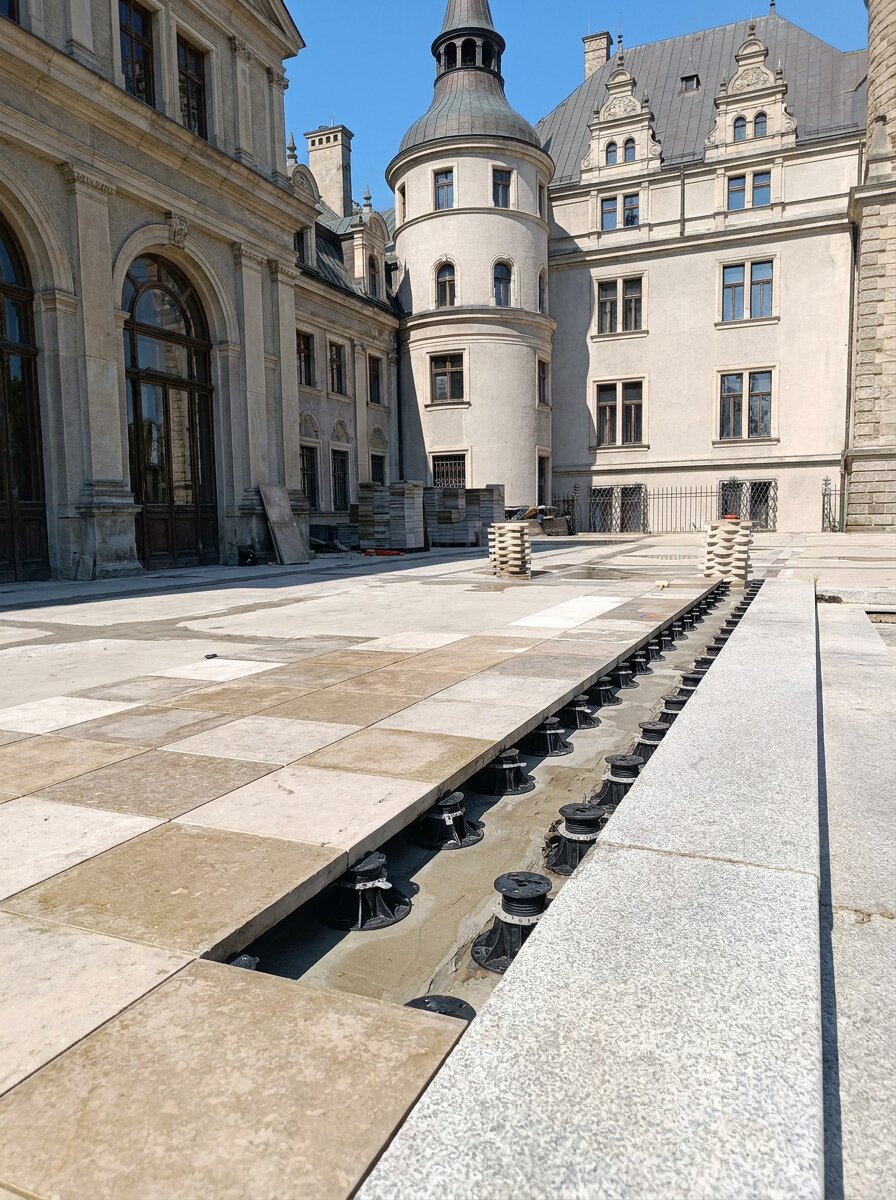
- Diverse and unstable concrete substrate: The existing concrete screed had numerous uneven areas, steps, and natural technological slopes designed for water drainage.
- Protection of the original heritage substance: The heritage conservator ruled out any solution that would permanently interfere with the ground or the structure of the castle walls. The use of adhesive mortars, which could permanently stain or damage the stone architectural details, stairs, or adjacent balustrades, was prohibited.
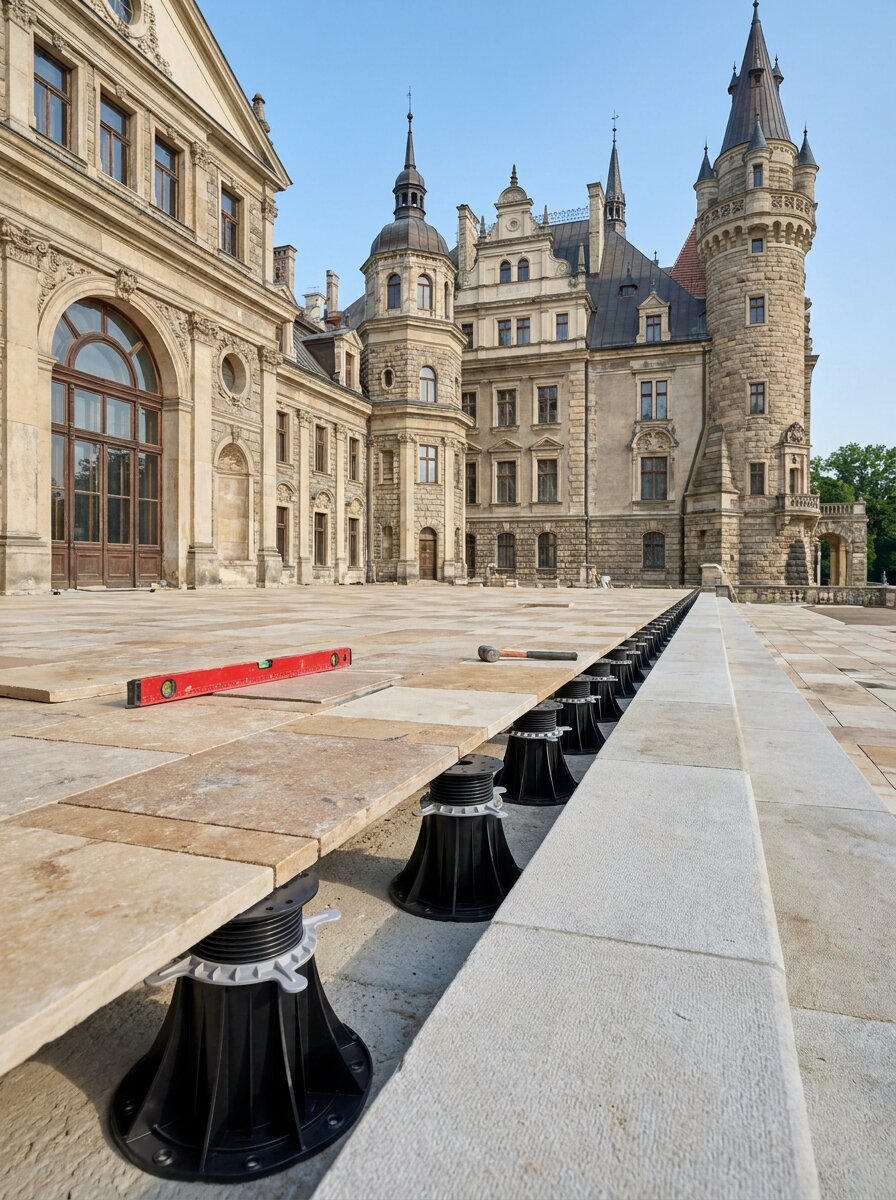
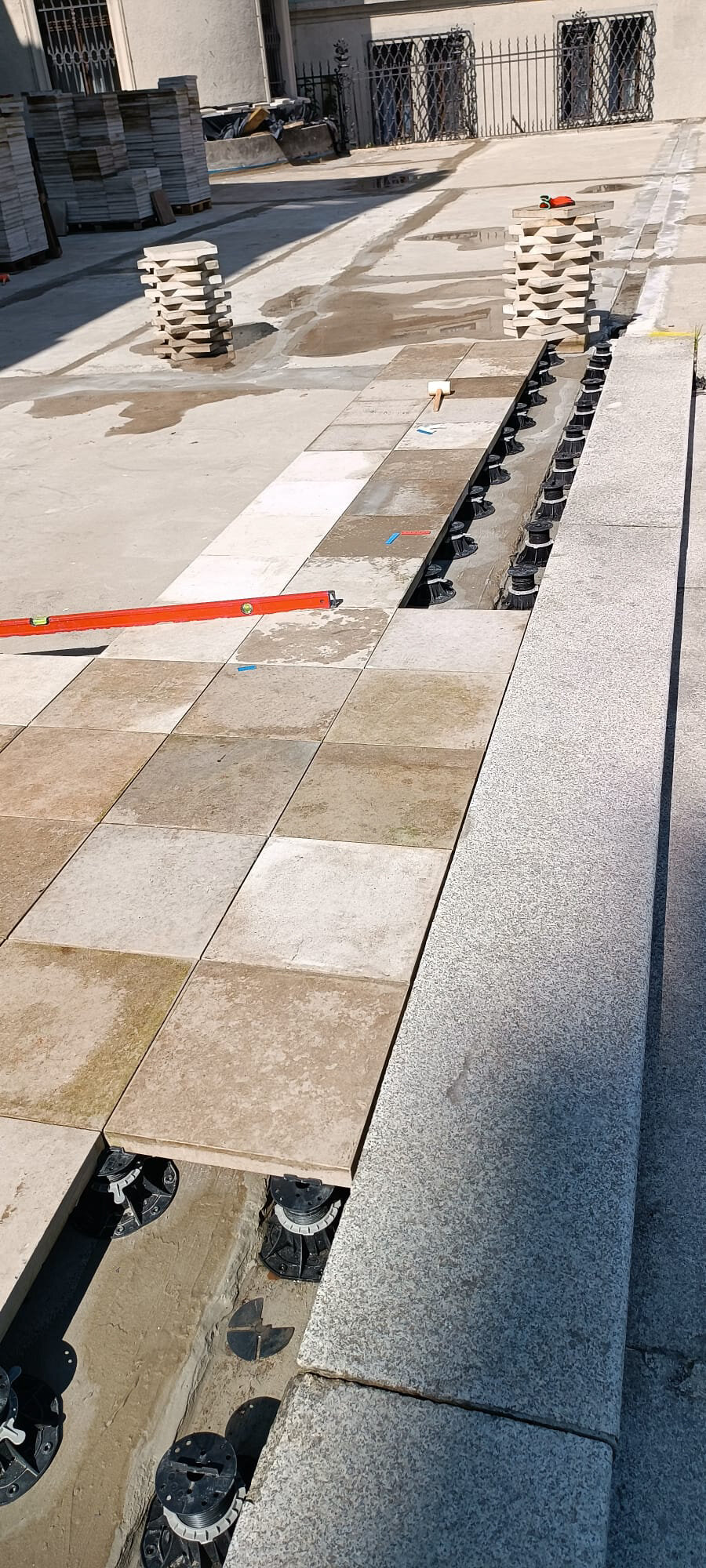
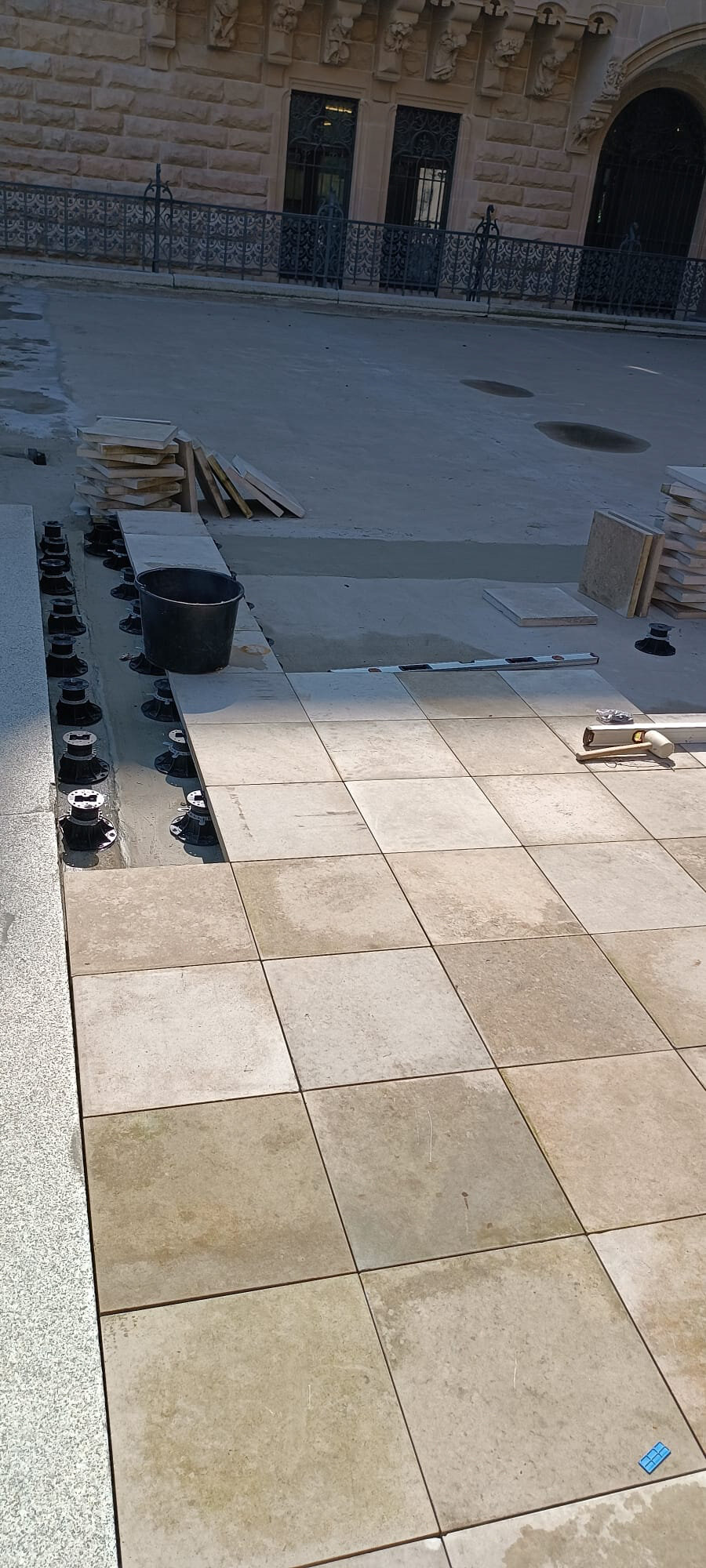
- Integration with existing granite infrastructure: The new terrace surface had to align perfectly, almost surgically, with the massive, historic granite steps (visible in the photos 214 (4) plyty standard.jpg and 214 (7) plyty standard.jpg), creating a safe pedestrian route without architectural barriers.
- High service loads: As a restaurant space, the terrace daily receives hundreds of guests, is intensively used by staff, and is subject to constant point loads from heavy umbrellas, planters with vegetation, and garden furniture.
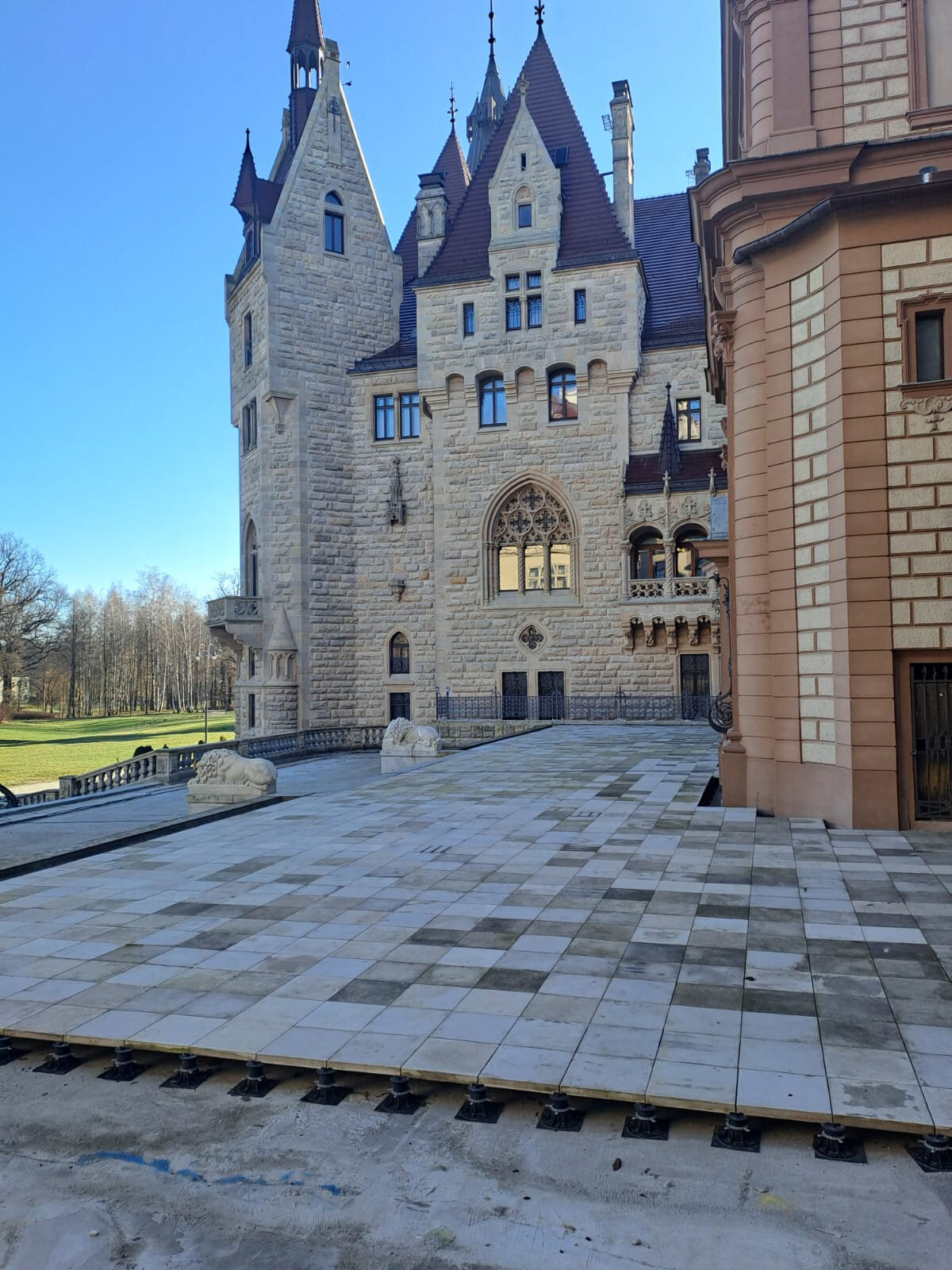
Execution Strategy: Self-Leveling &34;Dry&34; Installation
The choice of raised deck terrace technology proved to be the only logical and absolutely safe solution for this historic building. The space was laid out in a modular system, using terrace pedestals with smooth height adjustment.
Why did this technology work at Moszna Castle?
- Perfect leveling without screeds: The use of pedestals with variable height allowed for the smooth absorption of level differences in the substrate. The photos show how the perfect level of the gres pavers is maintained despite the visible slope of the concrete base.
- Direct alignment with granite: Thanks to the precise, threaded adjustment of the pedestals, the installers achieved a perfect height match between the new flooring and the original granite stair curb. The result was a surface without thresholds, which is crucial for the safety of guests and waitstaff.
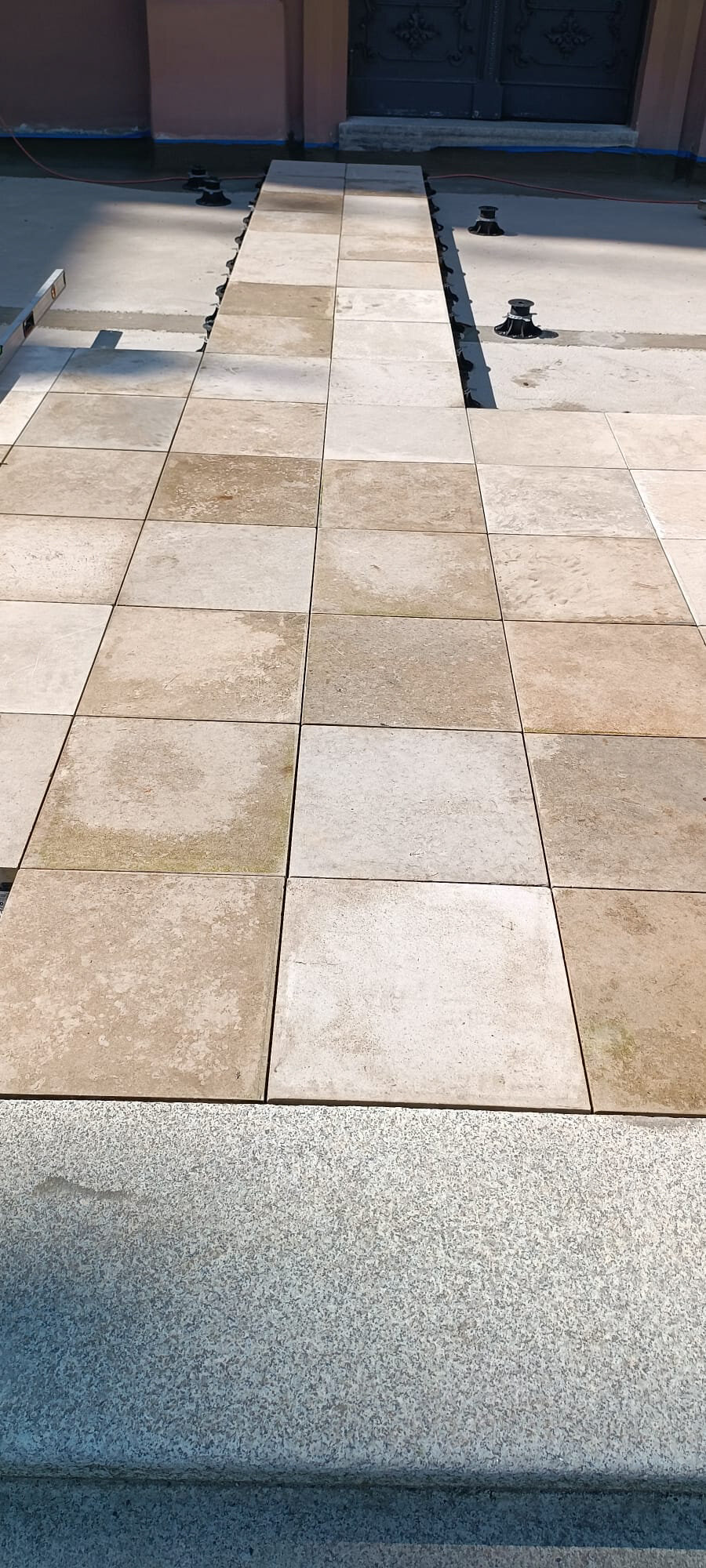
- Natural paver colors: The choice of large-format stone pavers with a melange, sand-beige structure allowed for an aesthetic reference to the historic stone walls of the castle, visually blending the new with the old.
- Reversibility of the process (Conservation Requirement): The entire structure is held solely by its own weight. If any archaeological, installation, or conservation work is needed, the terrace can be dismantled without damaging even a square centimeter of the original substrate.
Result: A space with class and guaranteed durability
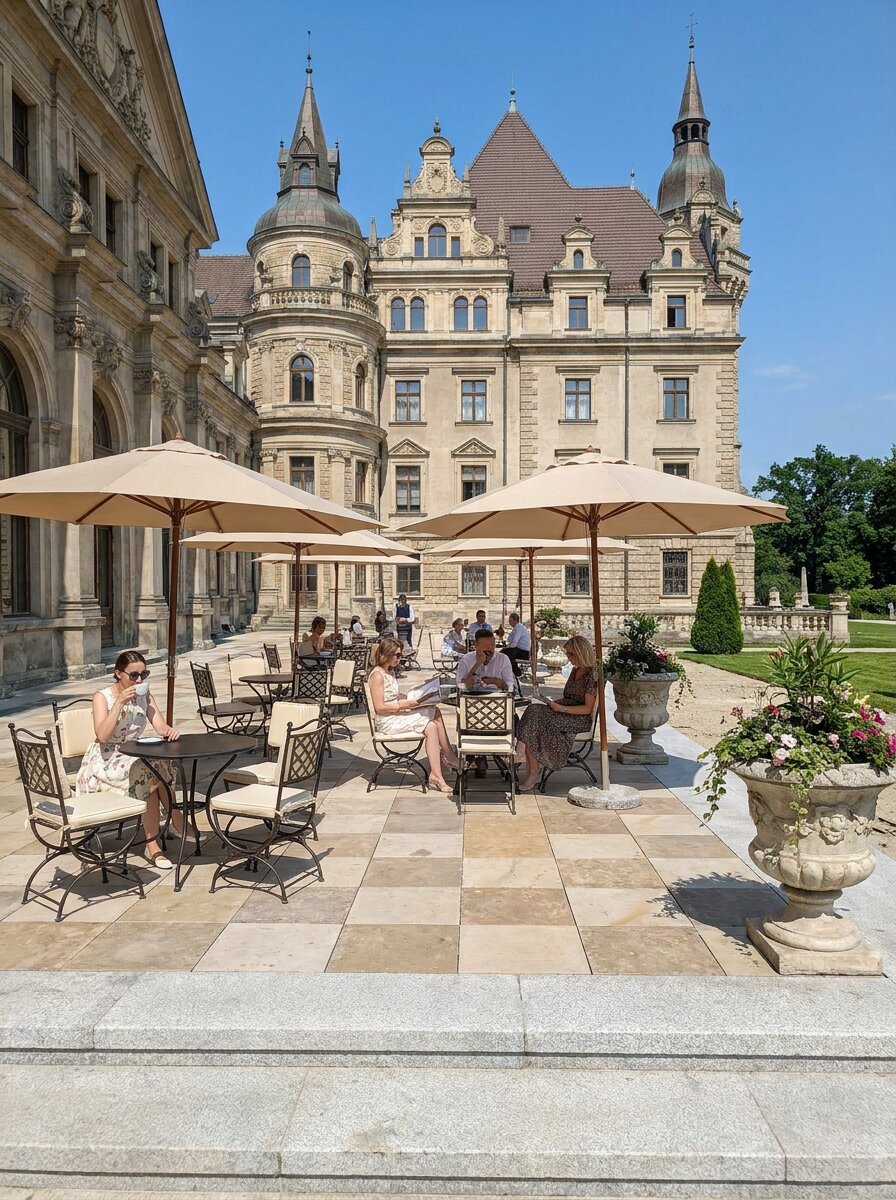
The final effect (shown in the photos) is a luxurious restaurant area that has become one of the favorite spots for visitors to Moszna Castle.
From a technical and functional perspective, the facility has gained:
- Hidden drainage: All gaps between the pavers function as natural drainage outlets. Rainwater immediately disappears from the terrace surface, allowing the café to operate almost immediately after the rain stops.
- Aesthetic concealment of installations: Beneath the paver surface, in the space created by the pedestals, electrical cables for café lighting and other utilities were routed non-invasively, without the need for chiseling into the historic substrate.
- No efflorescence or cracks: Unlike glued terraces, the raised technology completely eliminates the problem of cracking grout, pavers detaching under the influence of frost, or the formation of unsightly white salt efflorescence.
The project at Moszna Castle is a textbook example of how modern construction technology in the raised deck terrace specification can support heritage protection while delivering a fully functional, luxurious usable space.