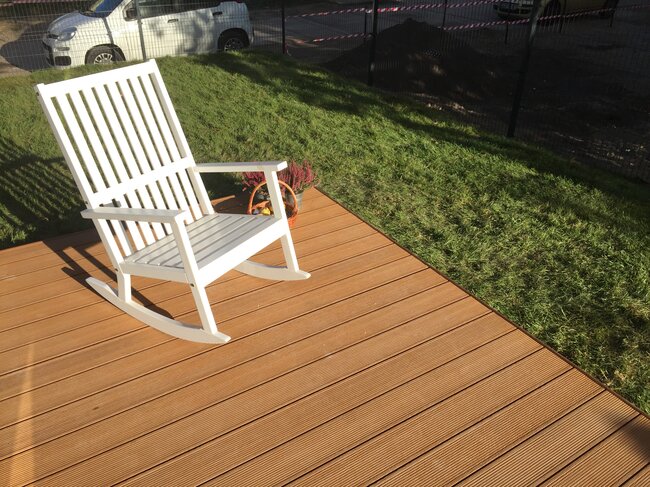
Regardless of whether you are installing heavy concrete pavers, natural stone, or traditional wooden deck boards with heavy garden furniture, understanding load-bearing limits is crucial for a safe and durable project.
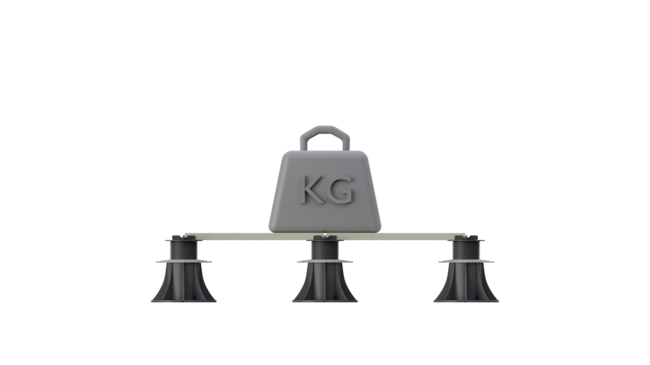
The short answer? A high-quality adjustable pedestal can support approximately 450 to over 1,800 kg (about 1,000 to over 4,000 pounds) per pedestal, depending on its design, material, and installation method. However, the exact load capacity of your terrace support system depends on several key factors.
Here is what determines how much weight an adjustable pedestal can bear and how to assess whether it is the right choice for your structure.
What determines the load capacity of an adjustable pedestal?
Not all pedestal systems are built the same way. As a manufacturer of adjustable pedestals, we design our support systems to withstand rigorous structural requirements, but load capacity depends on the design, materials, and installation context.
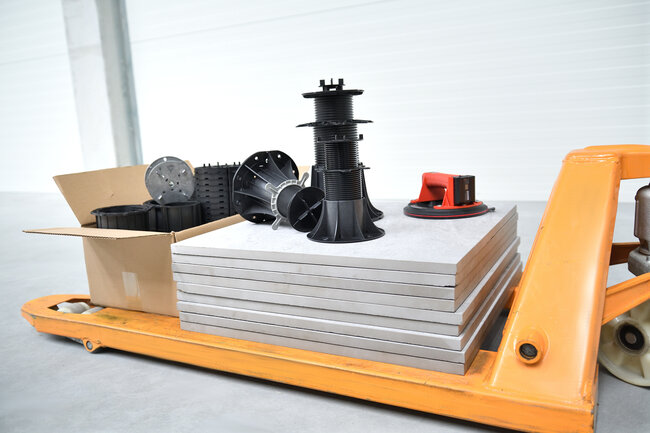
A typical pedestal system works by transferring weight vertically through three key components:
- Pedestal head: Receives the weight from the terrace paver or decking board material and distributes it evenly.
- Threaded column: Provides height adjustment while transferring the downward force.
- Base plate: Rests directly on the substrate (such as concrete or roofing membrane) to spread the weight over a larger area.
1. Material composition
- Polypropylene (PP): Most commercial plastic pedestals are molded from high-density, weather-resistant polypropylene. This material provides exceptional compressive strength, impact resistance, and tolerance to freeze-thaw cycles without loss of properties.
- Aluminum or steel systems: For ultra-heavy-duty structural applications or extreme heights, metal pedestals offer even higher load capacity.
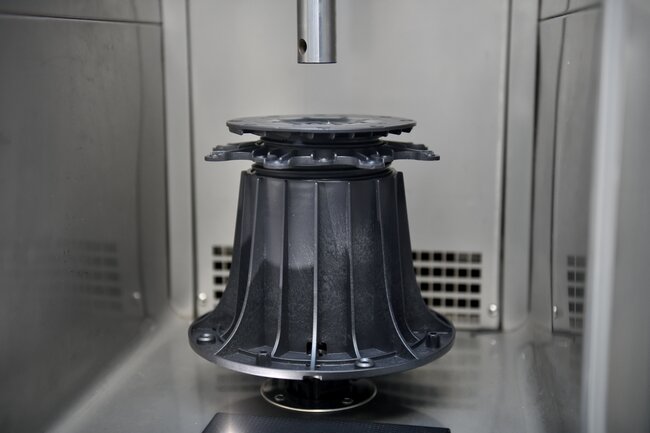
2. Height range and extensions
As an adjustable pedestal is raised higher, its center of gravity changes.
- At lower heights, the pedestal is subjected almost exclusively to a vertical compressive force, which allows it to carry the maximum load.
- At higher extensions (e.g. above 30 to 45 cm), stability becomes the key factor. The use of height couplers, slope correctors, or cross bracing helps maintain full structural integrity at greater heights.
See also: Base slope corrector MAX 8%
3. Load distribution and base plate surface area
A pedestal's load capacity is only as strong as its foundation:
- Head plate: Distributes weight evenly across the corners of four adjacent pavers or supporting joists.
- Base plate: Distributes the total downward load onto the substrate or roof surface below, preventing localized damage or settlement.
Static load vs. dynamic load: know the difference
When assessing load limits, it is important to distinguish between two separate types of loads:
- Static load: This is a constant, immovable weight placed on the terrace over time. Examples include heavy concrete pavers, natural stone, large planters, hot tubs, built-in outdoor kitchens, and heavy terrace furniture.
- Dynamic load: Refers to temporary or moving forces applied during everyday use. Examples include foot traffic, large gatherings, heavy snow accumulation, or strong wind suction forces.
When manufacturing adjustable pedestals, we design them to withstand both everyday static loads and the safety margins needed in dynamic real-world conditions.
How to calculate whether adjustable pedestals are suitable for your project
To determine whether the adjustable pedestal system will support the intended terrace load, perform this simple 3-step assessment:
Step 1: Calculate the dead load of your deck
Find the total weight of the surface material per square foot:
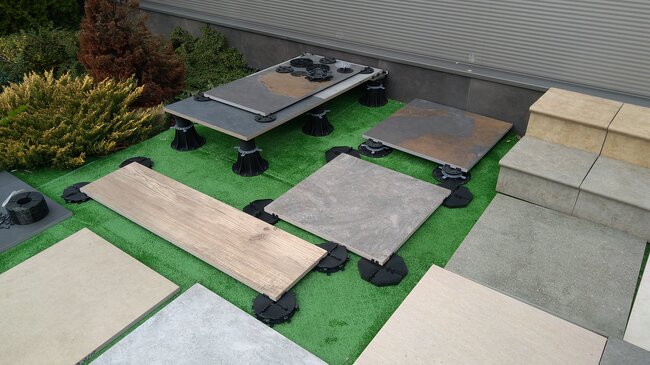
- Concrete pavers: The heaviest option, weighing approximately 22 to 30 pounds per square foot (107.4 to 146.5 kg/m²).
- Natural stone (granite/sandstone): A heavy natural material, at approximately 15 to 25 pounds per square foot (73.2 to 122.1 kg/m²).
- Porcelain pavers: A medium-weight option, ranging from 9 to 12 pounds per square foot (43.9 to 58.6 kg/m²).
- Wood / composite decking: The lightest surface option listed, weighing approximately 3 to 8 pounds per square foot (14.6 to 39.1 kg/m²).
Step 2: Estimate the live load and equipment
Add the estimated maximum live load (furniture, snow, people, and specialized equipment such as hot tubs or kitchens). Standard building codes for residential buildings often require a live load capacity of 40 pounds per square foot or 195.3 kg/m², while commercial spaces may require 60–100+ pounds per square foot or 292.9–488.2+ kg/m².
Step 3: Determining pedestal spacing
Calculate how many pedestals will support the given surface area.
- A standard 2x2 foot paver layout requires one pedestal per 4 square feet or one pedestal per every 0.37 square meters, which corresponds to a density of approximately 2.7 pedestals per square meter (since each pedestal supports four adjoining corners).
- If your total combined load (dead load + live load) is 50 pounds per square foot or 22.7 kg/m², each pedestal only needs to carry approximately 200 pounds or 90.7 kg under normal operating conditions, far below the thousands-of-pounds strength limit of a high-quality terrace pedestal!
Key benefits beyond strength alone
Load-bearing capacity is important, but it is not the only reason why adjustable pedestals are widely used in modern terrace architecture:
- Slope correction: Integrated slope regulators compensate for roof falls or uneven substrates (up to 5% or more), keeping the top surface perfectly level.
- Improved drainage and ventilation: Raised terrace surfaces leave open gaps, allowing rainwater to drain quickly to the substrate below while promoting airflow that prevents mould and rot.
- Concealed installations: The void space beneath the terrace creates a convenient place to route pipes, wiring, or irrigation lines out of sight.
Verdict: Will They Hold Up Your Deck?
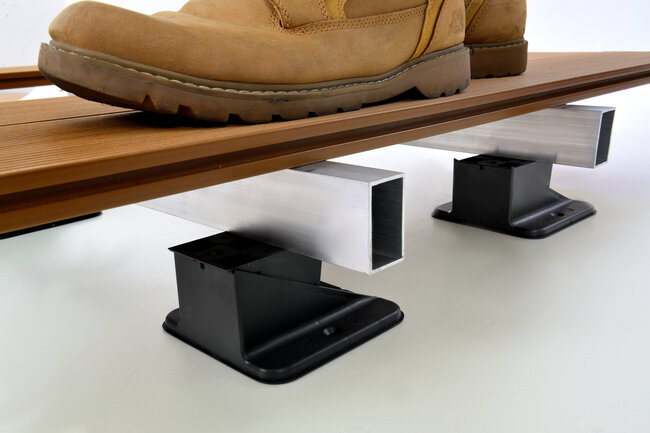
For nearly all standard decking applications in residential and commercial construction, from heavily trafficked rooftops to backyard patios, adjustable pedestal systems offer more than sufficient structural load capacity.
When correctly selected according to the manufacturer's load tables and installed on a solid, stable substrate, a foundation of adjustable pedestals provides a safe, durable, and maintenance-free deck for many years.