


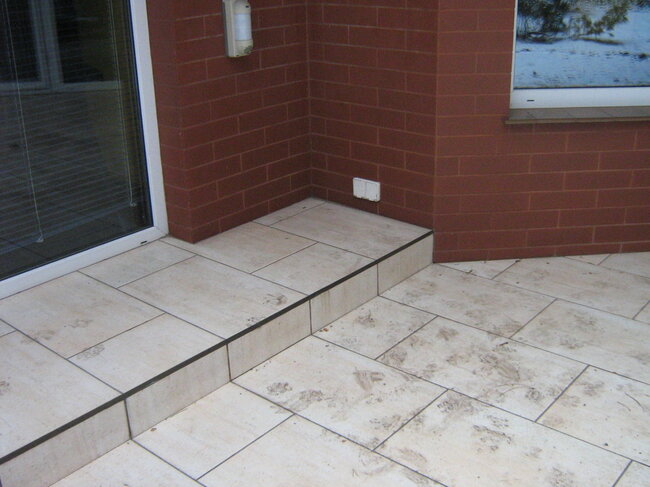
What is the difference between a raised deck terrace and a traditional terrace
In traditional bonded terraces, pavers are permanently bonded to the substrate using adhesive mortars. This type of construction is particularly sensitive to:
- standing water,
- frost and freeze-thaw cycles,
- movement of materials and the building structure.
Learn more:
→ See also: Elevated terrace vs traditional glued terrace
What elements make up a raised deck terrace
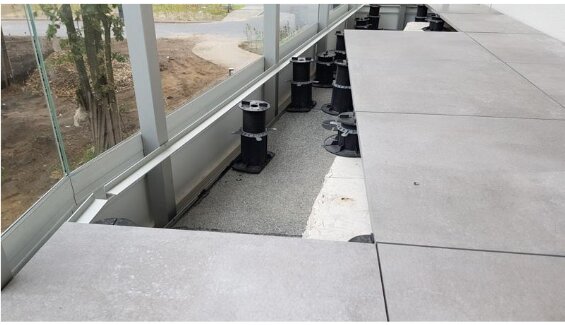
A raised deck terrace is not a single element, but rather a complete system of products working together, which includes:
- terrace pedestals (adjustable or fixed)
- optional substructure (e.g., aluminum joists or frame systems)
- stable substrate
- installation accessories and protective elements
- surface finishing material (pavers, boards, or other solutions)
Each of these elements performs a specific function and affects the durability, stability, and safety of the entire structure.
You can find a detailed description of the system here:
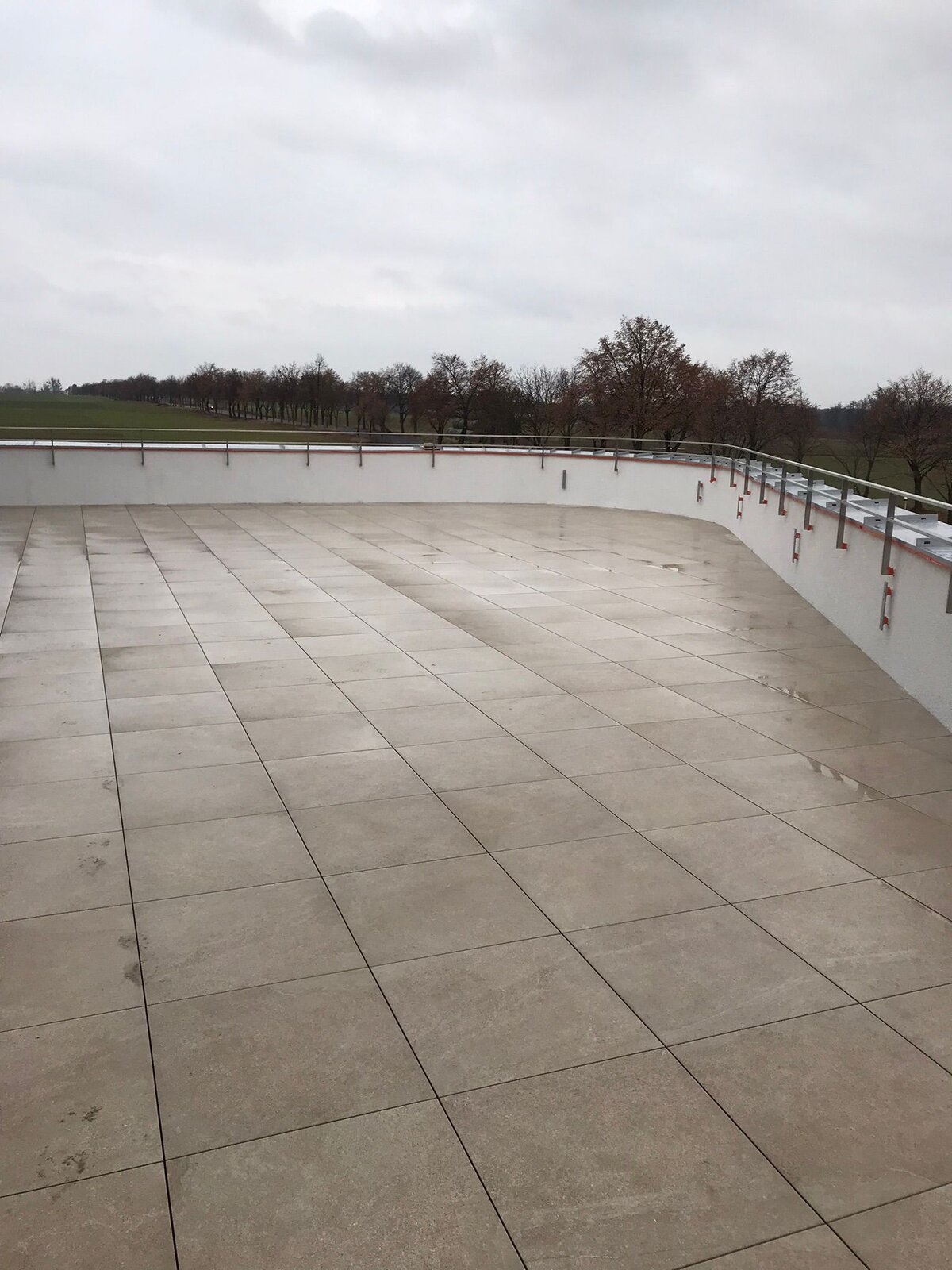
Where raised deck terraces are used
Raised deck terrace technology is used in many types of projects, including:
- on residential terraces,
- on balconies and loggias,
- on roof terraces,
- in commercial and public buildings,
- in fountains,
- on technical terraces and in service areas.
In practice, raised deck systems are the standard in projects where speed of installation, quality control, long-term performance, and the ability to make repairs without dismantling the entire surface are key.
The use of raised deck terraces largely depends on the awareness of designers in a given market. If architects are aware of the disadvantages of traditional glued terraces and know the raised deck terrace technology, they usually recommend its use in their projects.
We discuss application examples in more detail here:
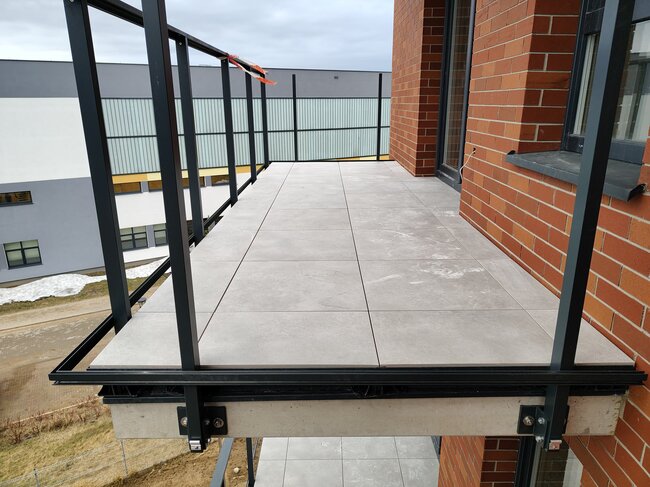
Why a raised deck terrace is a system solution
A raised deck terrace should be treated as a technical and design solution, not merely an aesthetic surface finish. Its advantages stem from:
- the ability to carry heavy loads - up to 2000 kg per single pedestal
- protection of the waterproofing layer
- the ability to level the walking (upper) surface independently of the substrate's slopes
- service access throughout the entire service life
- no permanent connection to the building
For this reason, raised deck terraces are particularly valued by designers, contractors, and investors undertaking professional projects.
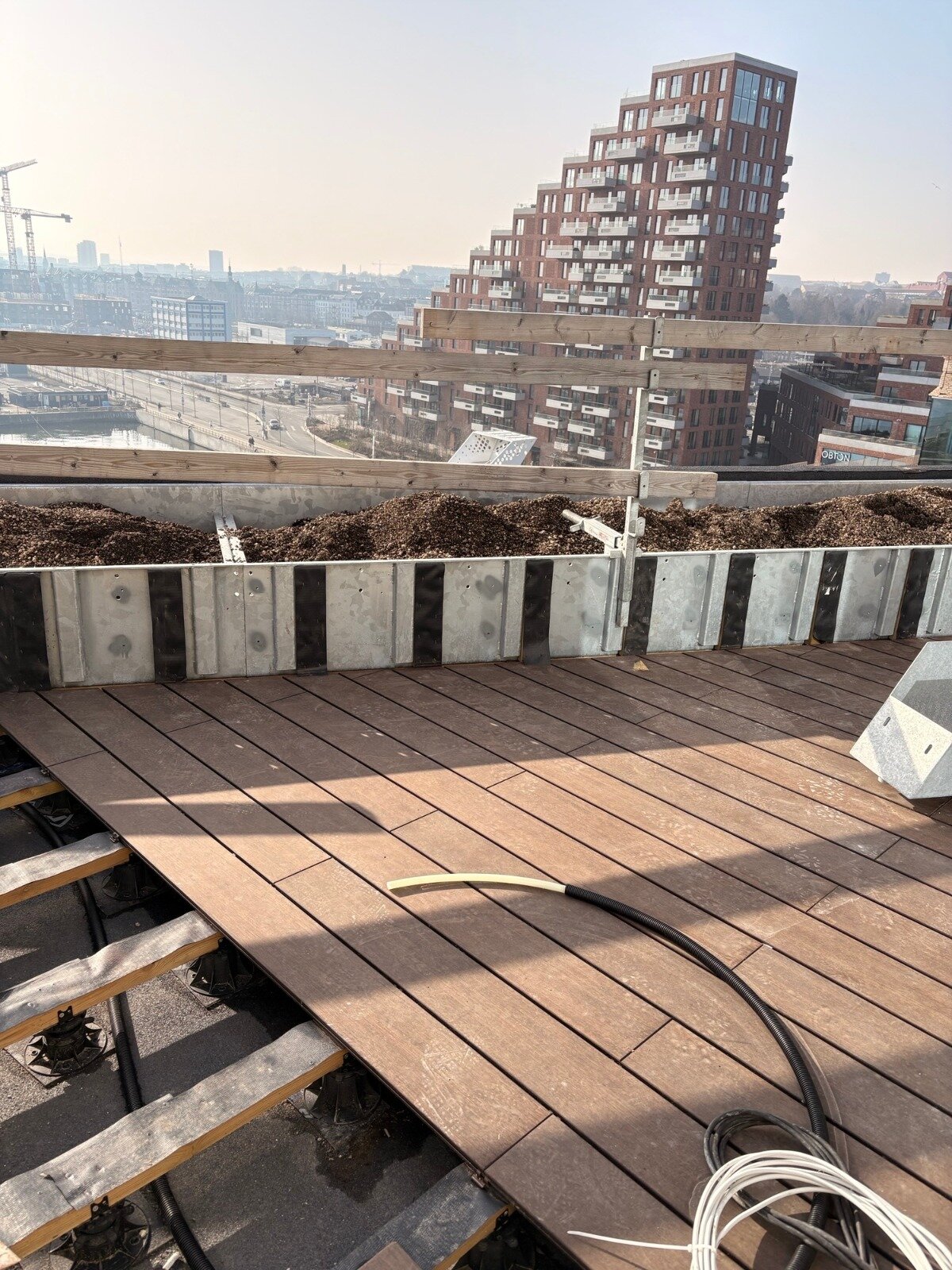
What you should know before choosing a raised deck terrace
Although raised deck terraces offer many benefits, they require:
- proper design,
- selection of appropriate system components - using products from proven and trusted manufacturers,
- following the manufacturer's guidelines
They are not a universal solution for every application, which is why each project should be analyzed individually in terms of loads, height, and technical conditions.
You can read about design principles and limitations here:
→ See also: Designing a raised deck terrace - key principles and guidelines
What's next?
If you already know what a raised deck terrace is, the next step is to understand how exactly such a system works and what technical solutions stand behind its durability.
Continue reading: