


The raised deck terrace system is based on point support of the surface and on separating the usable layer from the building's structural layers. Thanks to this, the terrace surface is not permanently bonded to the substrate, and the entire structure can function in a controlled manner despite the effects of water, frost, temperature, and the natural movement of materials.
The operating principle of a raised deck terrace results directly from its construction and the interaction of the individual system components.
Point support of the surface on pedestals
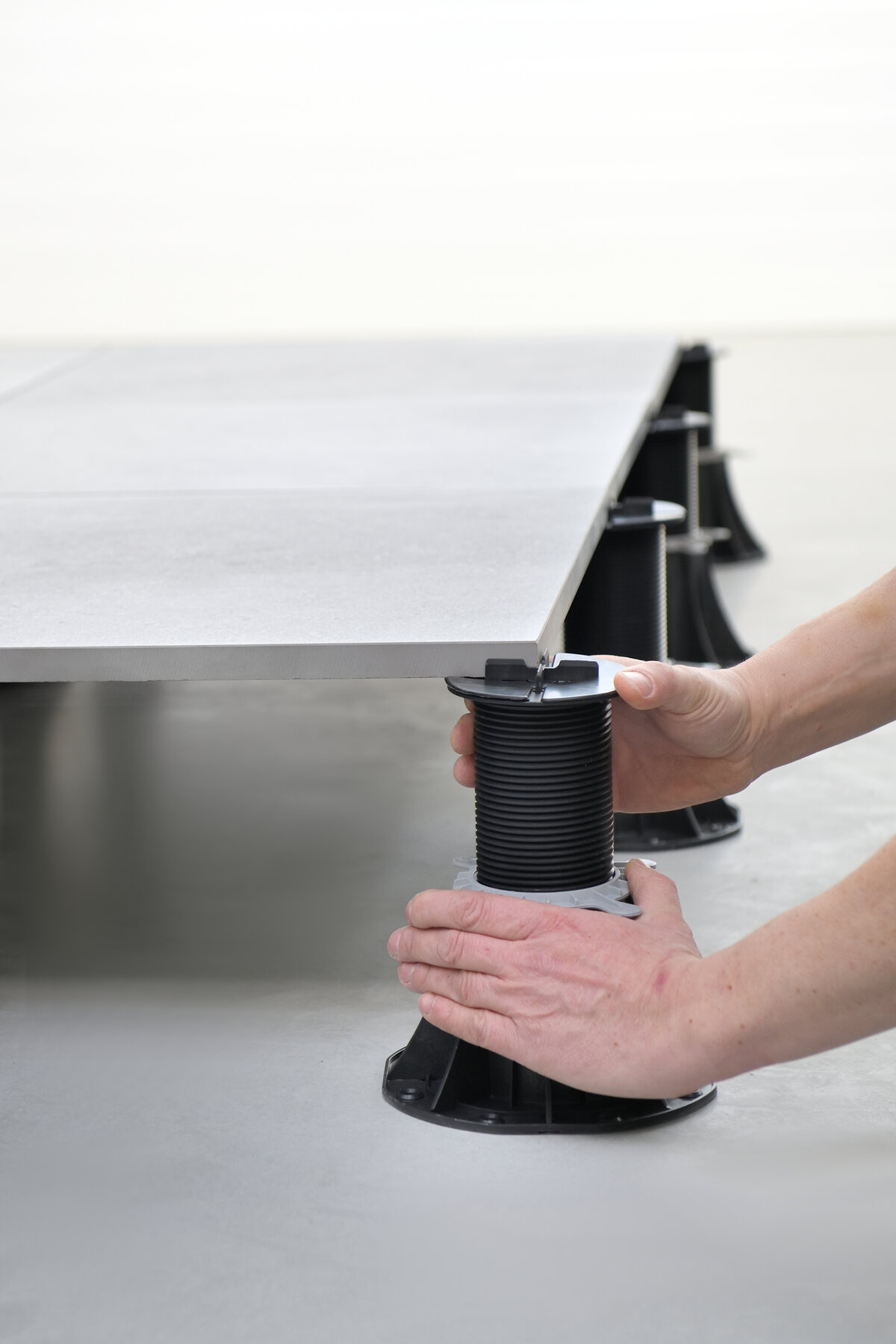
The basis of how a raised deck terrace works is the point support of pavers or boards on pedestals, rather than permanently gluing them to the substrate. Each element of the surface transfers loads to the pedestal and then to the structural substrate.
This solution primarily allows the "movement" of construction materials, including building settlement and the expansion and contraction of terrace pavers. This limits the formation of stress on the terrace surface, which increases resistance to cracking and detachment. That is why proper expansion joints are so important.
If you want to learn the basic definition of the technology:
Free water drainage beneath the surface
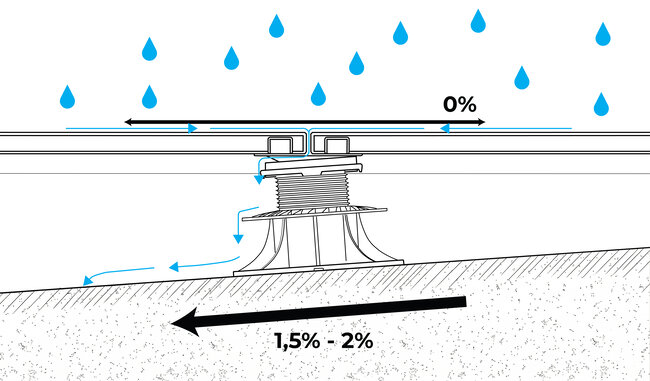
In a raised deck terrace, rainwater does not accumulate in the surface layers, but flows directly to the drainage system (gutters, drains) over the waterproofing membrane. The gaps between pavers or boards allow for its rapid removal according to the substrate's slopes.
Thanks to this:
- water does not pool under the pavers
- water does not remain on the boards or pavers
- the waterproofing membrane is not exposed to prolonged moisture (the building's structural elements are protected)
- the risk of frost damage is reduced
More about water and moisture management:
→ See also: Drainage of a raised deck terrace - how does it work and how to do it correctly?
Ventilation space and air circulation
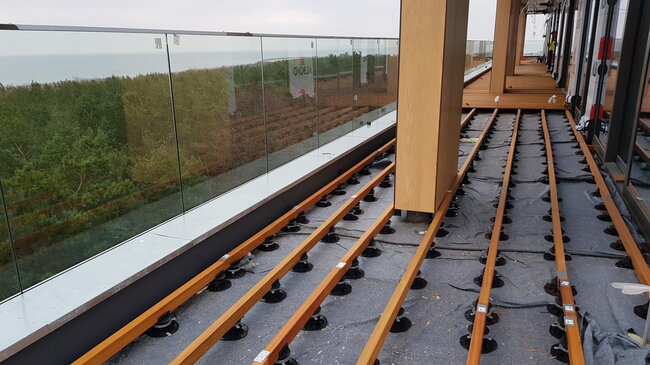
The space between the surface and the substrate serves as a ventilation zone, which enables air circulation under the terrace. This is crucial for draining any moisture from the terrace, allowing the structural layers to dry faster. This is particularly important to limit the growth of mold and material degradation.
An additional advantage of the void between the terrace surface and the substrate is:
- Acoustic insulation (especially useful for terraces on roofs or above living spaces)
- Better thermal insulation
- Lightweight construction (no adhesives or wet mortars)
Ventilation primarily ensures that the terrace does not create a closed moisture system, characteristic of traditional glued terraces.
Compensation of substrate unevenness and slopes
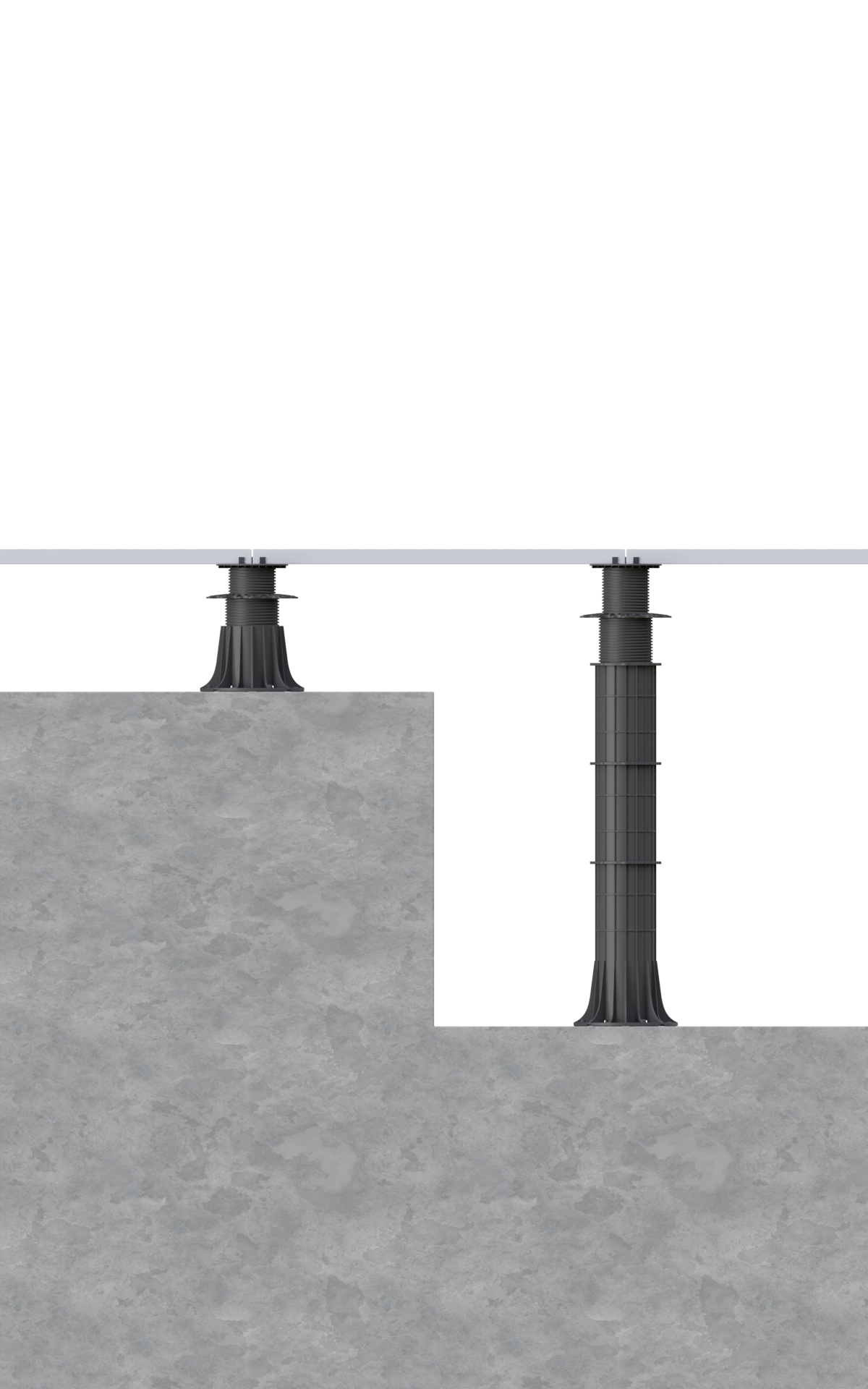
Adjustable pedestals allow for precise leveling of the surface, regardless of slopes and unevenness of the substrate. This means that:
Slopes necessary for drainage remain in the structural layer (substrate), so the usable surface can be perfectly level, raised to the required height, e.g., flush with the door threshold.
Such a solution significantly simplifies the design and construction of the terrace.
We discuss the design principles here:
→ See also: Designing a raised deck terrace - key principles and guidelines
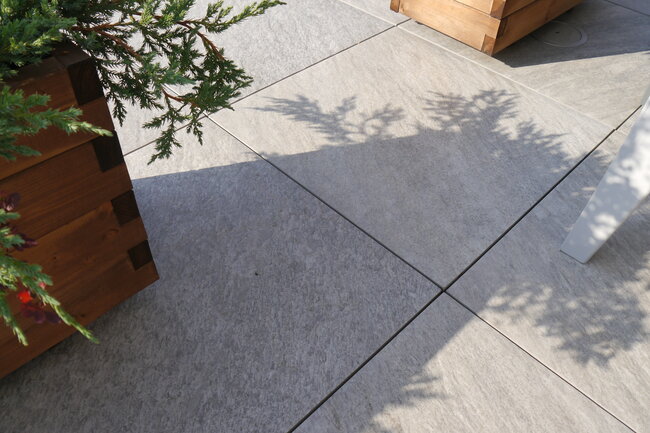
Expansion joints and controlled material movement
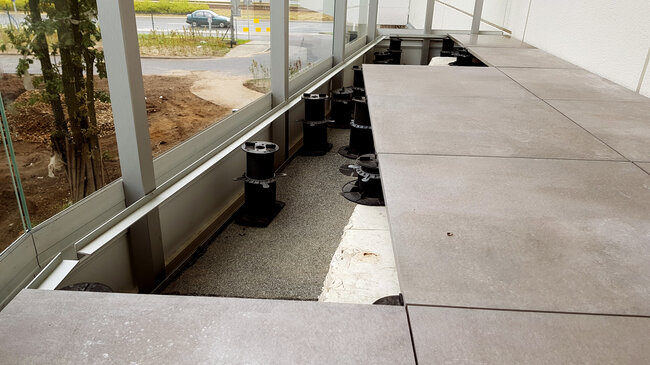
The lack of permanent adhesive connections allows the pavers, boards, and structural elements to move freely under the influence of temperature changes.
This primarily protects the building and materials, but it is important to remember the expansion joints that allow the individual layers of the terrace to work.
This is one of the key mechanisms that increases the durability of a raised deck terrace.
Service access to layers beneath the terrace
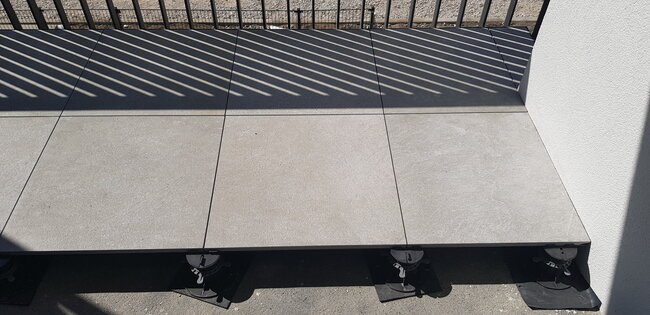
One of the key features of a raised deck terrace is the ability to selectively dismantle the surface. This allows for:
- inspection of the waterproofing condition
- access to technical installations
- repairs of individual elements without damaging the entire structure
Thanks to this, a raised deck terrace remains a functional solution even over a long period of use.
How the system components work together
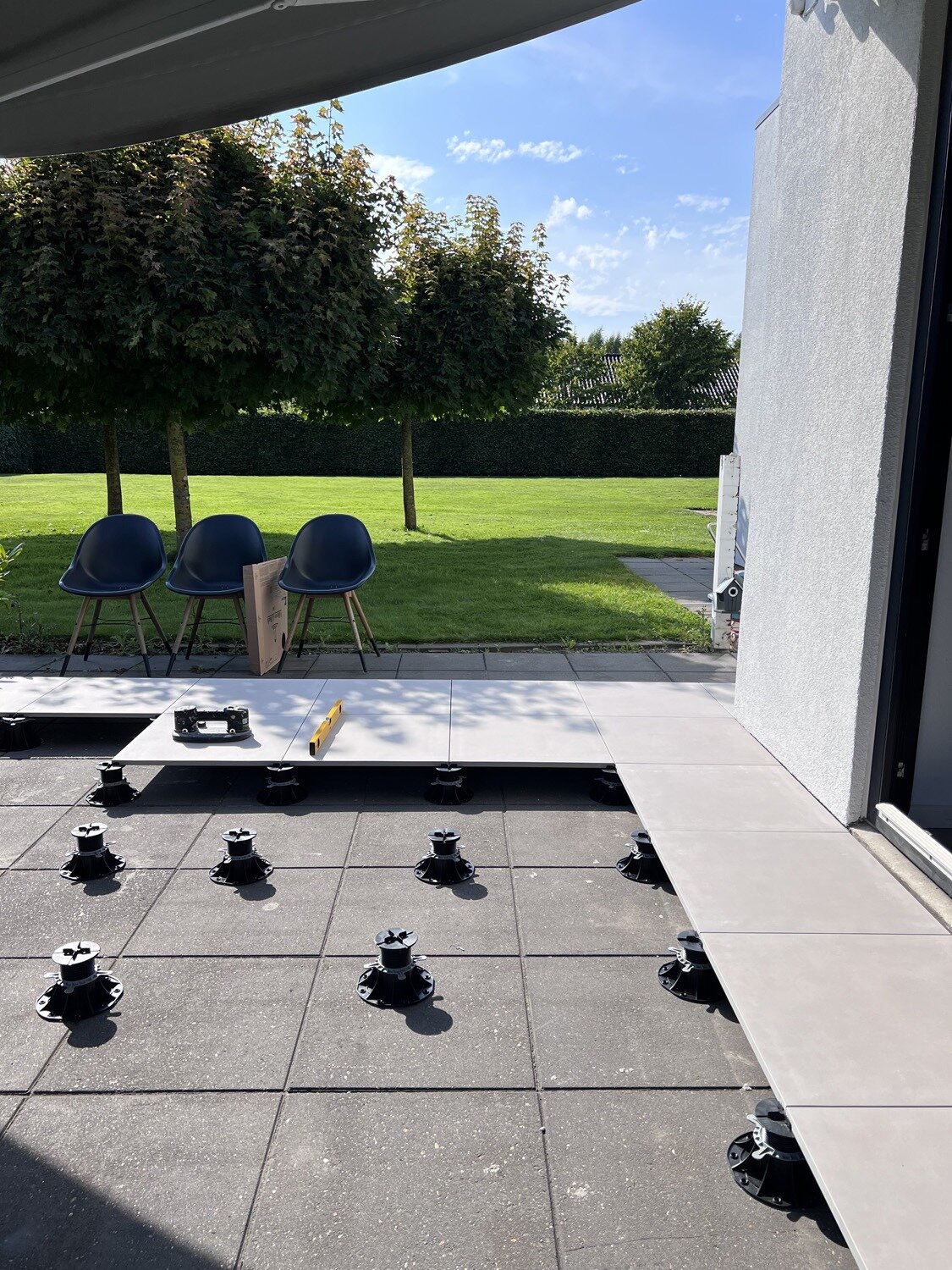
The proper functioning of a raised deck terrace results from the cooperation of all system components, such as:
- adjustable pedestals or support pads of fixed height
- the substructure, i.e., the base on which the pedestals are placed
- protective elements (rubber shims, up to wall clips)
- the usable surface - made of pavers or joist-supported decking boards
Each of these components serves a specific function, and only their proper selection allows for a durable and safe structure.
What's next?
If you already understand how a raised deck terrace works, the next step is to learn about:
- system components → Raised deck terrace system components
- applications of raised deck terraces → Raised deck terrace applications
- limitations and permissible loads →Loads and load-bearing capacity of a raised deck terrace - what is worth knowing?