


Why does wind lift terrace pavers?
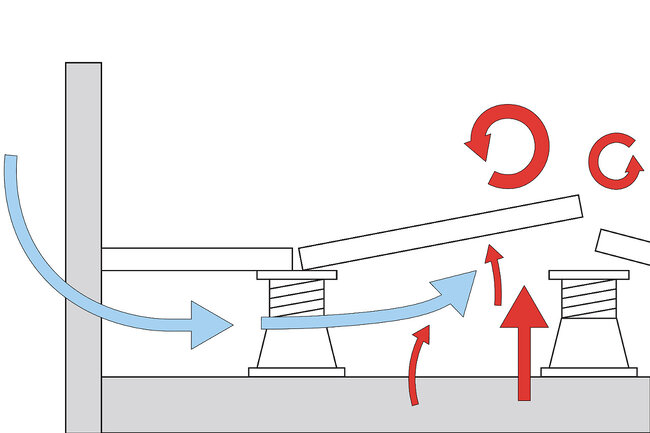
Wind lifting pavers is a phenomenon resulting from a difference in pressure.
Wind flowing around a building creates negative pressure above the terrace surface, which generates an uplifting force (the so-called wind uplift).
The most vulnerable to paver uplift are:
- building corners
- terrace edges
- high roofs
- open spaces (without protection)
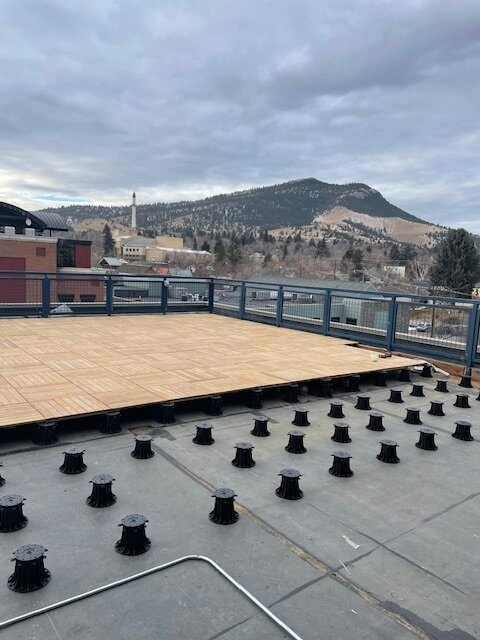
Therefore, if the terrace is located on a high floor of a building where there is a risk of strong winds, it is worth additionally securing the terrace.
If you want to understand the basics of how the structure works:
Which areas of the terrace are most exposed to paver uplift?
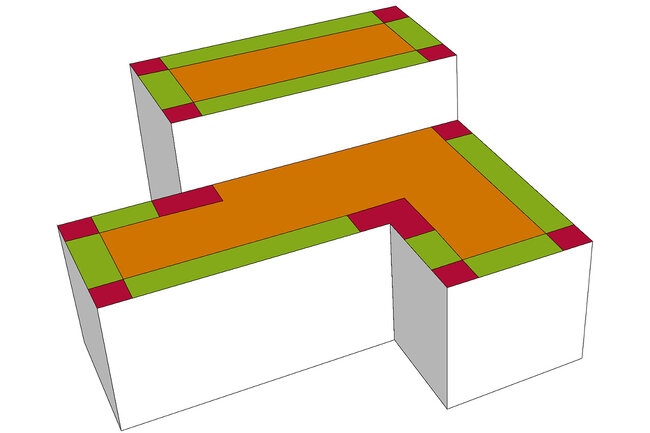
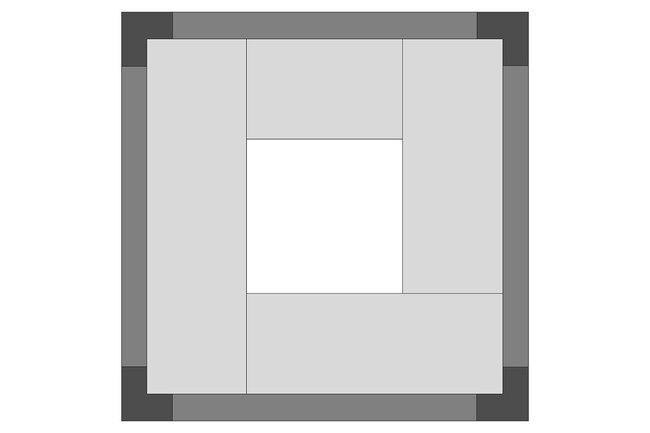
Not every part of the terrace is equally exposed to wind action. In design, three zones are distinguished:
- central zone (safest - brown)
- edge zone - green
- corner zone (greatest loads - red)
In corner zones, suction forces can be even several times greater than in the center of the terrace. It is worth taking this into account when preparing the design.
Accessories protecting raised deck terraces against paver uplift
There are several solutions to the problem of pavers being lifted by wind, one of which is the use of terrace accessories that have been specially designed to effectively protect the system.
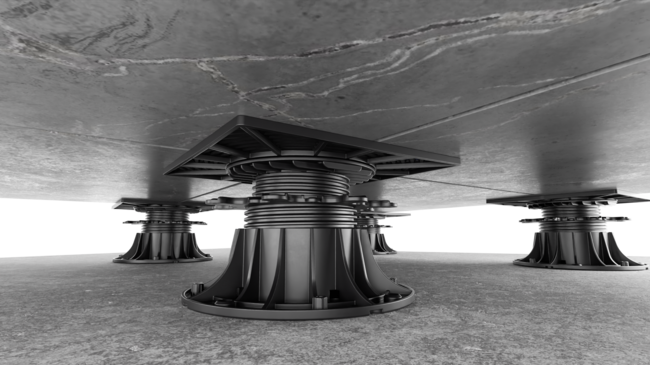
The Windgrip system, which connects the pedestal to the paver using an additional adhesive
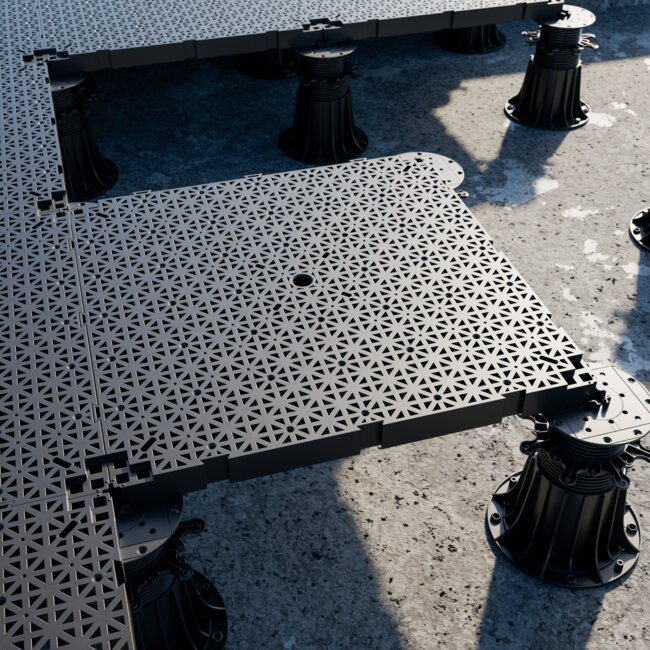
Additional substructure of the system in the form of DeckSafe grid
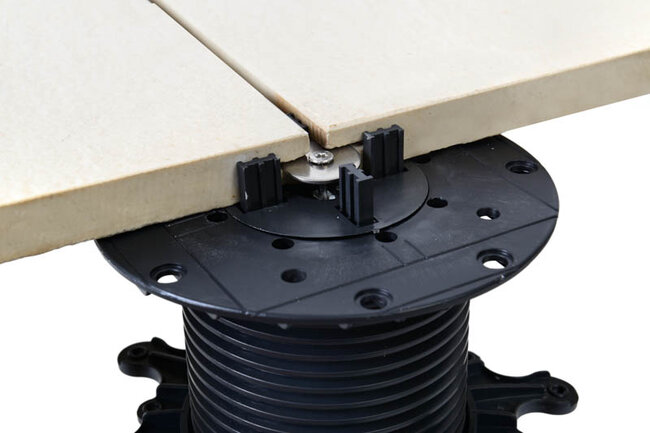
Former windproof system with paver notching
Additional protections used to limit wind uplift of the terrace
In addition to system accessories, additional protections can be used, such as:
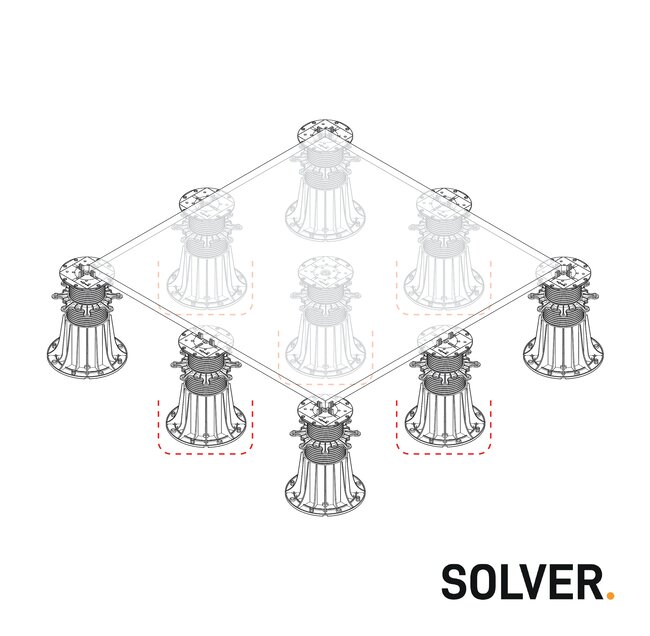
1. Increasing the number of support points (pedestals)
Arranging more pedestals:
- under the center of the paver,
- at the edges,
- in corner zones.
The effect is greater stability, better load distribution, and less empty space under the pavers.
2. Limiting airflow under the terrace
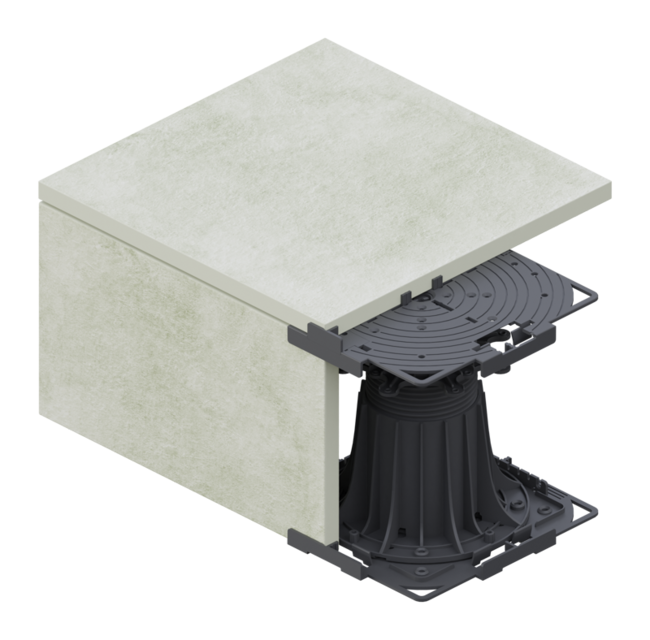
Securing the edges of the terrace by installing side finishing closure plates or elements covering the sides of the terrace.
This reduces the "suction" effect of air under the pavers.
installation video
3. Structural load (additional ballast)
In some cases, the weight of the system is increased, which is a fairly simple solution, however it should not be used as the primary safeguard. Additional loads may include:
- thicker pavers (e.g., 5 cm),
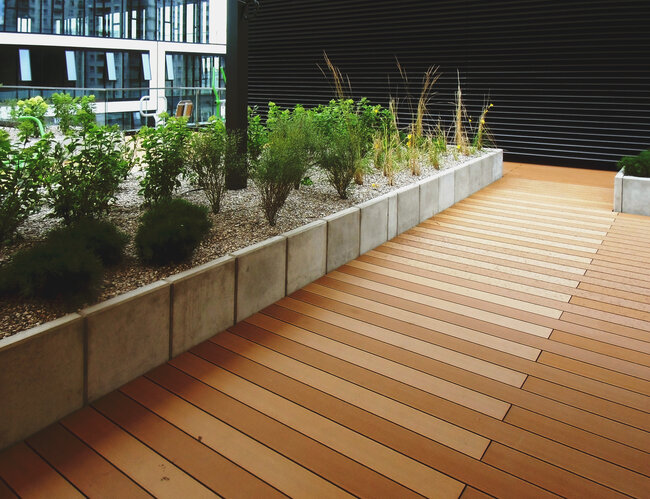
- additional loads, e.g., planters
- heavy elements of small architecture
Pedestals and wind resistance
Terrace pedestals also matter:
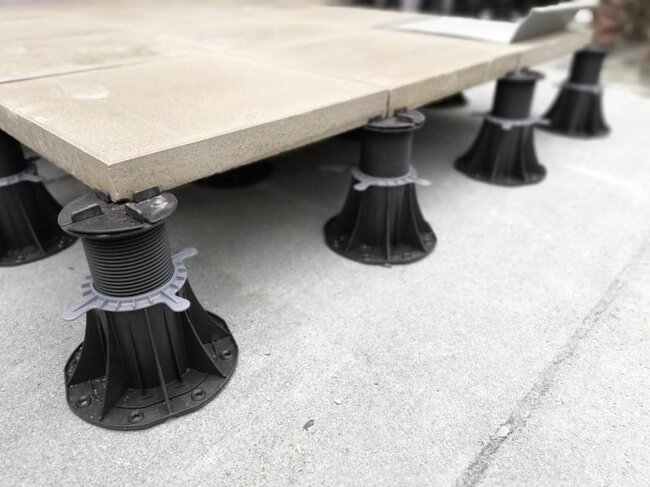
- larger base &61; greater stability,
- possibility of anchoring to the ground,
- compatibility with locking systems.
Therefore, the selection of a pedestal should take into account not only the height, but also wind conditions.
→ See also: Adjustable terrace pedestals - application, construction and selection rules
Designing a Wind-Resistant Terrace
When designing skyscrapers or tall buildings, the impact of wind on the structure is always taken into account. Therefore, when designing terraces, the following are considered:
- the local wind zone
- the height of the building
- wind exposure
- the size and format of the pavers

Most common mistakes
- lack of protection in corner zones,
- using only the weight of the pavers as protection
- lack of additional supports for large formats
- ignoring the building height
- lack of wind condition analysis
Summary
Securing a raised deck terrace against wind is a key element of the system in projects that are exposed to strong wind, particularly in projects such as:
- roof terraces
- high-rise buildings
- open spaces
Wind conditions should be considered at the design stage, if you want to know more:
See also: Designing a raised deck terrace - key principles and guidelines