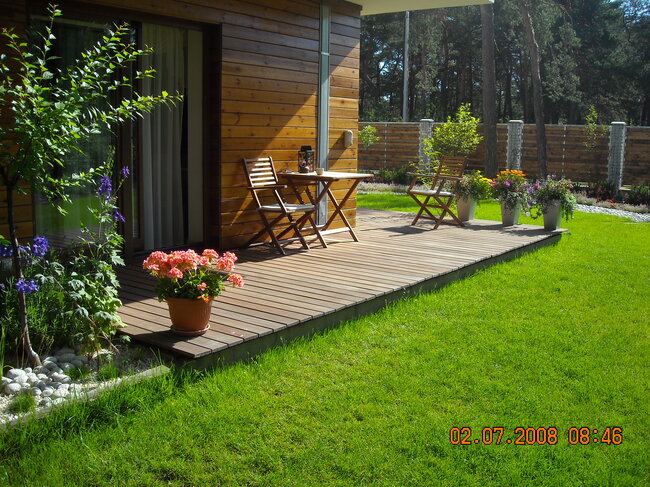
Accessories for pedestals play an important role in the functioning of a raised deck terrace. They help installers adjust height, improve stability, support various surface materials, and create clean edges and transitions.
However, not every project requires the same accessories. A terrace with porcelain pavers has different requirements than a wooden terrace. A low garden terrace requires a different solution than a raised rooftop terrace.
So how do you choose the right accessories?
The best approach is to first analyze the installation conditions and then select accessories that solve the specific requirements of a given location.
1. Start with the installation conditions
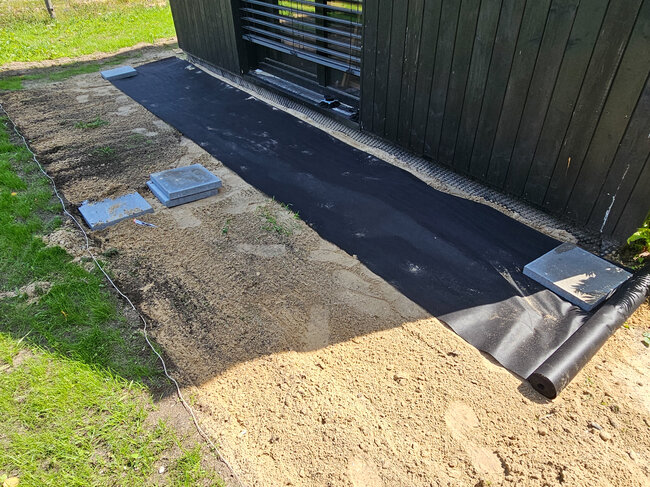
Before choosing accessories, take a close look at the surface on which the pedestal system will be installed. The substrate, target height, expected load and drainage conditions all influence which components you need.
Here are six factors worth checking.
Condition of the substrate
Is the installation taking place on concrete, an existing terrace, compacted ground or a waterproofed roof? A stable concrete slab usually provides a more predictable base than soil or an uneven outdoor surface. A softer or less stable substrate may require additional preparation or an appropriate load-distribution solution.
Expected load
Think about what the surface will be carrying. A residential terrace with occasional foot traffic has different requirements than a commercial roof with garden furniture, planters or maintenance equipment.
Required installation height
Measure the difference between the substrate and the target surface. This helps determine whether standard pedestals are sufficient or whether extensions are necessary.
Drainage and water runoff
Raised deck terrace systems often allow water to drain beneath the target surface. Accessories should not disrupt drainage paths or create unwanted obstructions.
Surface material
Porcelain pavers, natural stone, wooden decking and composite boards require different support solutions. The accessory must match the material and the pedestal configuration.
Appearance of the finish
Take into account exposed edges, corners, steps and connections to doors or existing paving. These areas often require more attention than the main surface.
As a manufacturer of adjustable pedestals, we recommend checking these conditions before selecting individual accessories. It is easier to plan a complete support system at the outset than to correct problems after installation.
2. Leveling shims: for correcting minor height differences
Even a well-prepared substrate can have minor height differences. These differences can cause uneven seating of terrace pavers or slight movement underfoot.
Leveling shims help correct minor height differences and improve contact between support elements.
When should they be used?
- When the substrate has minor surface irregularities.
- When individual pavers require minor height adjustments.
- When additional precise leveling is required during installation.
- When the installation requires a more consistent finished surface.
For example, imagine installing 600 × 600 mm porcelain tiles on an existing concrete terrace. Most of the substrate is level, but one section has a slight difference. An appropriate leveling shim can help correct this difference without changing the height of the entire installation.
What happens when the wrong shim is used?
A shim that is too thick or incorrectly placed can cause uneven support. Using unsuitable materials can also affect stability or durability.
As a manufacturer, we design pedestal accessories to work with specific pedestal components. Always check the recommended shim thickness, material, and compatibility before combining products from different systems.
Remember that shims are for precise adjustments. They do not replace correcting serious substrate problems.
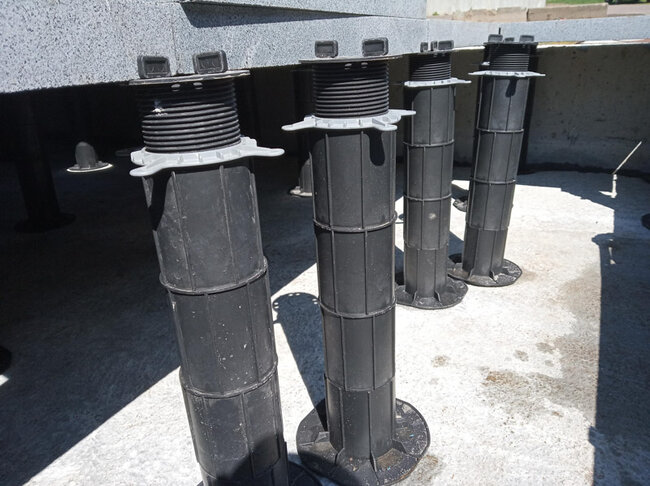
3. Pedestal extensions: when standard height is not enough
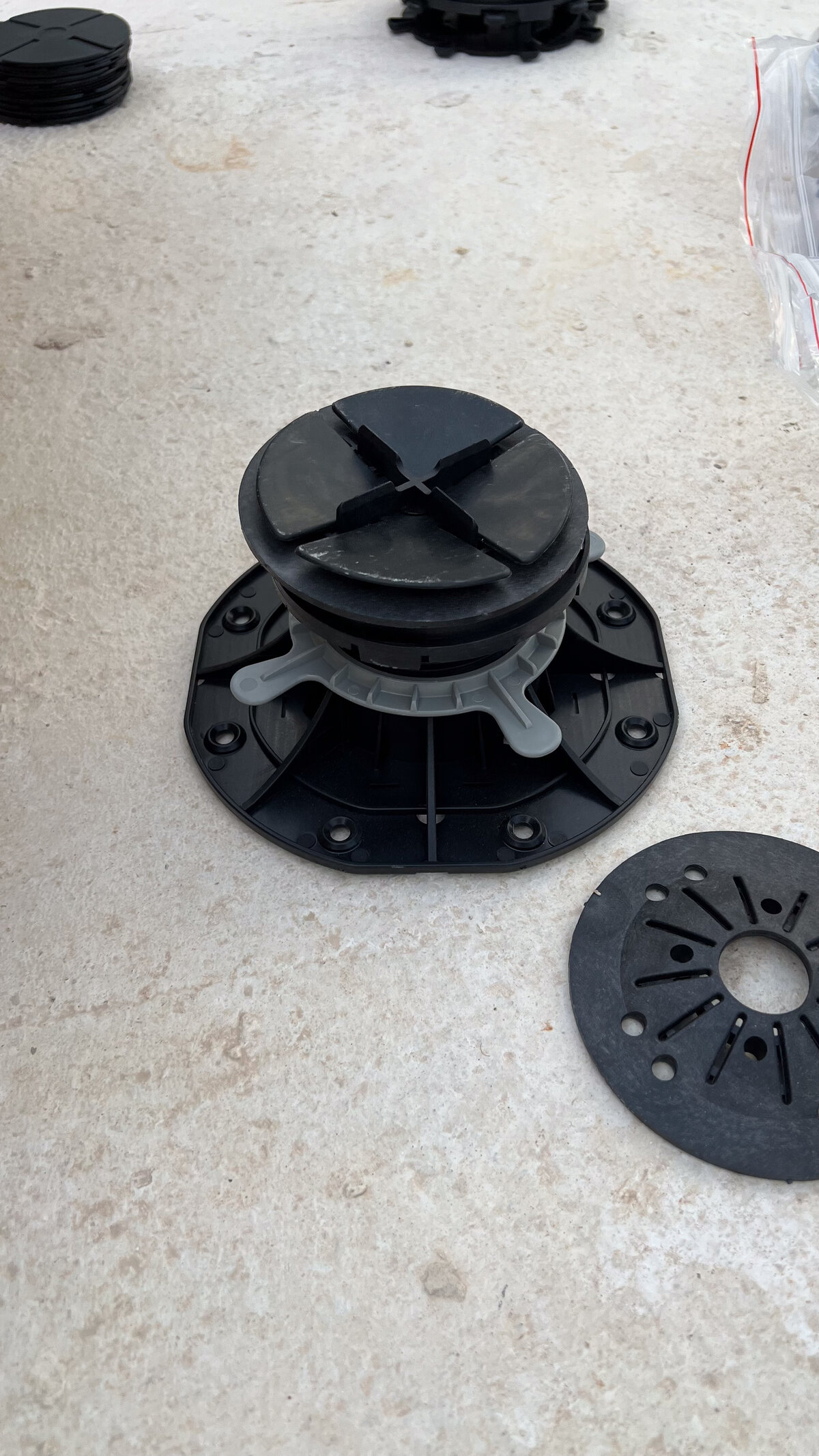
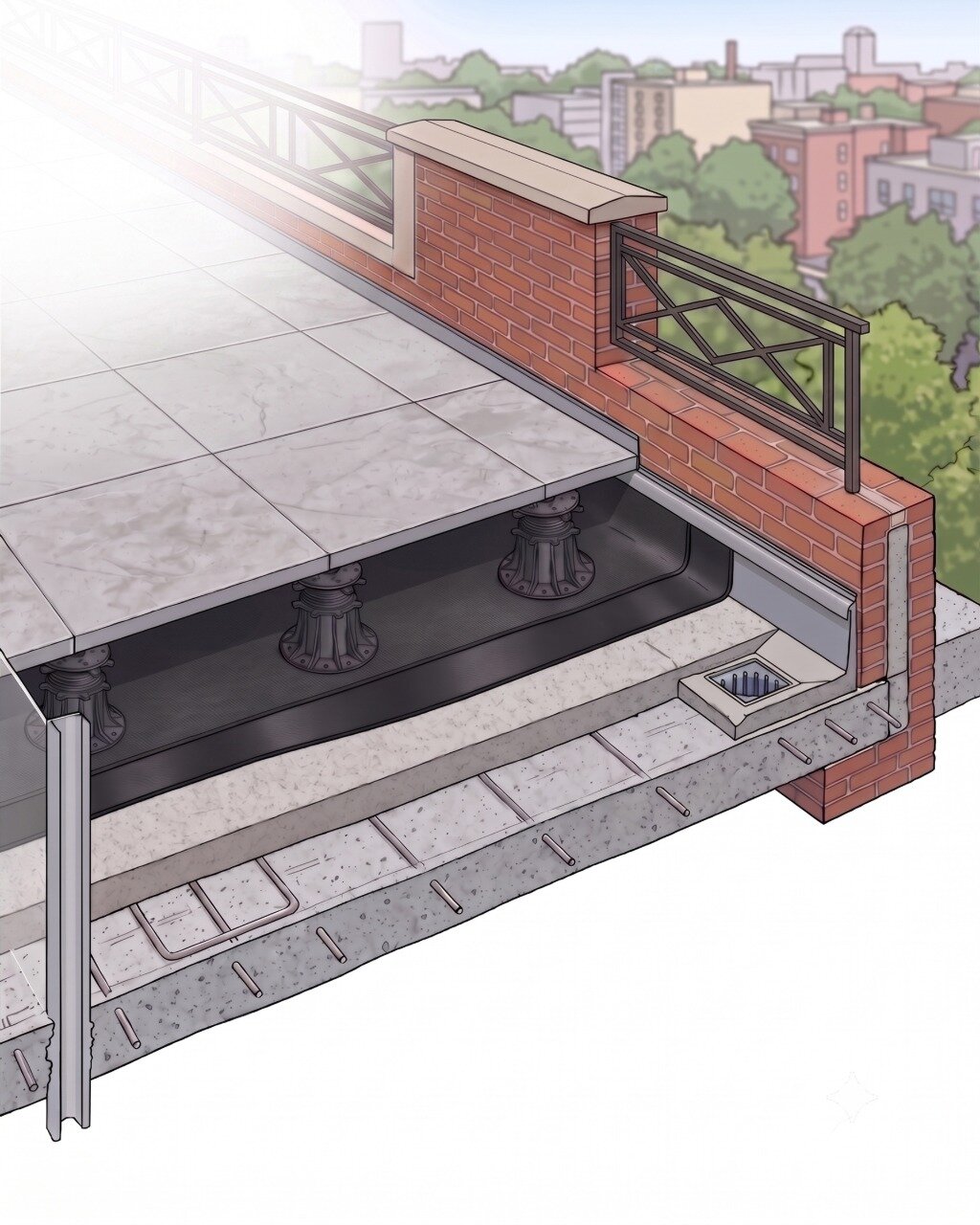
Some projects require greater height than a standard adjustable pedestal can provide. This is common on roofs, balconies and terraces, where installers must account for existing thresholds, drainage systems or structural details.
Pedestal extensions increase the available installation height, allowing the support system to maintain its intended configuration.
When are extensions the right choice?
- When the required finished floor level exceeds the standard pedestal range.
- When the installation must account for a deeper installation or drainage zone.
- When raising a terrace or deck above an existing surface.
- When the project requires different finished heights across multiple areas.
For example, a rooftop terrace may require a raised floor to account for waterproofing details and drains. An extension can provide additional height without the need to use a completely different pedestal model, provided the manufacturer's system allows it.
What should be checked?
Not every pedestal can accept every extension. Check the maximum permissible height, the connection method and the stability requirements.
Adding too many extensions without respecting the manufacturer's limits can result in unstable support. A taller pedestal may also require additional lateral stability or a different support configuration.
As a manufacturer of adjustable pedestals, we recommend checking the full height range of the pedestal and extension combination, not just the height of the extension itself.
4. Support grids: for better load distribution
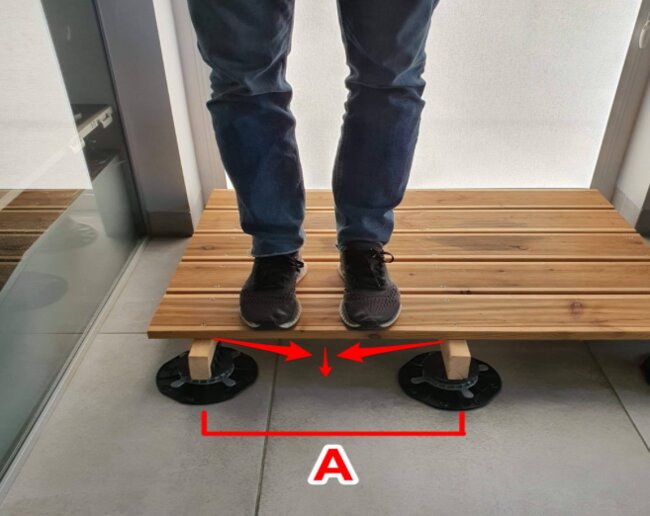
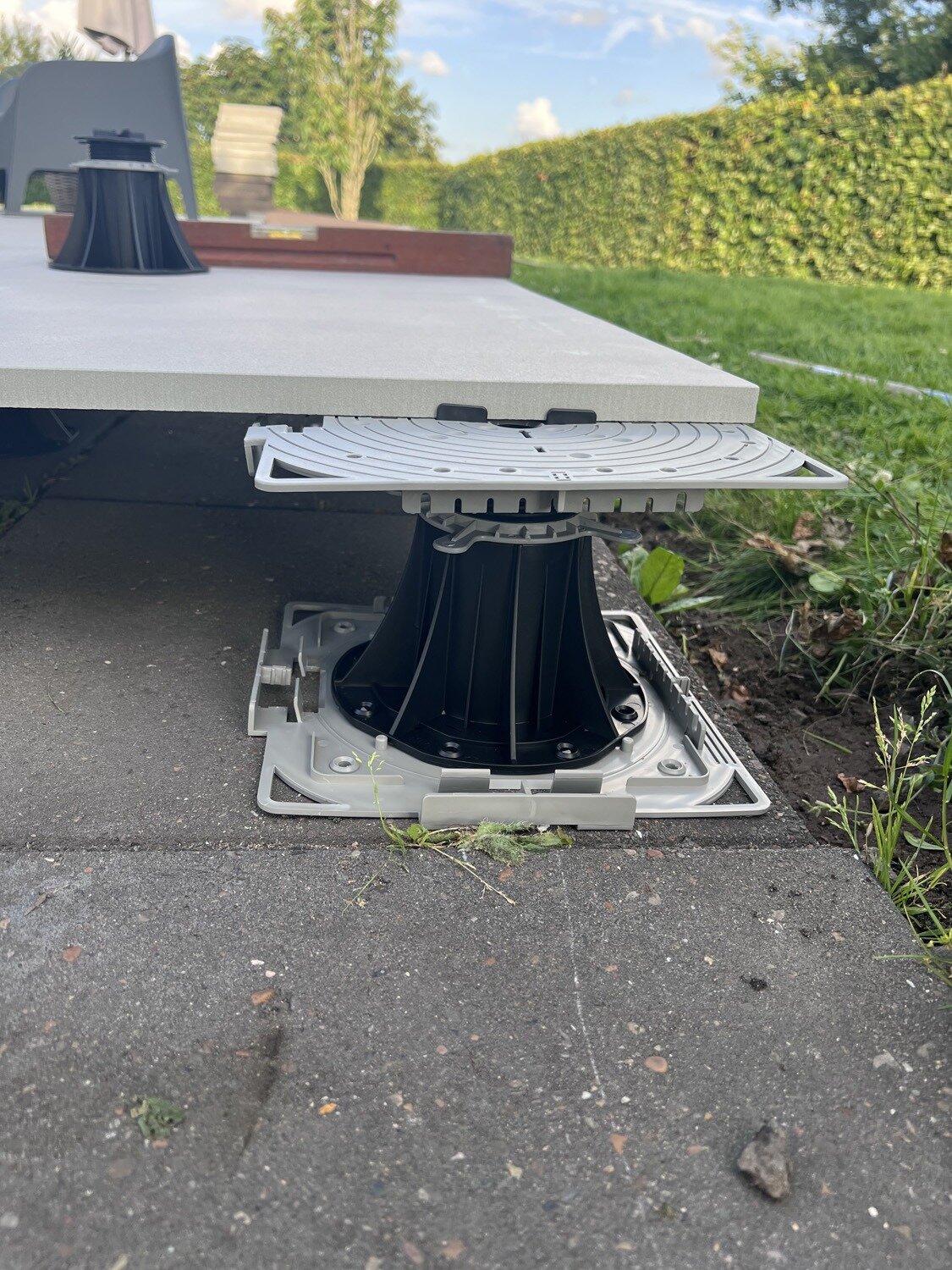
Some installations require more than single support points. This applies in particular to decking board systems, larger paving layouts and projects where loads must be distributed over a larger area.
Support grids connect or coordinate multiple support points, creating a more coherent load-bearing structure. Depending on the system, they can help secure joists, distribute loads and maintain the required spacing.
When should a support grid be considered?
- When installing wooden or composite decking boards on adjustable pedestals.
- When the project uses a substructure based on joists.
- When a specific paving layout or frame requires coordinated support points.
- When the project requires additional structural support in accordance with the system design.
For example, a garden terrace with several seating areas may use aluminium or wooden joists supported on adjustable pedestals. An appropriate support layout helps keep the joists at the correct spacing and provides a consistent base for the decking boards.
What happens when the support layout is insufficient?
If the support points are too far apart, the joists may deflect under load. The terrace may feel springy, the connections may experience additional stress, and the finished surface may become uneven.
However, adding more supports does not automatically solve every structural problem. Joist spans, material properties, fixing details and design loads must be taken into account.
When determining the support grid, its compatibility with the pedestal head, joist dimensions and intended load should be verified. Our approach as a manufacturer of adjustable pedestals is to treat these components as a single installation system rather than separate products.
5. Edge profiles: Maintaining the stability and aesthetics of the terrace edge
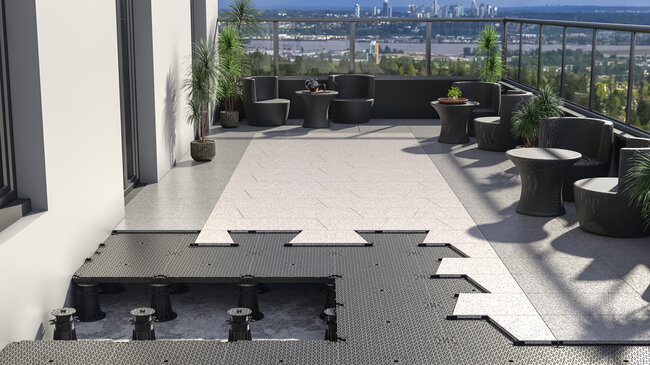
The center of the terrace often attracts the most attention during installation. However, the edges deserve just as much care.
Around the perimeter, terrace pavers may have fewer adjacent supports. Without proper edge finishing, the outer pavers may shift, become exposed, or create an unsightly appearance.
Edge profiles help provide a defined perimeter and, depending on the system, can hold or support the exposed edge of the finished surface.
When are edge profiles useful?
- On exposed edges of terraces and balconies.
- When the surface layout ends at an open perimeter.
- When a clean, consistent edge finish is required.
- When the system requires additional perimeter restraint.
For example, a rooftop terrace with porcelain pavers may have exposed sides facing a garden or a lower roof. A suitable edge profile helps create a neat boundary and maintain consistency of the perimeter finish.
What happens when the profile is mismatched?
A profile that does not match the surface thickness or the pedestal system may not hold the edge correctly. It may also create visible gaps or disrupt water drainage.
Do not assume that every edge profile provides structural restraint. Some products are primarily finishing elements, while others are designed to perform a supporting function. Check the product specification before installation.
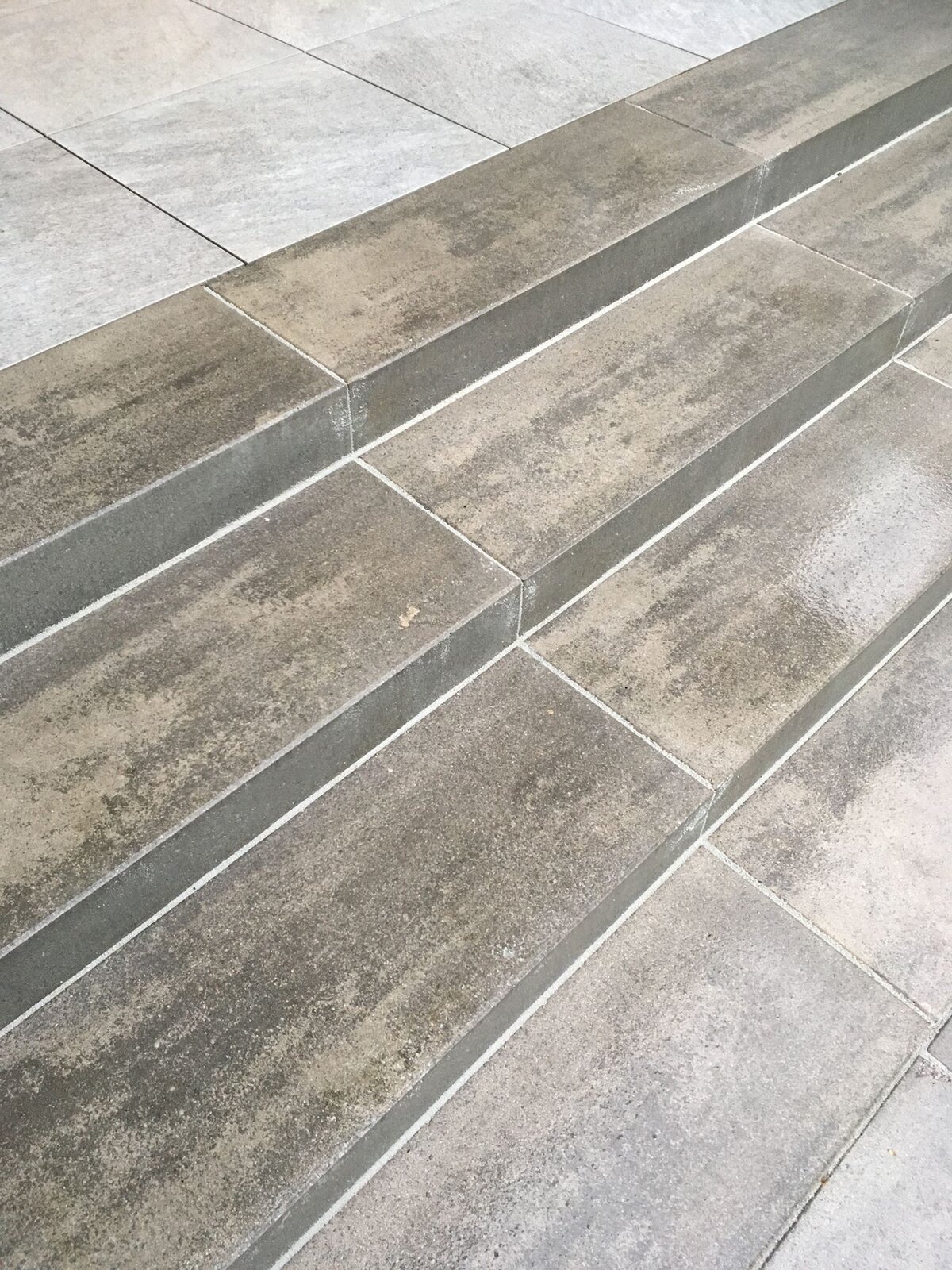
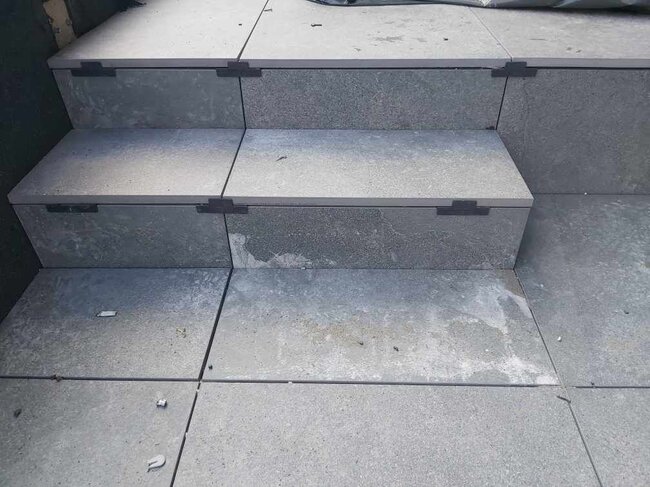
6. Transition profiles: connecting different surface levels
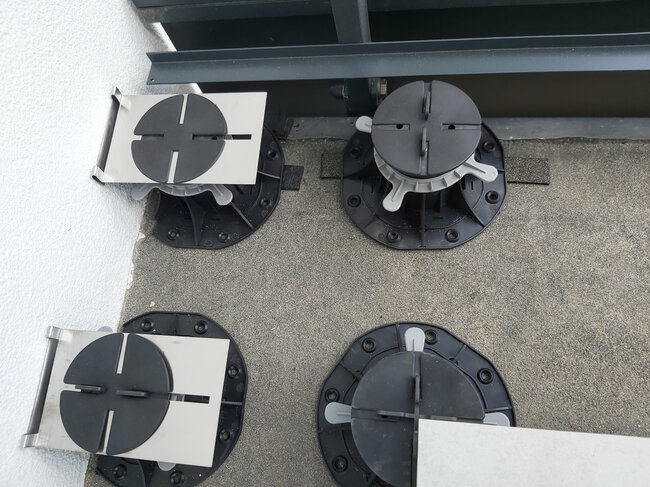
Not every outdoor surface ends at the same height. A raised deck terrace may connect to an existing patio, garden path, door threshold, or external stairs.
These connections require careful planning. A sudden height difference can create a tripping hazard and make the finished installation look incomplete.
Transition profiles help create a defined connection between different surfaces or levels.
When should they be used?
- When a raised deck terrace meets an existing surface.
- When connecting deck boards to a lower outdoor surface.
- When finishing around door thresholds.
- When creating a transition between different flooring materials.
For example, a homeowner may install a raised composite deck next to an existing concrete patio. A transition profile can help create a cleaner connection between these two surfaces.
What should be avoided?
A profile that is too small, too large, or unsuitable for the height difference may leave an unsightly gap. It may also create an uncomfortable transition to walk on.
For larger level changes, a properly designed step or ramp may be necessary. A transition profile alone cannot replace proper structural and accessibility detailing.
7. Match accessories to the surface material
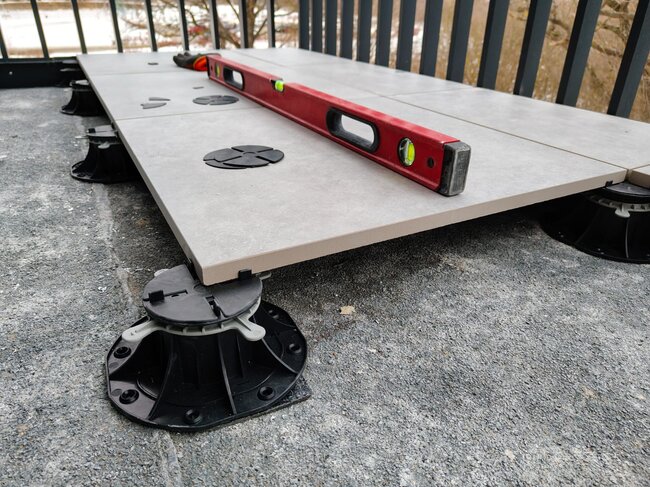
The surface material plays an important role in determining which pedestal accessories are needed. Porcelain pavers, natural stone, wooden boards and composite boards have different support requirements. Choosing compatible accessories helps maintain stability and prevents problems during installation and everyday use.
Porcelain pavers
Porcelain pavers require even support to prevent rocking, shifting or uneven joints. Leveling shims can help correct minor height differences, and appropriate pedestal extensions allow the required installation height to be achieved. Edge strips are also useful on exposed terrace edges, where an aesthetic and properly supported finish is needed.
Natural stone
Natural stone requires careful attention to load-bearing support and material protection. Depending on the dimensions, stone thickness and manufacturer's recommendations, appropriate shims and compatible pedestal heads may be needed to achieve even support. Extensions can also help adjust different terrace heights. Always check the stone manufacturer's installation requirements before selecting the support configuration.
Wooden boards
Wooden boards typically use a joist-based substructure supported by adjustable pedestals. Joist support elements, grids and compatible fastening accessories help maintain correct spacing and positioning of the load-bearing frame. Extensions may be necessary when the terrace must sit higher above the existing substrate or terrace.
Composite boards (WPC)
Composite boards also require a stable supporting structure. The spacing between joists and the support points on pedestals must comply with the board manufacturer's recommendations. Suitable joist pedestals, fastening elements and transition strips help achieve consistent installation and an aesthetic connection with the surrounding surfaces.
As a manufacturer of adjustable pedestals, we recommend checking the compatibility of each accessory with the selected pedestal model and surface material. Accessories that look similar are not always interchangeable. A correct connection should meet the installation requirements while maintaining the intended performance of the entire system.
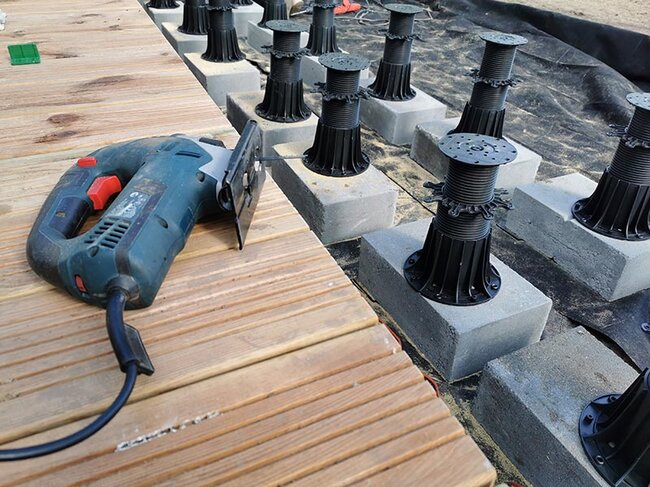
8. Consider drainage, climate and long-term performance
Accessories must also match the environmental conditions at the installation site.
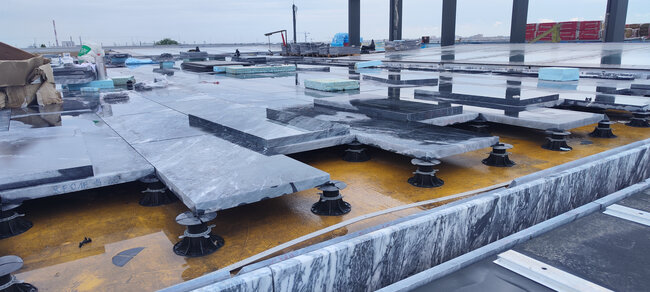
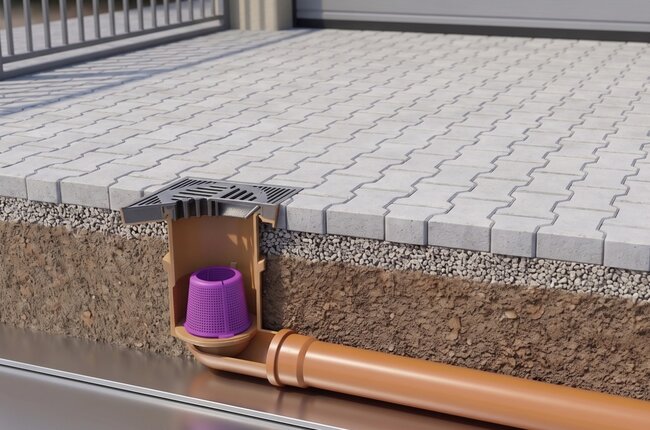
A terrace exposed to heavy rainfall requires unobstructed water drainage paths. Accessories should not block water drainage or create places where debris accumulates.
Climate also matters. In locations with significant temperature fluctuations, materials must account for expected expansion and contraction. In coastal environments, material durability and corrosion resistance become particularly important for metal components.
Ground conditions also influence the choice. A pedestal system installed on a concrete roof differs from a system installed on compacted soil. On softer ground, substrate preparation and appropriate load distribution may be necessary before installing the pedestals.
Local building regulations should also be taken into account, particularly for roof terraces, balconies, waterproofing, fire resistance, balustrades and accessible walkways.
There is no single set of accessories suitable for every project. The correct specification depends on the installation site and the manufacturer's installation guidelines.
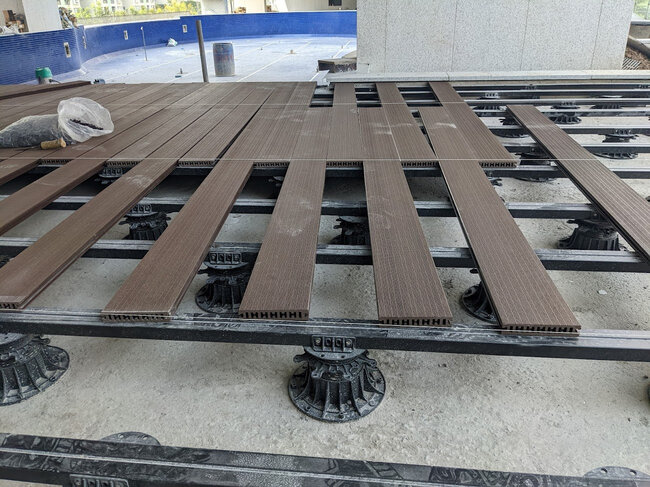
9. How to select the right combination of accessories
You don't need every accessory for every installation. Sometimes a standard adjustable pedestal with a compatible head and basic leveling elements is entirely sufficient.
It is important to identify which parts solve a real installation requirement.
Use this simple checklist before placing an order:
- Check the substrate. Determine whether the base is concrete, an existing terrace, or prepared ground.
- Calculate the final height. Determine whether standard pedestals are sufficient or whether extensions are needed.
- Estimate the load. Take into account foot traffic, furniture, planters, and other anticipated loads.
- Plan drainage. Make sure the accessories do not obstruct water flow.
- Identify the surface material. Choose accessories compatible with porcelain, stone, wood, or composite boards.
- Review the perimeter and transitions. Decide whether edge strips or transition strips are necessary.
- Check product compatibility. Confirm dimensions, connection details, material specifications, and permitted configurations.
When developing our pedestal systems, we consider how individual components interact with each other across different installation requirements. That is why product data sheets and installation instructions are important. They help installers confirm whether a given accessory is suitable for the intended pedestal model and application.
Summary: Choose accessories based on the task they are meant to perform
A successful raised deck terrace or platform depends on more than choosing an adjustable pedestal of the right height. Accessories determine how the system handles minor level differences, supports its structure, finishes exposed edges, and connects different surfaces.
The good news is that you don't have to overcomplicate your selection. Start with the installation conditions and add only those components that match a real requirement.
Before purchasing materials, make a short list of the substrate, expected load, water drainage conditions, required height, and surface material in your project. Then match each condition to the appropriate accessory.
If you are unsure, consult the adjustable pedestal manufacturer's technical documentation or the installation team before combining components. A little planning at the specification stage can prevent wobbly pavers, unstable edges, and unnecessary adjustments later on.
The best accessory selection is not the one with the most components. It is the one that gives each part of the installation a clear purpose and keeps the finished surface stable, level, and neat for years.