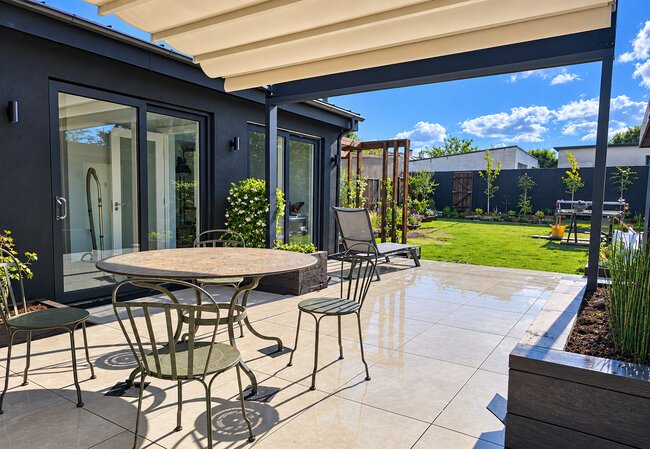
For years, this was simply part of building raised outdoor surfaces. Installers worked with the materials they had available, adjusting heights through trial and error. The results could be acceptable, but achieving consistent levels and maintaining them over time was difficult.
Adjustable pedestal systems changed this approach. What began as a practical alternative to fixed supports evolved into a range of engineered products with improved adjustment mechanisms, stronger materials, and accessories for more complex outdoor installations.
Understanding this evolution helps homeowners, landscape architects, and garden designers recognize what modern pedestal systems offer and what to consider when choosing them.
1. The Beginnings: Bricks, Pads and Fixed-Height Pedestals
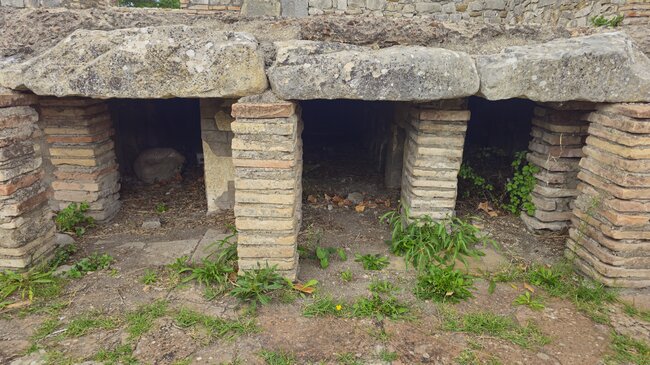
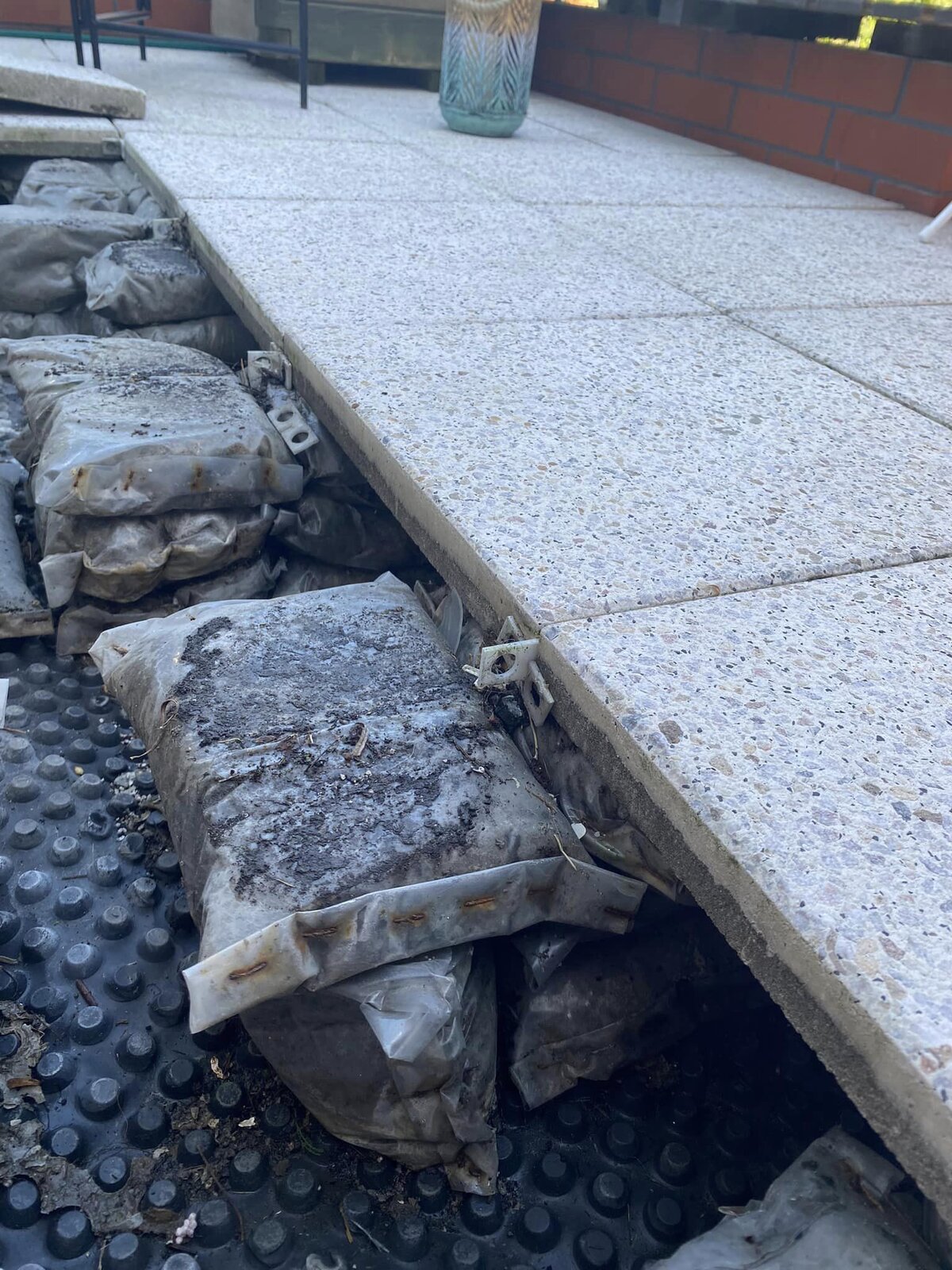
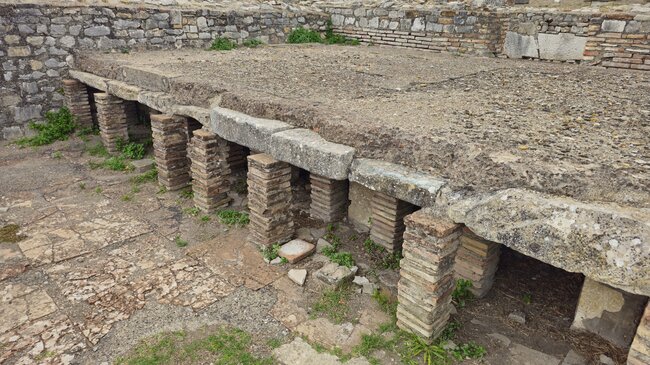
Before adjustable pedestals became widely available, raised deck terraces and decks were often supported using bricks, concrete blocks, pieces of wood or other fixed-height materials.
The idea was simple. Installers placed supports under pavers or deck joists, and then added smaller pieces of material wherever extra height was needed.
For simple projects on relatively flat ground, this method could work. The materials were cheap, easy to find and required no specialist equipment.
However, problems arose when the substrate was uneven or when conditions changed.
A pedestal that initially stood stable could become unstable after ground movement or repeated contact with moisture. Wood could degrade, and poorly positioned bricks and loose shims could shift under load. Achieving the same height across a large terrace also required considerable manual adjustment.
Another difficulty was maintenance. If one section settled, installers often had to lift several pavers to fix the problem.
What improved: These early methods provided an inexpensive way to create raised surfaces and introduce space beneath the pavers.
What remained a problem: Height adjustment was slow, accuracy was limited, and the supports were not designed to facilitate future leveling.
The need for a more consistent and flexible solution became increasingly obvious as outdoor terrace and raised surface projects became more ambitious.
2. Introduction of Height-Adjustable Pedestals
The introduction of adjustable terrace pedestals marked a significant change in outdoor construction.
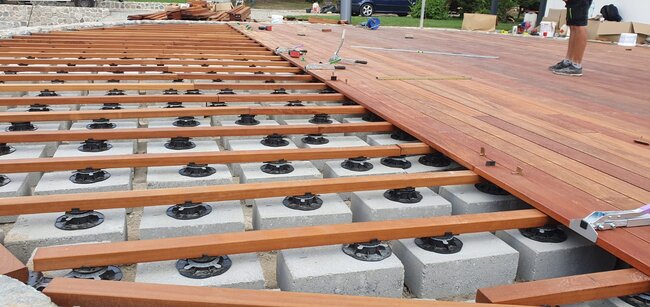
Instead of relying on fixed-height blocks, installers could use a pedestal with a rotating threaded mechanism to increase or decrease its height. This made it possible to create a level surface even when the substrate had varying heights.
The threaded design was particularly useful. By rotating the adjustment section, installers could make minor height corrections without replacing the entire pedestal or rebuilding the substrate.
This saved time during installation and made future maintenance easier.
However, early adjustable systems still had limitations. Not every design offered a sufficient adjustment range, and some mechanisms were difficult to operate after the surface had been laid. Poorly designed threads could also become difficult to adjust or lose effectiveness in demanding conditions.
Load-bearing capacity was another important factor. The pedestal had to withstand the weight of the surface and the expected use without excessive deformation or instability.
As a manufacturer of adjustable pedestals, our company recognizes how important these early design improvements remain. The modern pedestal still relies on the same basic principle: reliable mechanical adjustment combined with secure support.
What improved: Installers gained greater control over surface height, more consistent leveling, and a faster installation process.
What remained a problem: Adjustment mechanisms, load-bearing capacity, and the stability of individual components still varied considerably between products.
3. Better threads, height correctors and more precise leveling
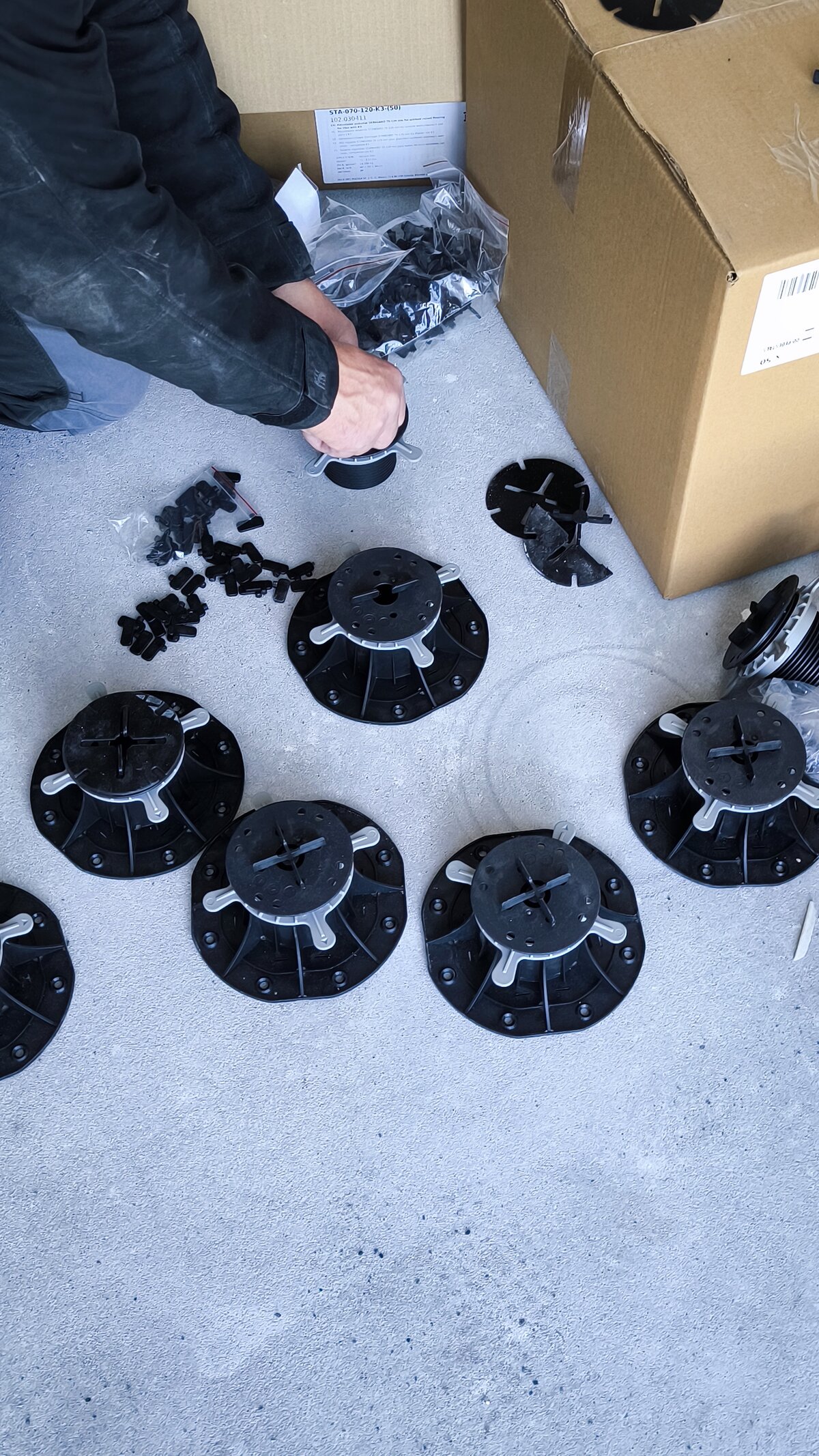
As adjustable pedestal technology developed, manufacturers began to pay more attention to the details of the height adjustment mechanism.
The threaded connection became one of the most important areas of improvement. A well-designed thread allows installers to make controlled adjustments while maintaining proper engagement of the support.
The design of the adjustment ring and locking elements also matters. These solutions help prevent unwanted movement and make it easier to achieve the required installation height.
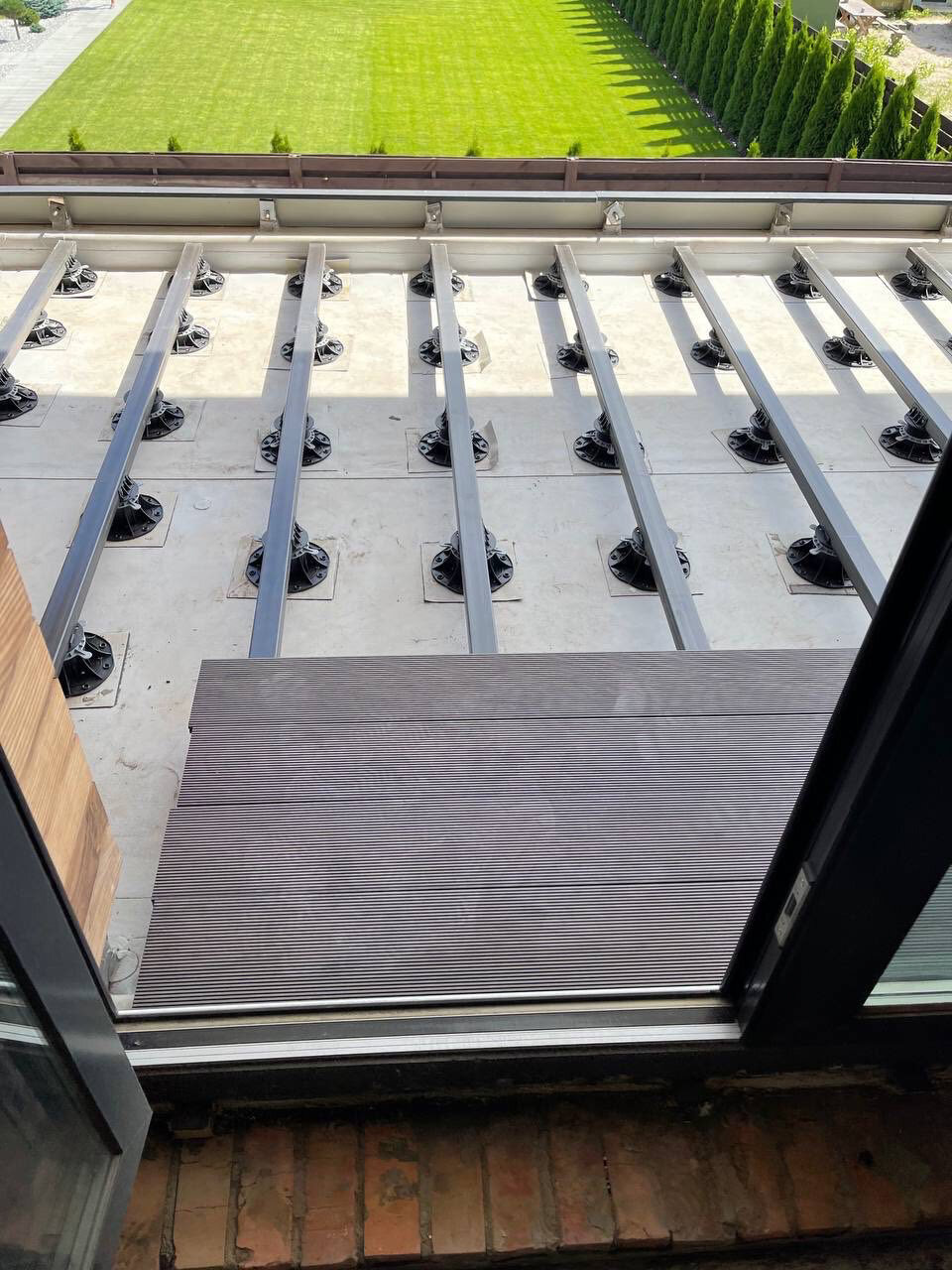
Imagine, for example, installing a terrace next to a garden wall where the ground gradually slopes down. Instead of using various sets of fixed supports, installers can adjust individual pedestals to compensate for the changing elevation.
This is particularly useful on larger terraces, where even small height differences can become noticeable across several rows of surfacing.
Some modern systems also offer adjustment tools or features that facilitate height correction after installation, depending on the product design.
However, the thread mechanism alone does not guarantee good performance. The adjustment range must match the project requirements, and the pedestal must remain stable at the selected height. In particular, the maximum extension must be taken into account when assessing load capacity and structural suitability.
What was improved: More controlled adjustment, easier installation and better consistency across large raised surfaces.
What remained a problem: A mismatched adjustment range or inadequate support design could still cause instability, especially in demanding locations.
4. Stronger materials and improved base and head designs
Another significant development concerned the materials used to manufacture pedestal systems.
Early support solutions often relied on materials that could degrade, absorb moisture or change shape over time. Modern pedestal systems increasingly use engineering plastics, including polypropylene, chosen for their suitability in outdoor applications.
Material choice is important because outdoor pedestals face a range of environmental challenges. They may be exposed to rain, standing moisture, temperature fluctuations, sunlight and repeated loads from people walking on the surface.
A suitable material must retain its mechanical properties under the conditions specified by the manufacturer.
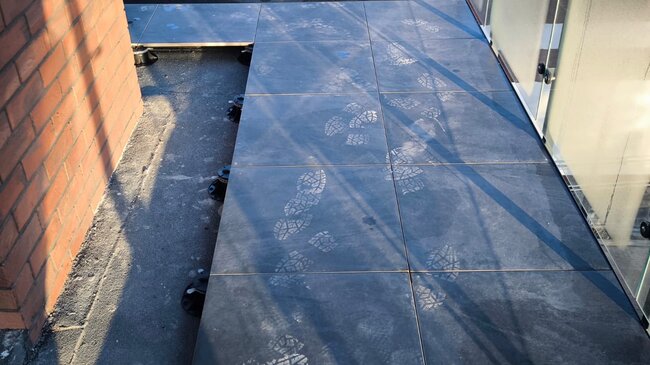
Base design has also become more advanced. A wider, properly designed base can help distribute loads across the supporting surface. Its shape and contact area affect stability, particularly when installed on suitable waterproofing or a prepared substrate.
The head plays an equally important role. It must provide reliable contact with the terrace paver or joist structure while helping to maintain correct spacing and alignment.
Some systems include rubber shims or protective elements to limit direct contact between hard materials, minimise noise and improve contact conditions.
For an adjustable pedestal manufacturer, these details are key considerations during product development. When comparing products, readers should look beyond appearance and check material specifications, recommended operating conditions and declared load capacity.
What was improved: better resistance to outdoor conditions, more thoughtful load distribution and better support in both the base and the head.
What remained a problem: even durable materials will not compensate for an unsuitable installation surface, incorrect loading or poor drainage planning.
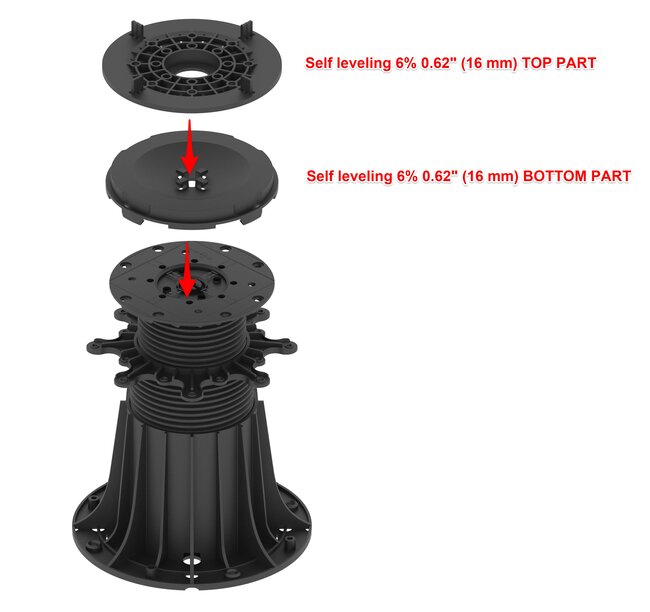
5. Accessories made pedestal systems more versatile
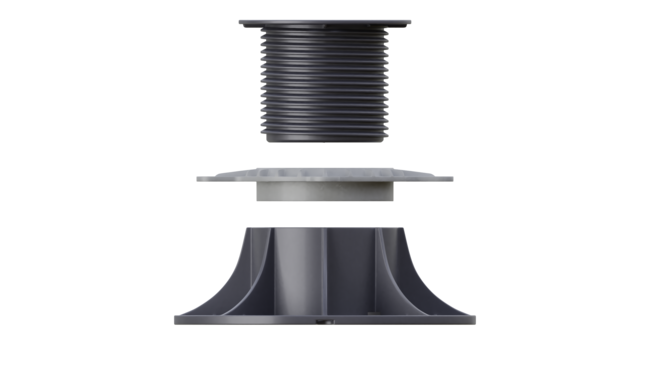
As outdoor construction requirements became increasingly diverse, manufacturers began developing accessories that allowed pedestal systems to handle more than just simple, flat terraces.
This was an important step, because not every garden has a perfectly level surface or a standard paving layout.
One useful solution was the introduction of slope correctors. These accessories help compensate for appropriate substrate gradients, allowing the supported surface to remain level where the installation requires it. Always check their permissible slope range and mounting position.
Height extenders also increased flexibility. Instead of replacing the entire pedestal with a different model, installers could use compatible extenders to achieve greater installation heights.
Other accessories addressed specific installation requirements:
- Leveling shims: Help correct minor differences in support height and improve contact conditions.
- Rubber shims: Provide a protective layer between the pedestal and the supported surface.
- Spacer tabs: Maintain even gaps between paving slabs and support water drainage through the joints.
- Support grids: Provide additional support arrangements for compatible surface formats and installation layouts.
- Edge and transition accessories: Help create aesthetic perimeter finishes and manage transitions between different surface materials.
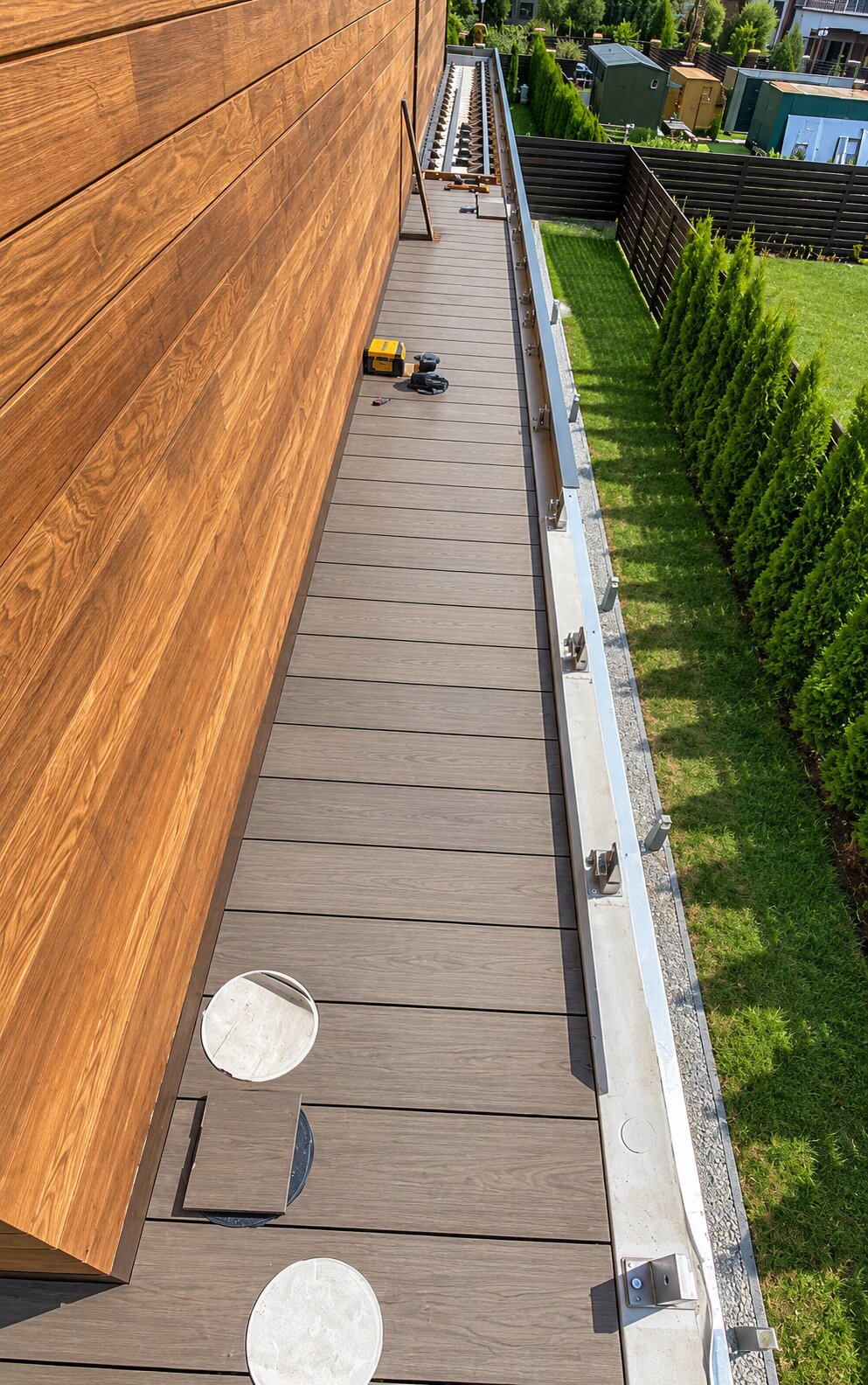
Water drainage was another important issue. Raised deck systems create an open space beneath the finished surface, allowing water to flow toward the intended drains when the substrate structure is properly designed.
However, the pedestal alone does not solve every drainage problem. Waterproofing, drains, substrate preparation and slopes beneath the raised surface still require proper planning.
What improved: Accessories expanded the range of projects in which adjustable pedestals could be used, including sloped terraces, larger paver formats and more detailed edge solutions.
What remained a problem: Compatibility became increasingly important. Accessories must be designed for a specific pedestal system and used within defined limitations.
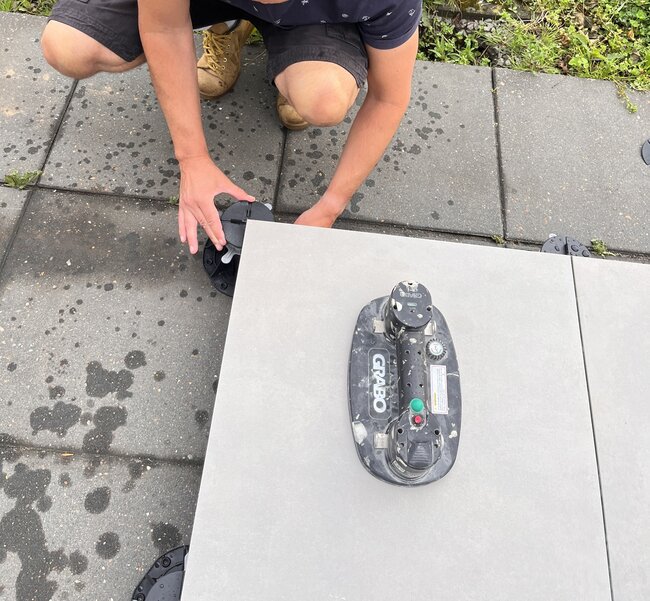
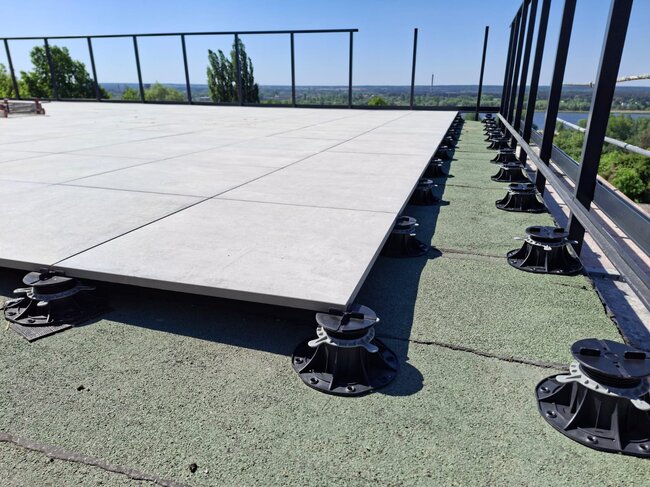
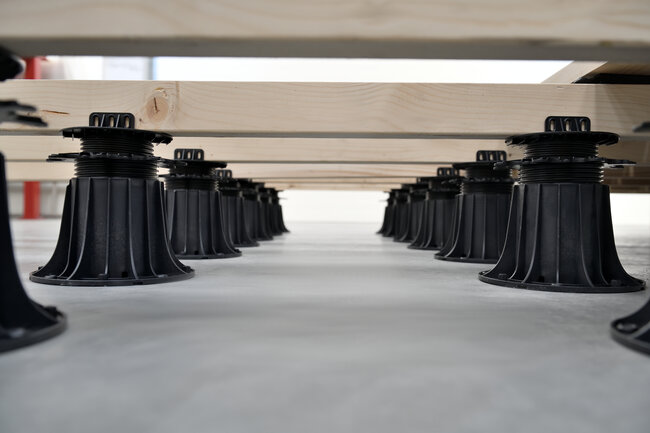
6. Modern pedestal systems: from single supports to complete solutions
Adjustable pedestals are now available in many configurations, from simple supports for standard surface installations to more specialized systems for complex outdoor surfaces.
The biggest change is the way manufacturers approach the entire installation, instead of treating the pedestal as an isolated component.
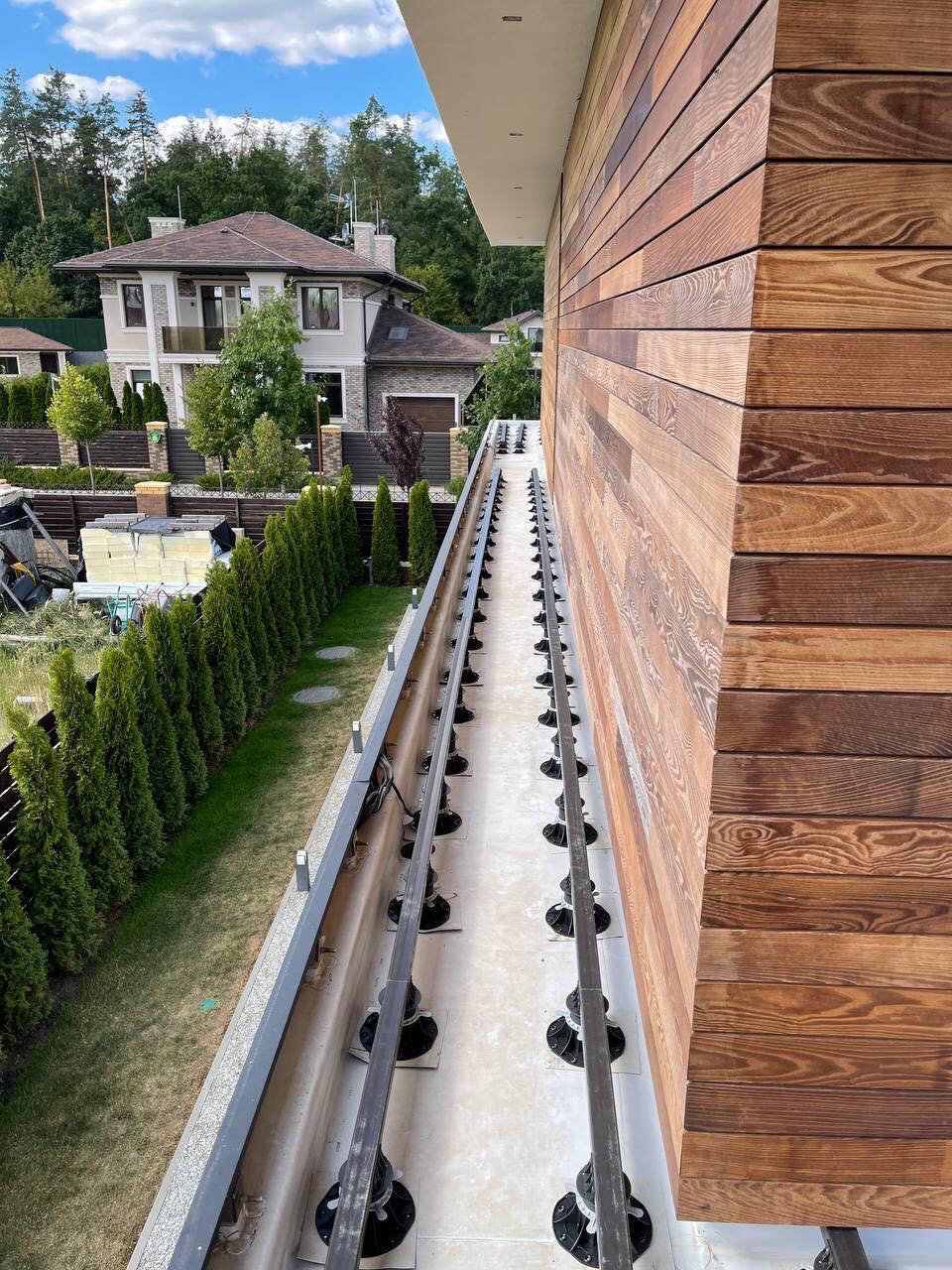
A modern system can combine adjustable heights, compatible extensions, slope correctors, protective pads and various head configurations. Together these components help installers meet the requirements of individual projects.
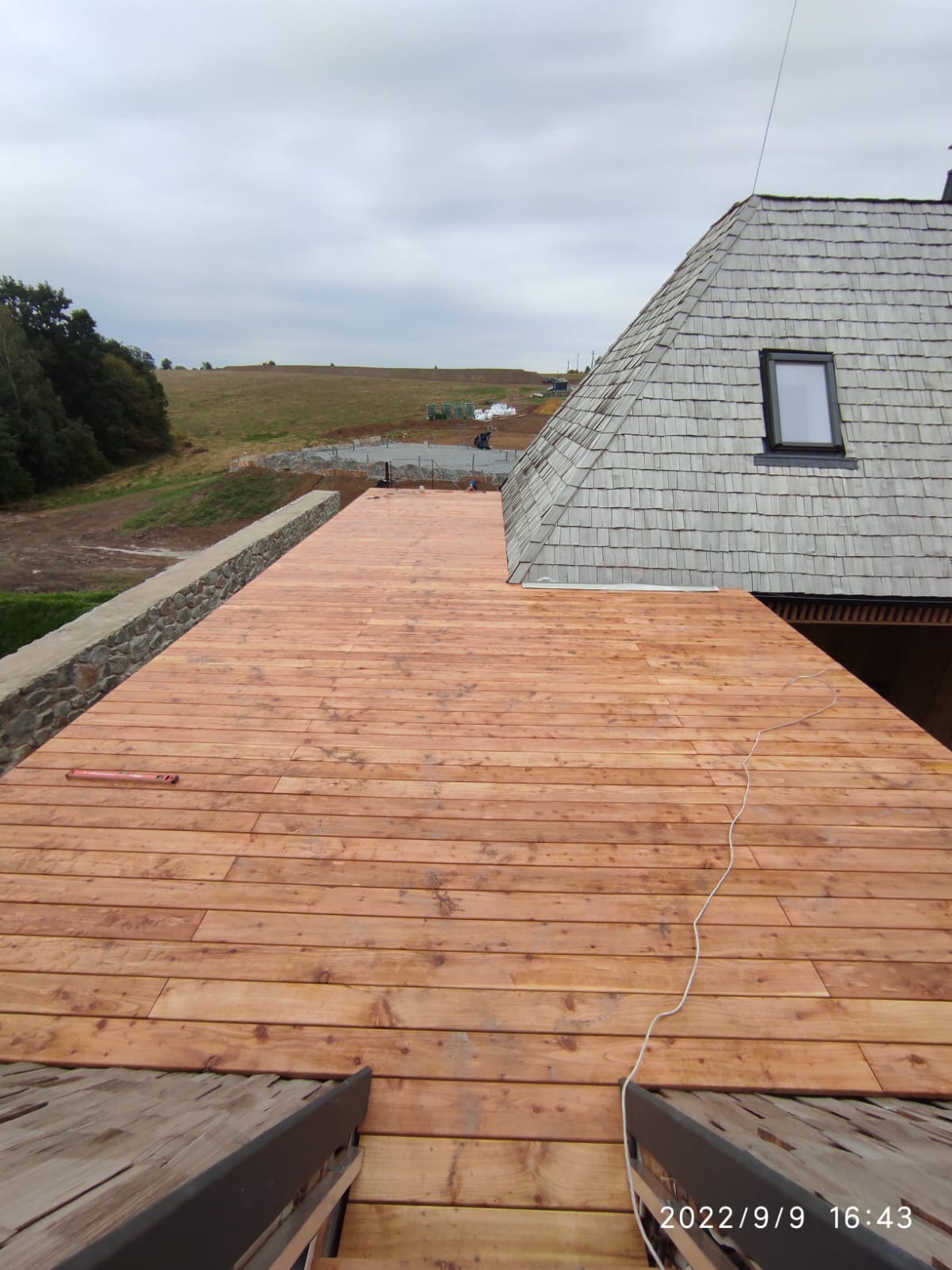
For example, a simple garden terrace on a flat, well-drained, properly prepared surface may only require standard adjustable pedestals. There is no reason to introduce unnecessary components when a basic system can reliably do the job.
However, a terrace on sloping ground may require additional leveling accessories and a wider adjustment range. A large-format porcelain installation may also require a specific pedestal layout depending on the dimensions, thickness and weight of the pavers.
When comparing products from different generations, it is worth analyzing the manufacturer's technical documentation instead of relying solely on appearance.
As a manufacturer of adjustable pedestals, our company considers clear product information an important part of helping customers make informed decisions. A reliable product data sheet should explain:
- Minimum and maximum adjustment heights.
- Base and head dimensions.
- Material composition and relevant performance properties for outdoor use.
- Load capacity and the conditions under which it was tested.
- Compatible accessories and extensions.
- Suitable applications and installation limitations.
These details make it easier to fairly compare different pedestal systems and determine whether a product is suitable for the intended project.
7. What still matters when choosing an adjustable pedestal today?
Despite decades of development, the basic requirements for good pedestal installation have not changed. The finished surface must remain stable, level and suitable for its environment.
The difference is that modern systems offer more ways to achieve these results.
Before choosing a product, the conditions at the installation site should be considered.
Ground conditions: Is the load-bearing surface stable, or is there a risk of settlement? Pedestals require a suitable, load-bearing substrate.
Slope and drainage: Does the site require slope correction? Where will rainwater drain and are the drainage outlets correctly positioned?
Expected loads: The weight of the paving or decking boards, furniture, planters and expected foot traffic must be taken into account. The entire support layout must be suitable for the expected loads.
Climate: Long-term moisture, temperature changes and UV exposure must be considered. Check whether the materials are intended for local conditions.
Surface dimensions: Large and heavy terrace pavers may require a different support layout than smaller tiles. Follow the paver manufacturer's recommendations and the pedestal manufacturer's installation guidelines.
Not every project requires the most advanced system available. The best choice is one that meets the actual installation requirements without introducing unnecessary complexity.
Conclusions: A better support system starts with the right design
The evolution of adjustable pedestals reflects a simple construction challenge: how to create a raised outdoor surface that stays level without constant manual adjustment.
Stacked bricks and shims were an early solution. Fixed-height blocks made installations more orderly, and threaded adjustable pedestals introduced greater precision. Improvements in materials, base and head construction, and modular accessories then expanded the capabilities of these systems.
Modern adjustable pedestals offer far greater flexibility than their predecessors, but product choice still matters. The right adjustment range, reliable materials, proper load capacity, and compatible accessories — all contribute to a successful installation.
Before starting your next terrace or garden decking project, take a closer look at the technical specifications of the systems you choose. Check whether the adjustment range matches your terrain, whether the accessories account for slope and drainage requirements, and whether the support layout is suitable for your pavers or decking.
A well-designed raised surface starts with something that is often hidden from view: the support system beneath it.