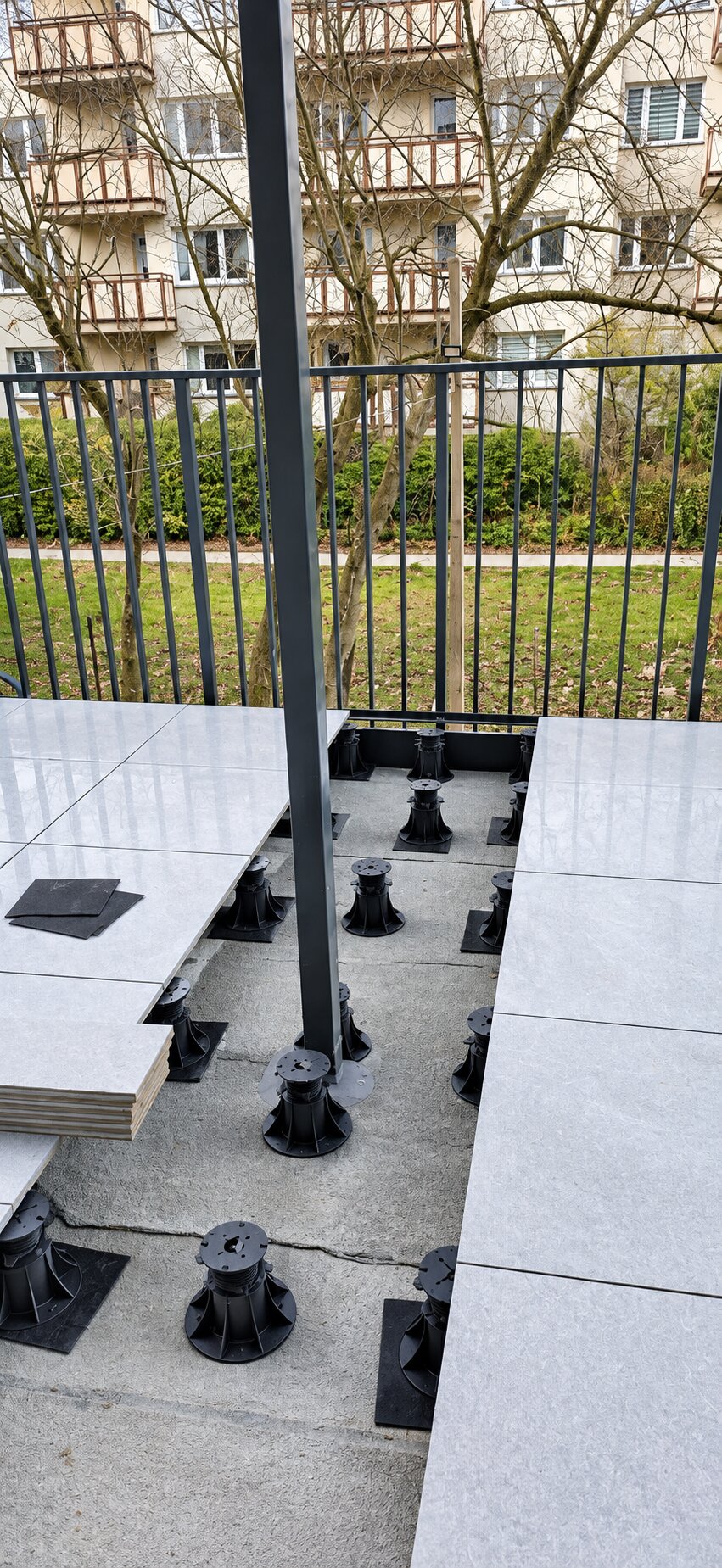
The problem may not be the pedestals themselves. It may be the accessories that were overlooked during installation.
When planning a raised deck terrace, adjustable pedestals are only one part of the system. The accessories around them help create a stable, level, well-drained and accessible surface. They also affect how the terrace performs over time, especially when it is exposed to changing weather conditions, regular foot traffic and environmental factors.
As a manufacturer of adjustable pedestals, we understand that choosing the right support system requires looking beyond the pedestal itself. Every element must work together, from the base resting on the substrate to the accessories supporting the finished surface.
Let's take a look at which pedestal accessories matter and why they deserve attention already at the design stage.
1. Pedestal heads and bases: the foundation of a stable surface
The pedestal head and base are the main contact points between the load-bearing structure and the finished terrace surface.
The base distributes the load onto the substrate, while the head supports the terrace paver, joist or other finishing material. Depending on the installation method, various head designs are available.
For example, in a terrace with terrace pavers, a head with paver spacer tabs can be used to maintain even joints. In a wooden or composite terrace, a head adapted for fixing joists may be required.
Using the wrong head can lead to uneven support, uneven joint spacing or unwanted movement between elements. A poorly fitted base can also cause problems during installation on a sensitive waterproofing membrane.
As a manufacturer of adjustable pedestals, we recommend checking the head configuration, base dimensions and intended use before specifying a complete system.
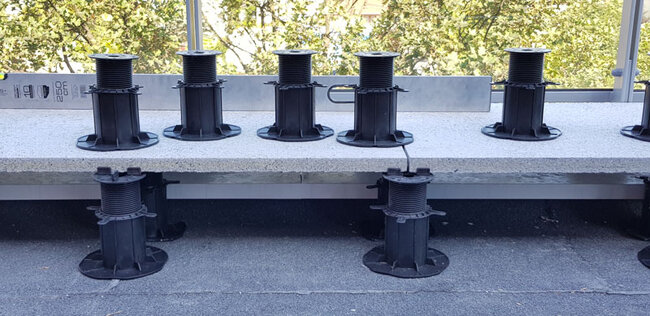
2. Leveling and spacing shims: small elements that make a big difference
Even a well-prepared concrete slab is not always perfectly flat. Small differences in surface height can affect the finished terrace, especially when installing large-format porcelain pavers or natural stone.
Leveling shims help correct minor height differences and improve contact between the pedestal head and the surface material. Spacers, on the other hand, help maintain even gaps between adjacent pavers or supporting elements.
Without proper leveling accessories, installers may have difficulty eliminating wobbly pavers or uneven joints. Over time, repeated movement can cause discomfort underfoot and additional stress on individual surface elements.
These accessories are particularly useful when working with large-format pavers, where even a small difference in support height can become noticeable.
However, shims should only be used within the limits recommended by the manufacturer. They do not replace correcting larger substrate unevenness or selecting the appropriate pedestal height.
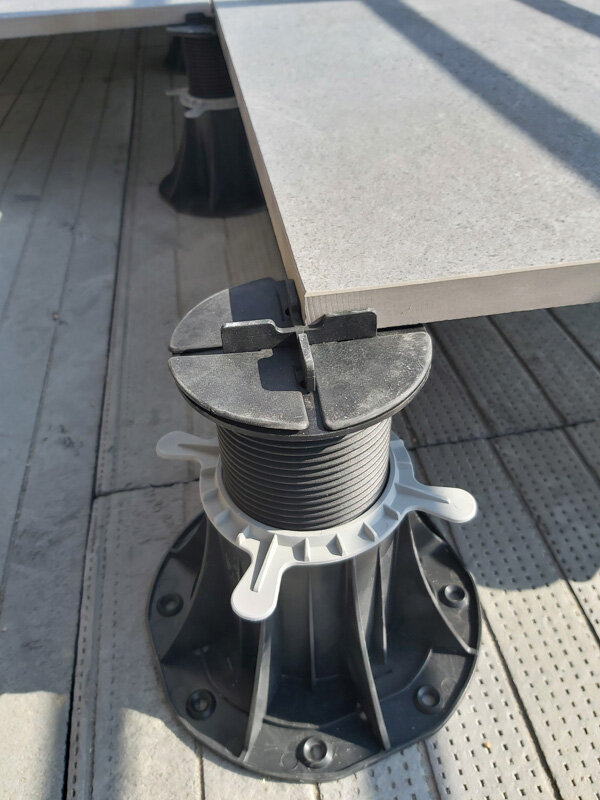
3. Pedestal extensions and height adjusters: Achieving the required level
Raised deck terraces often have to account for various construction conditions. A rooftop terrace may require additional clearance for drainage pipes, insulation, or building services. Another project may require a raised surface to align it with an existing door threshold.
Pedestal extensions and height adjusters make it easier to meet these requirements.
Extensions increase the overall height of the pedestal, while adjustment mechanisms allow installers to precisely adjust the finished level. Together they help maintain a consistent surface across areas with different elevation requirements.
It is important that the additional height does not compromise stability.
Before specifying extensions, the maximum permissible pedestal height, the extension range, and the load capacity of the entire assembled system must be checked. One should never assume that a combination of components has the same parameters as a standard pedestal without checking the manufacturer's technical documentation.
For us as a manufacturer of adjustable pedestals, matching the pedestal body, extension components, and adjustment mechanism is an important part of designing a reliable terrace support system.
4. Support grids and cross beams: keeping terrace joists in place
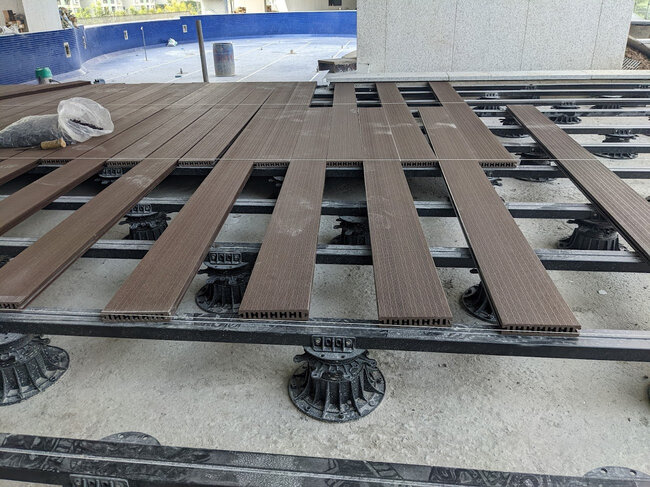
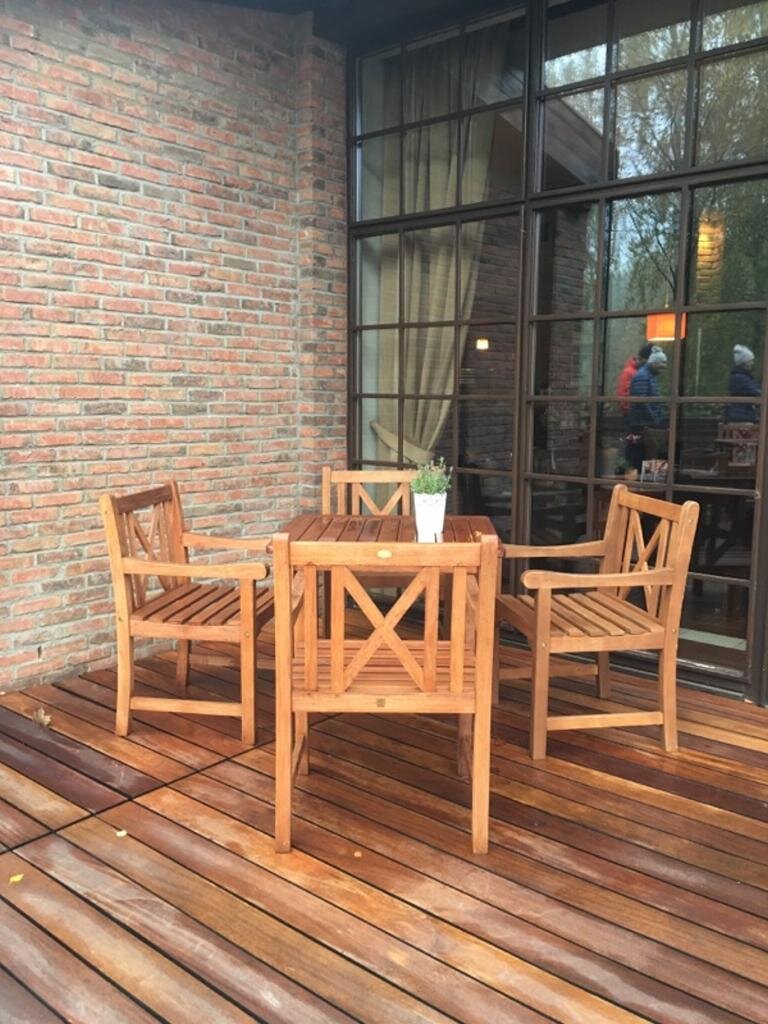
Not every raised deck terrace uses pavers. Wooden and composite decking systems typically require a supporting structure made of joists or aluminium profiles.
And this is where support grids and cross beams become important.
These accessories connect the individual pedestals and help position the joists correctly. They can improve the consistency of the supporting structure and help prevent unwanted movement during installation and use.
Without suitable joist connectors or support accessories, the structure may shift, especially when the terrace is exposed to repeated foot traffic or lateral forces.
The accessories must be matched to the joist material, dimensions and installation method. For example, an aluminium joist system may require a different fastening method than a wooden substructure.
When choosing a pedestal system for decking boards, consider the complete supporting configuration rather than selecting pedestals and joists separately.
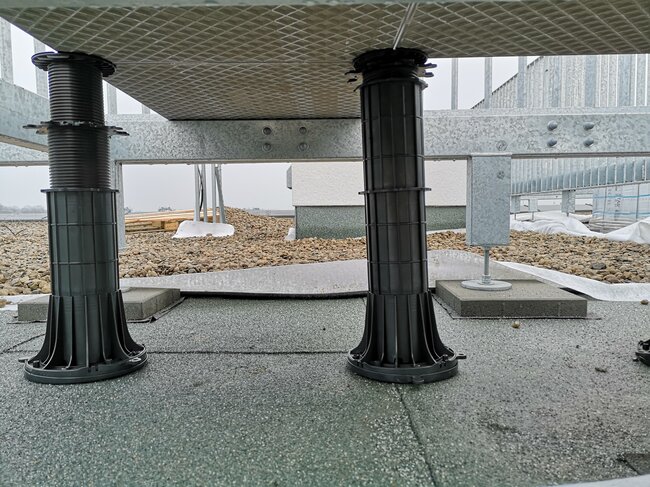
5. Edge and perimeter profiles: proper terrace finishing
The edges of a raised deck terrace often receive less attention than the main usable surface. However, they play an important role in the finished appearance and the overall safety of the installation.
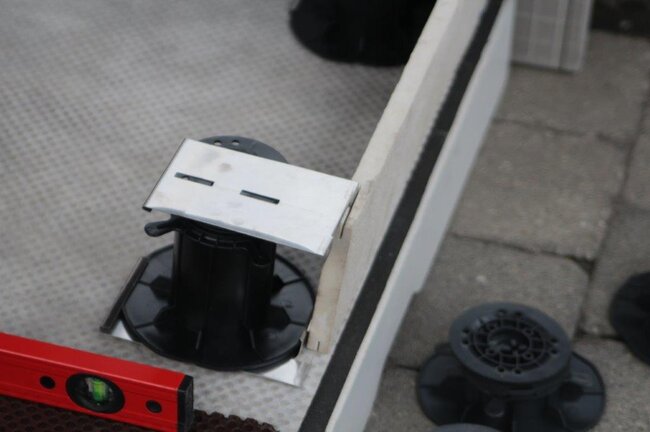
Edge and perimeter profiles help create clean transitions around the terrace. They can also help hold or protect the edges of the surface, depending on the system design.
This is particularly important for balconies, rooftop terraces and raised platforms, where exposed edges require carefully designed finishing.
Without proper perimeter details, terrace pavers may not have sufficient support at the edge, or the installation may look unfinished. In some situations, exposed edges can also pose a safety risk.
Proper solution depends on the terrace layout, paver thickness, edge conditions and applicable local building requirements. Edge profiles should not be treated as substitutes for required structural safety or fall protection.
6. Support pads and isolators under pedestals: Protecting the substrate
On roof terraces, the waterproofing membrane is one of the most important parts of the building envelope. Damage to this layer can result in leaks and costly repairs.
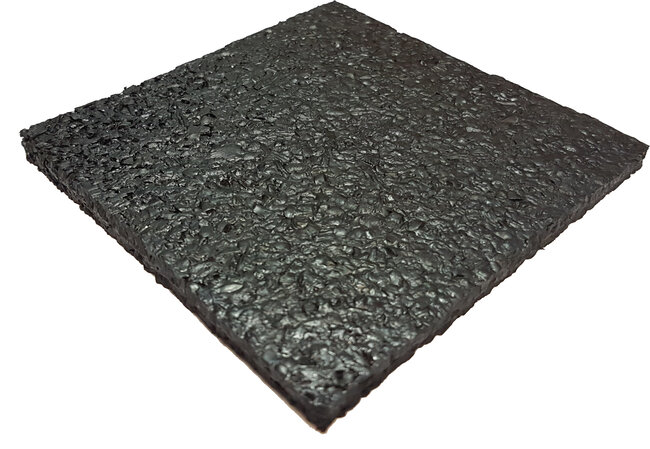
Support pads and isolators under pedestals are placed between the pedestal base and the load-bearing surface when the system design requires it.
Their function may include:
- Protecting the substrate or waterproofing membrane from direct contact.
- Reducing friction and unwanted movement.
- Helping to distribute contact pressure.
- Limiting vibration transmission.
- Providing separation between different materials.
A missing or unsuitable protective pad can increase the risk of membrane damage, especially when the substrate has a sensitive surface or the pedestal is exposed to movement.
However, not every installation requires an additional pad. Some pedestal bases are already designed for direct installation on approved substrates.
It is important to follow the waterproofing manufacturer's recommendations and confirm compatibility between the pedestal base and the protective layer.
7. Drainage and filtration components: managing water beneath the surface
One of the main advantages of a raised deck terrace is the open space beneath the finished surface.
This space allows water to move toward drainage outlets while separating the surface of pavers or boards from the waterproofing layer.
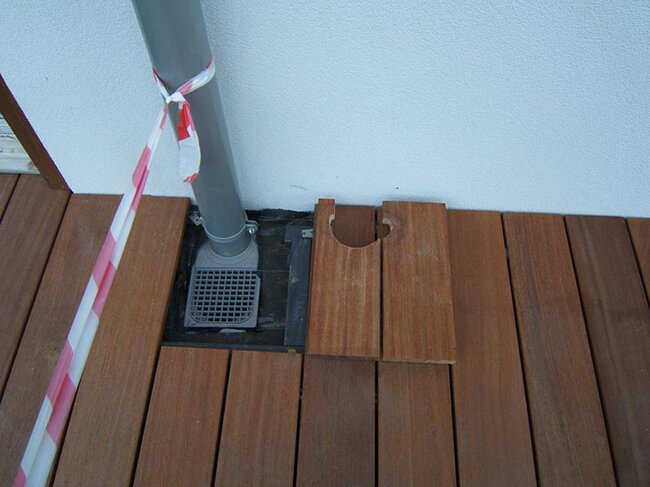
Depending on the design, drainage and filtration components may include drainage mats, filter geotextiles, protective layers, and appropriate outlet accessories.
Each component serves a different purpose. Drainage layers help manage water flow, while geotextiles can prevent fine particles from penetrating and blocking drainage paths.
Without proper drainage planning, water can accumulate around outlets or become trapped beneath the terrace. This can cause maintenance issues and affect the long-term functioning of the entire roof system.
Pedestals alone do not guarantee effective drainage. The base waterproofing layer must have correct slopes, drainage outlets, and appropriate details.
How pedestal accessories support sustainable terrace design
The right pedestal accessories do more than just improve installation quality. They also support several principles of sustainable building design.
Ensuring ventilation beneath the surface
A properly designed raised deck terrace creates an air gap between the finished surface and the substrate. This separation allows air movement and helps moisture escape from the space beneath the pavers or deck boards.
It can also reduce direct heat transfer between the exposed surface and the roof structure below. The actual thermal benefit depends on the full roof construction, ventilation conditions and climate.
Supporting effective drainage
A properly designed pedestal system allows water to penetrate through the joints between pavers and reach the drainage layer below. Appropriately selected accessories help maintain the intended clearance and avoid unnecessary obstructions.
This reduces the risk of water stagnation and supports the long-term performance of the terrace.
Facilitating maintenance
Raised surfaces can provide access to waterproofing membranes, drainage outlets, cables and other building services.
Individual pavers can often be lifted to inspect the space below without dismantling the entire terrace. This can reduce disruption and make maintenance work easier to carry out.
Supporting more durable construction
A terrace that stays level, drains water properly and allows access for repairs is less prone to premature reconstruction. Choosing compatible components from the start can help reduce material waste and unnecessary replacement work.
These benefits depend on proper design and installation. Pedestal accessories contribute to sustainable performance, but they do not replace good waterproofing, insulation or drainage design.
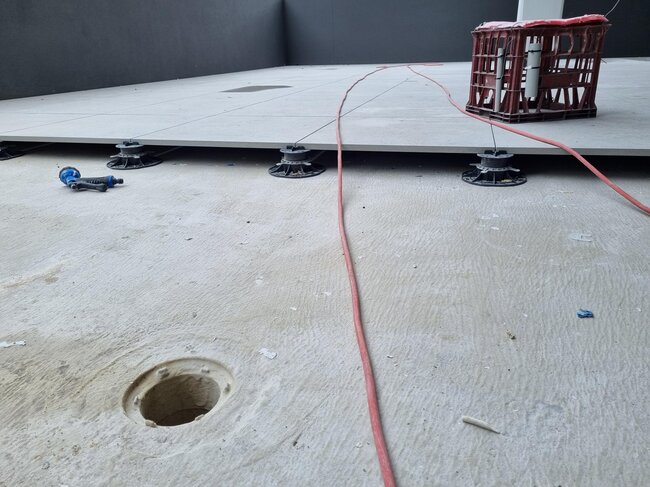
What should be checked before choosing pedestal accessories?
Not every terrace requires a complex set of accessories. A simple installation on a relatively even concrete base may only require standard pedestal heads, support pads and an appropriate adjustment mechanism.
More demanding projects require a closer look.
Here are the main factors to consider before determining the accessories.
1. Type of substrate
Is the pedestal being installed on concrete, a waterproofing membrane, insulation or another load-bearing layer? Each surface has different requirements for load distribution and protection.
2. Load capacity
The expected foot traffic, weight of the surface, terrace structure, furniture, planters and any additional design loads must be taken into account. Check the load capacity of the entire pedestal and accessory set, not just a single pedestal.
3. Pedestal height and adjustment range
Confirm the required final height and whether extenders or additional adjustment elements are necessary. Always stay within the configuration permitted by the manufacturer.
4. System compatibility
Pedestal heads, spacers, extenders, shims and joist connectors should be designed to work together. Mixing components from different manufacturers without technical approval can cause unexpected fit or performance issues.
As a manufacturer of adjustable pedestals, we recommend carefully reviewing the product data sheets. Pay attention to dimensions, material specifications, permissible loads, adjustment ranges and approved accessory combinations.
5. Climate and exposure
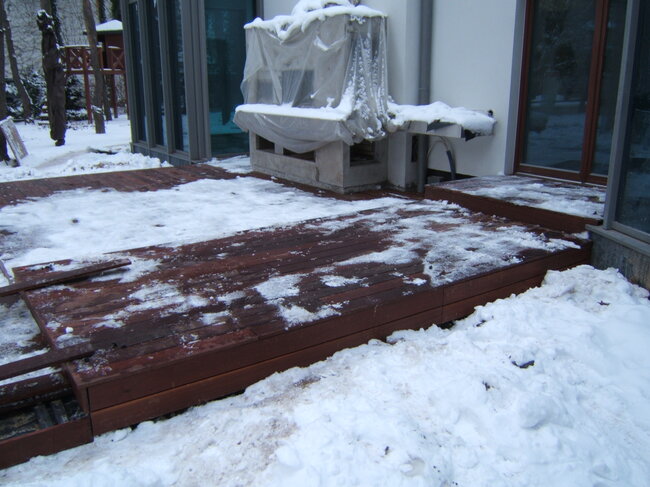
An outdoor terrace experiences different conditions depending on location. Temperature changes, UV exposure, rainfall, frost and wind can affect the choice of materials and installation requirements.
6. Maintenance access
Consideration should be given to how access to the waterproofing membrane, drains, and building services will be provided after installation. A good design should allow for practical future inspections and repairs.
7. Local building regulations and sustainability requirements
Some projects must meet specific requirements regarding drainage, fire resistance, accessibility, roof load, ventilation clearances, or environmental certification. Before finalizing the selection of accessories, the relevant local standards and project specifications should be checked.
The right accessories make the whole system work
A successful raised deck terrace is not just a collection of adjustable pedestals supporting pavers or boards. It is a complete system in which every element has its job.
Pedestal heads ensure proper support for the surface. Shims and spacers help maintain alignment. Extensions and height adjusters adapt to different construction levels. Support grids keep the board frameworks in place, and pads protect sensitive substrates. Perimeter profiles and drainage elements complete the installation.
For a typical terrace, standard accessories are enough. More complex roof projects, unusual substrate conditions, higher loads and demanding environmental requirements call for a more carefully selected set.
As a manufacturer of adjustable pedestals, we believe the best time to consider these details is before installation begins, not when problems arise.
Before finalizing your next terrace project, review the full accessories list against three essential requirements: the expected load, the required ventilation and drainage clearance, and the maintenance needs of the structure beneath the surface.
Properly accounting for these details from the very start can significantly affect how well your raised deck terrace will perform for many years.