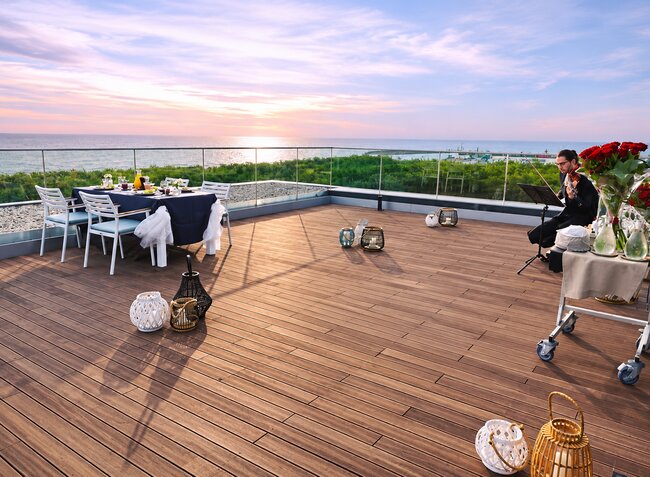
These problems often start with the support system.
When building a raised deck terrace, leveling the joists is just as important as choosing the right decking boards. The joists carry the boards, distribute the weight and keep the entire structure stable. If their support points are uneven, the finished terrace may show movement, uneven joints and drainage problems.
And this is where adjustable joist pedestals come in.
RAPTOR pedestals from SOLVER provide a dedicated support system for terrace joists. As a manufacturer of adjustable pedestals, SOLVER develops support solutions designed to help installers create level and stable terrace structures on various substrates. The RAPTOR system uses a wedge-based adjustment mechanism that allows installers to make precise height corrections during installation.
What are pedestals for decking joists used for?
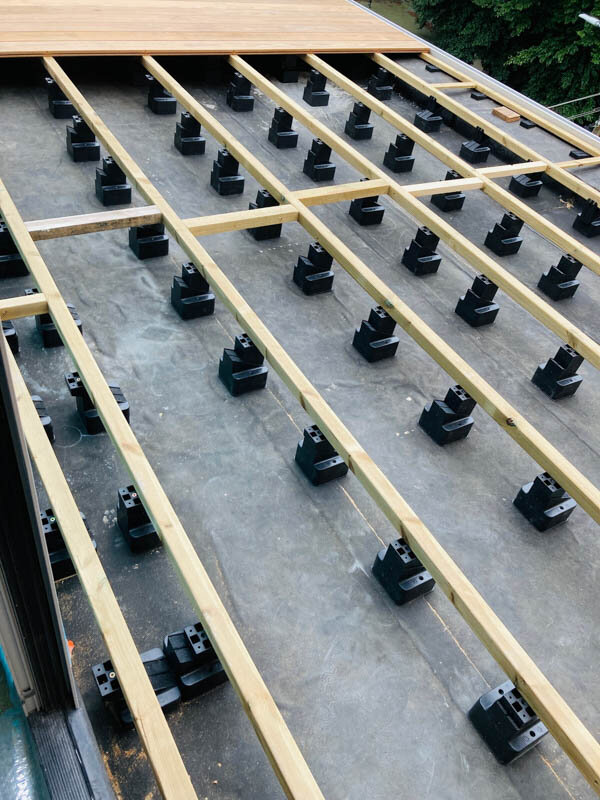
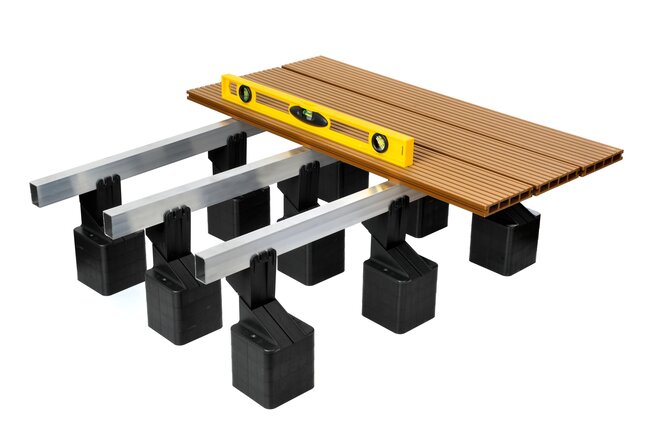
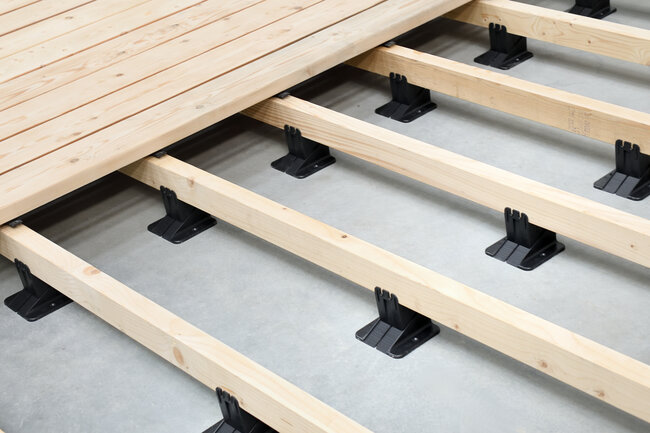
In a raised deck terrace system, pedestals are located between the load-bearing surface and the joists. They transfer the load from the deck frame to the substrate, creating stable support points along the joist layout.
Instead of laying wood directly on concrete, ground, or another load-bearing surface, the joists rest on adjustable pedestals.
This arrangement solves several practical problems.
First, it helps keep the joists level. Even if the concrete slab has a slight slope or individual sections are at different heights, each pedestal can be adjusted to set the frame in the correct position.
Second, it creates an open space beneath the decking boards. Air can circulate under the boards, and rainwater can drain across the substrate surface instead of accumulating around the joists.
Third, it provides access to the space beneath the terrace. Depending on how it is installed, contractors can inspect drainage components, reach technical installations, or access waterproofing membranes without dismantling the entire support structure.
At SOLVER, we understand that the support system plays an important role in the long-term use of a raised deck terrace. That is why our solutions with adjustable pedestals are designed to meet practical installation challenges, including uneven substrates, height differences, and the need for reliable joist support.
What makes RAPTOR stand out?
Not all adjustable pedestals use the same adjustment mechanism. Some rely on threaded components, while others use fixed-height supports or separate shims.
RAPTOR uses a wedge-based system.
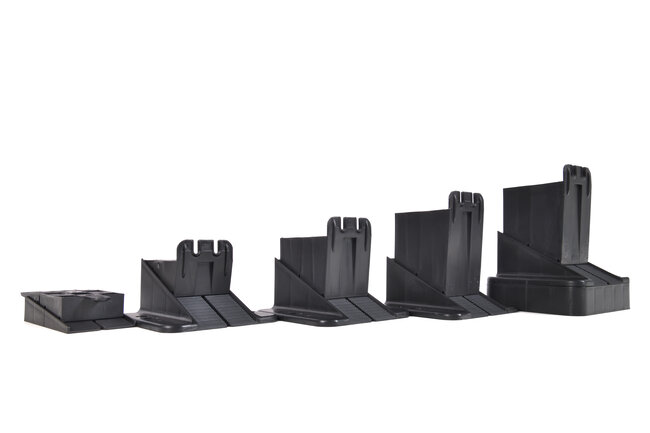
The pedestal consists of an upper and a lower wedge element. Shifting one wedge relative to the other changes the support height. Adjustment is made in 1 mm increments, which allows installers to make fine corrections without repeatedly adding or removing shim materials.
For an adjustable pedestal manufacturer such as SOLVER, precision is an important part of the pedestal's design. Even a small height difference can affect how a long joist rests on multiple support points.
Here are the main features of RAPTOR that matter during installation.
1. Precise height adjustment
Adjustment in 1 mm increments makes it easy to correct uneven joist lines. For example, when installing a terrace on an existing concrete terrace, the installer may find that one section is slightly lower than another. RAPTOR allows individual adjustment of support points for leveling.
This is particularly useful for long joists, where small differences can become more noticeable on the finished frame.
2. Low-height installation
RAPTOR is designed to work at relatively low installation heights, with the standard range starting from 15 mm.
This makes it useful in renovation projects where the vertical space between the existing substrate and the finished terrace level is limited.
3. Compatibility with various joist materials
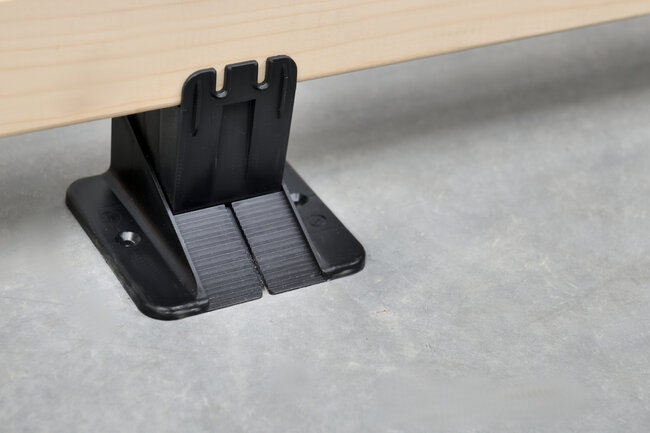
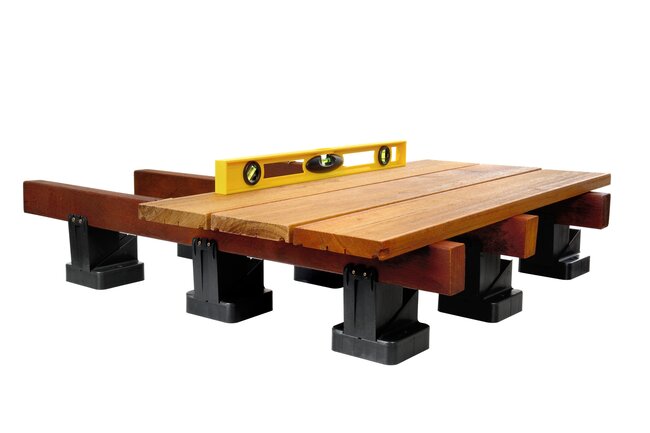
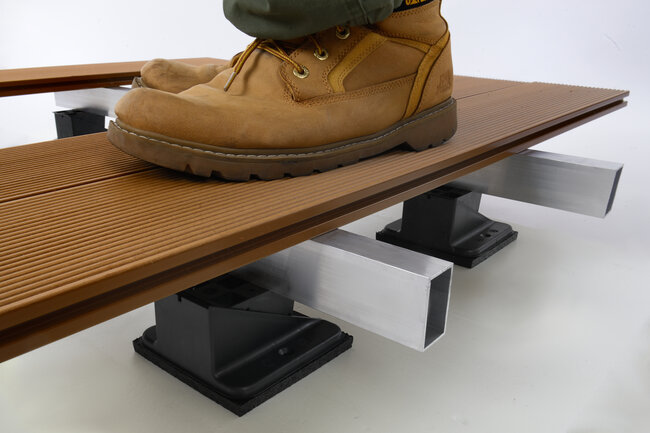
The system is designed for hardwood, softwood, aluminium, and WPC joists. Its universal joist head makes it easier for installers to work with different construction materials without the need for a completely different support system for each project.
The RAPTOR system specifies a maximum joist width of 60 mm, which should be checked against the dimensions of the selected joist before installation.
4. Additional mounting accessories
RAPTOR has dedicated accessories that help adapt the support system to on-site conditions.
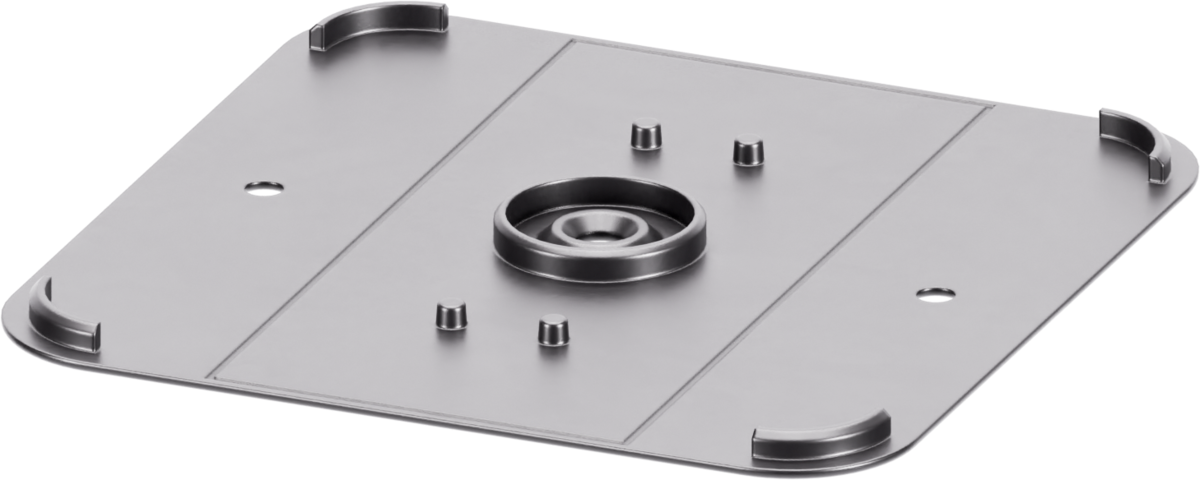
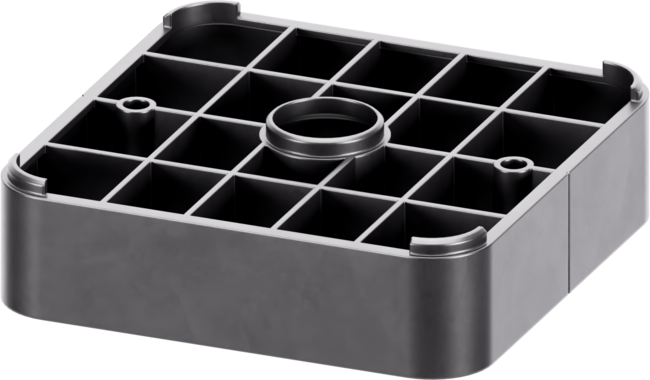
These include a 30 mm height extender, a 2 mm protective pad, a 10 mm acoustic pad, and a 7% base slope corrector.
The system also allows wedge elements to be connected with screws when additional securing is required, for example at terrace edges or in places exposed to unusual movement.
As a manufacturer of adjustable pedestals, SOLVER supplies these accessories to help installers adapt the support layout to various design requirements.
See also: RAPTOR XL pedestal 95-125 mm for decking
RAPTOR versus traditional methods of supporting joists
Traditional terrace construction often uses wooden shims, concrete blocks, or fixed-height pedestals under the joists.
These methods can work well in simple projects. If the substrate is already level and the required terrace height is low, there may be little reason to use a more adjustable system.
However, problems can arise when the surface is uneven.
Wooden shims may require repeated cutting and adjustment. Concrete blocks offer fixed support heights, which makes fine adjustments difficult. Direct contact of wood with a damp substrate can also create conditions conducive to moisture-related deterioration.
RAPTOR offers a different approach. Instead of modifying the supporting material every time the joist height needs adjustment, the installer adjusts the pedestal itself.
For SOLVER, as a manufacturer of adjustable pedestals, developing practical solutions to these installation challenges is an important part of creating support systems for modern terrace projects.
What should you check before choosing RAPTOR pedestals?
Before ordering pedestals, look at the entire terrace project instead of choosing supports solely based on their height.
Joist spacing and span
Start with the joist layout. At what distance from each other will the joists be spaced? What is the distance between the support points along each joist?
These dimensions depend on the decking board material, the joist dimensions, and the decking board manufacturer's recommendations. The pedestal spacing must therefore correspond to the relevant installation requirements.
Load requirements
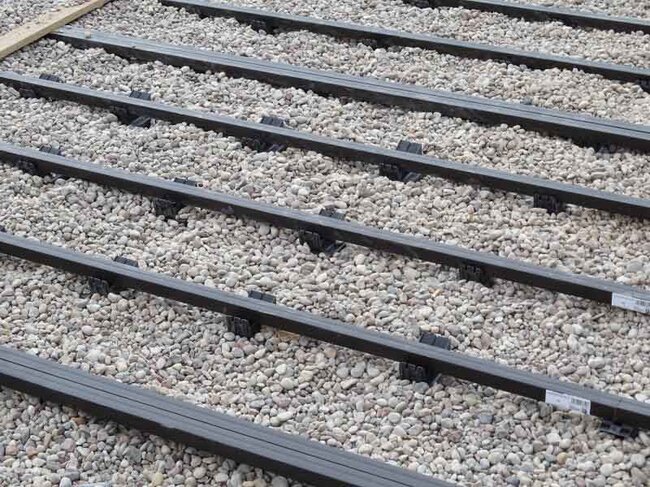
All loads the terrace must carry should be taken into account, including its own weight, furniture, planters and the anticipated occupancy.
RAPTOR has a declared load capacity of up to 1,000 kg. However, this value should not be treated as the permissible working load for every installation. An appropriate safety factor should be applied, and the actual design must account for how loads are distributed across the support points.
When selecting a SOLVER pedestal system, it is recommended to check the technical specification, including load capacity and maximum extension. These details are essential for choosing the correct support configuration.
Type and condition of the substrate
Is the terrace being installed on concrete, a roof membrane, or another prepared surface?
The substrate must provide adequate support under each pedestal. On terraces with waterproofing, protecting the membrane is particularly important.
Height and slope
Measure the difference between the lowest and highest point of the installation area.
The RAPTOR series includes several height configurations, and additional components are available for specific applications. Check the required height of the finished surface against the actual adjustment range of the selected configuration.
As a manufacturer of adjustable pedestals, SOLVER provides various support solutions for different installation heights and site conditions. Choosing the right configuration starts with accurate measurements of the finished terrace surface level and the substrate.
Drainage and airflow
A raised deck terrace should allow water to drain away beneath the structure. Make sure the pedestal positions do not block water outlets or create unwanted water traps.
Leave sufficient space for airflow and consider how the terrace edge finishing will affect ventilation.
Access and local requirements
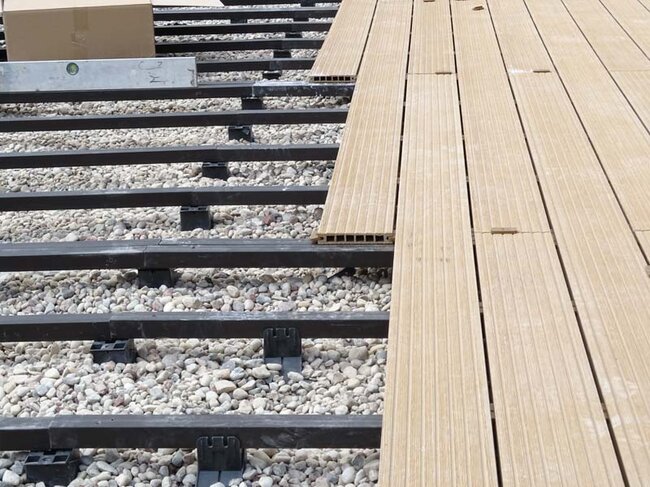
If there are electrical installations, drainage pipes or waterproofing elements under the terrace, it is necessary to consider how they can be accessed at a later time.
Local building regulations and project specifications should also be checked for minimum distances, fire safety, ventilation and structural requirements.
Correct installation
A good installation starts with accurate measurements.
First check the substrate and mark the planned joist positions. Calculate the required support points using the joist manufacturer's recommendations. Then select the appropriate RAPTOR height configuration for each area.
Install the pedestals and adjust the wedge elements to achieve a level surface across the entire frame. Check the joists as you go, rather than waiting until the entire structure is assembled.
In places where project conditions require it, the wedge elements can be secured with screws to prevent unwanted movement. This is worth considering along exposed terrace edges and in other non-standard locations.
Finally, check the frame for level, stability and proper drainage before attaching the decking boards.
SOLVER develops adjustable pedestal systems with practical installation requirements in mind. However, even a well-designed pedestal requires correct positioning, appropriate spacing and proper installation to function as intended.
Is RAPTOR the right support system for your terrace?
RAPTOR is particularly useful when the terrace requires precise leveling, when the substrate is uneven, or when the available installation height is limited.
Its gradual wedge adjustment, compatibility with various joist materials, and range of accessories give installers practical flexibility across different terrace projects.
However, an adjustable pedestal is not automatically the best choice for every terrace. A simple low-profile installation on a level substrate may work perfectly well with a simpler support solution.
As a manufacturer of adjustable pedestals, SOLVER focuses on developing support systems that meet various requirements for decking boards and terraces. The right choice always comes down to joist dimensions, pedestal spacing, total loads, substrate condition, and the required installation height.
Before placing an order, review the joist layout, calculate the required pedestal heights, and confirm the design loads in accordance with the RAPTOR technical documentation. A few careful checks at this stage can make installation easier and help create a stable, well-supported terrace that will perform as intended for a long time.